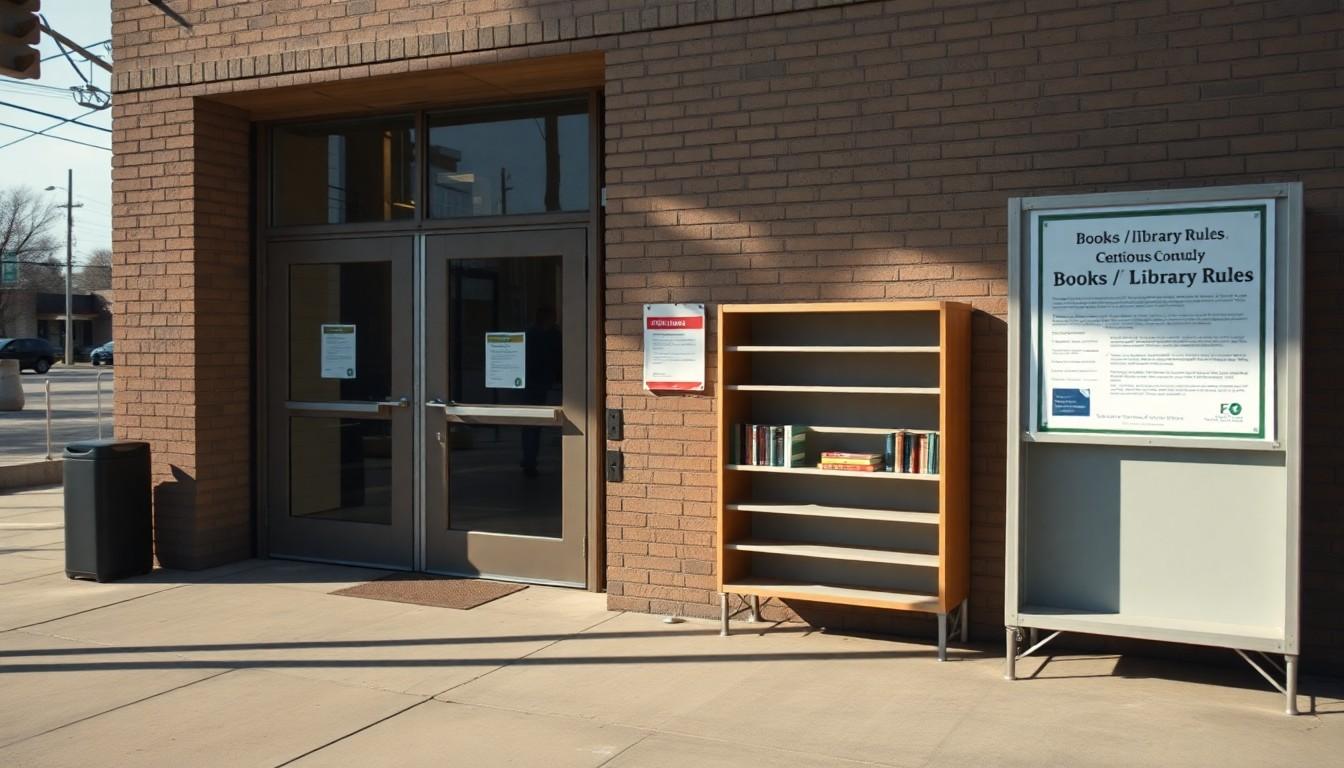
Readers, librarians and free-speech advocates continue to rally around Maia Kobabe’s Gender Queer, a graphic memoir about identity, family and self-discovery. Its repeated appearance on US banned-books lists shows why illustrated LGBTQ+ stories remain a flashpoint in schools and libraries, even as supporters argue that access to them matters deeply.
Essential Takeaways
- A landmark memoir: Gender Queer explores Kobabe’s experiences as queer, non-binary and asexual.
- Repeated challenges: The graphic memoir has become a regular target in US library and school complaints.
- Why comics matter: Images can make stories feel immediate, but that visibility also makes graphic novels especially vulnerable to challenges.
- Support remains strong: Librarians, educators and readers continue to defend the book’s place in collections.
- A wider debate: The controversy reflects broader arguments over LGBTQ+ representation, education and public-library access.
A personal story became a national flashpoint
The striking thing about Gender Queer is how ordinary its starting point feels. Kobabe created a memoir about understanding identity, navigating family relationships and finding language for experiences that can be difficult to explain. The book’s illustrated format gives those moments a soft, intimate quality, making the later political storm feel all the more jarring.
Published in 2019, the memoir quickly found support among readers, teachers and librarians. It also received major recognition from the American Library Association, according to the organisation’s records and coverage from the Smithsonian. That success placed the book in front of a much wider audience, including campaigners determined to remove it from public collections.
The result has been extraordinary visibility. Rather than disappearing, Gender Queer has become one of the best-known challenged books in the United States, with its title repeatedly appearing in banned-book discussions from library groups and educational organisations.
Why is Gender Queer challenged so often?
Complaints about the book commonly focus on a small number of illustrated passages. Critics have argued that those pages make the memoir unsuitable for younger readers, while supporters say the scenes form part of an honest account of growing up and learning about the body.
That disagreement sits at the heart of the censorship debate. A book can contain material that some families would rather discuss privately without being removed from every school or library shelf. As reporting from PinkNews has shown, many challenges have involved calls for restriction even when complainants had limited familiarity with the book as a whole.
This is where context matters. Gender Queer isn't presented as a biology textbook or a collection of explicit material. It's a memoir, and memoirs often include awkward, vulnerable or intensely personal moments. Removing the entire work because of selected pages can flatten a complicated story into a single accusation.
Graphic novels are carrying more of the pressure
Illustrated books have a special vulnerability in these disputes because a challenging image is easy to circulate without the surrounding pages. A paragraph can require patience and context; a picture can provoke an instant reaction. That doesn't make the image more dangerous, but it can make the controversy move faster.
Library and banned-book records show that graphic novels and illustrated young-adult titles are frequently caught up in challenges involving sexuality, gender and race. Marshall University’s banned-books resource lists Gender Queer among books that have faced restrictions, while the broader data gathered by the American Library Association has highlighted the growing scale of challenges.
There’s an uncomfortable irony here. Comics can make difficult ideas approachable for readers who might struggle with a dense block of text, yet that same clarity can make them politically conspicuous. The pages are accessible, memorable and difficult to misrepresent once readers have encountered the full story.
What should readers and libraries consider?
For families, the most useful question isn't simply whether a book has been challenged. It’s whether the content suits a particular reader’s age, maturity and circumstances. Parents can look at publisher information, read the memoir themselves or speak with a librarian rather than relying on a clipped image or social-media post.
Libraries, meanwhile, generally work with collection policies designed to provide a range of perspectives. That doesn't mean every title belongs everywhere, or that every reader must choose it. It does mean decisions should be based on transparent standards rather than pressure campaigns aimed at particular communities.
Readers who want to understand the debate should also seek the complete book and the library’s policy. Good-faith disagreement is part of public life, but removing a title from everyone because one group objects is a much bigger step. It changes a personal choice into a community-wide restriction.
The argument is bigger than one memoir
The controversy surrounding Gender Queer reflects a wider fight over who gets to appear in public education and shared cultural spaces. Reporting from the Smithsonian and the US Senate hearing covered by Georgia Public Broadcasting has placed book challenges within a broader discussion about local libraries, political pressure and the role of public institutions.
For Kobabe, the issue isn't only whether one memoir remains available. It’s about whether LGBTQ+ readers can find stories that help them feel less isolated, particularly when schools and libraries may be among the few places where such books are accessible. A quiet graphic memoir has become a very loud symbol of that question.
That may explain why the book continues to attract both opposition and support. People aren't merely arguing about a title on a shelf; they're arguing about trust, representation and who gets to decide what young people are allowed to encounter. And, as librarians often know better than anyone, a book’s impact can begin with one reader finding the right page at the right time.
Gender Queer remains a reminder that access to stories can be a form of belonging.
Source Reference Map
Story idea inspired by: [1]
Sources by paragraph:
- Paragraph 1: [2], [6]
- Paragraph 2: [3], [5]
- Paragraph 3: [4], [6]
- Paragraph 4: [2], [3]
- Paragraph 5: [4], [6]
- Paragraph 6: [2], [4]
- Paragraph 7: [3], [5]
- Paragraph 8: [2], [6]
- Paragraph 9: [4], [7]
- Paragraph 10: [2], [5]
- Paragraph 11: [6], [7]
- Paragraph 12: [3], [4]
- Paragraph 13: [2], [5]
- Paragraph 14: [6], [7]
- Paragraph 15: [2], [4]