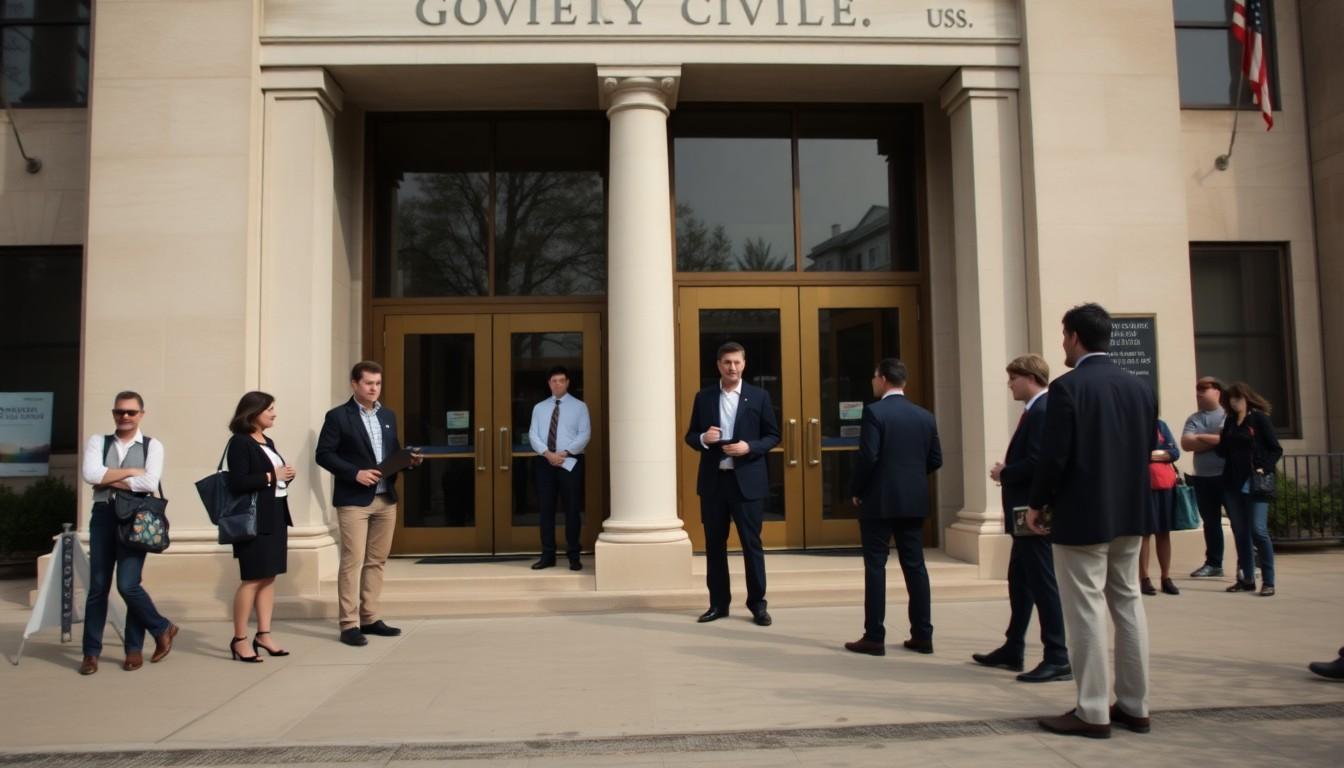
Voters in several US states are being asked to decide measures affecting transgender healthcare, school policies and sport. LGBTQ+ advocates warn that these proposals are about more than individual laws: they could test a divisive campaign strategy ahead of the 2028 presidential election and reshape how rights are debated nationwide.
Essential Takeaways
- Several states are in focus: Arizona, Colorado, Missouri, Nebraska and Washington are central to the debate.
- Healthcare and sport are linked: Proposals could affect trans young people’s care and transgender students’ participation in athletics.
- Schools face added pressure: Washington proposals include measures concerning disclosure of LGBTQ+ pupils’ identities and safeguarding reports.
- Ballot politics can travel: Campaign tactics tested locally may be reused in future state and national elections.
- The wider stakes are significant: Advocates say attacks on one part of the LGBTQ+ community can weaken protections for everyone.
The ballot box is becoming a battleground
The sharpest warning from LGBTQ+ campaigners is also the simplest: rights are increasingly being placed before voters as political theatre. Instead of debating household costs, healthcare access or education, campaigns can use a small and visible minority as a convenient target. Ballot campaigns discussed by Trans United Fund have followed that pattern, presenting anti-trans proposals as urgent answers to problems they don't solve. [2]
That matters because ballot measures can reach voters differently from ordinary legislation. A proposal may appear as a short question on a voting paper, while the consequences sit in dense legal language and affect schools, clinicians, families and employers. The format can make emotionally charged messaging more powerful than careful scrutiny. Ballot.org has described the 2026 measures as a source of division and distraction. [3]
There is an uncomfortable historical lesson here. Anti-equality initiatives have previously helped energise voters through fear-based campaigning, with effects extending well beyond the particular issue on the ballot. The concern now is that transgender people are being used in a similar political experiment.
What could voters actually be deciding?
The proposals vary from state to state, so treating them as one identical package would be misleading. In Missouri, the debate includes restrictions on gender-affirming healthcare for transgender young people alongside abortion provisions, creating a broad and politically loaded amendment rather than a narrow question about one policy area. The changing landscape of state abortion initiatives adds further context, as KFF has reported. [7]
Elsewhere, measures focus on sport and school life. Reporting from Colorado has outlined the number and range of measures expected on that state's 2026 statewide ballot, while Colorado Public Radio has examined proposals affecting trans young athletes and gender-related care. [4], [5]
The practical consequences could be considerable. Families may face uncertainty over treatment, pupils could be excluded from activities, and schools may have to interpret new constitutional or statutory requirements. For parents, teachers and young people, that isn't an abstract culture-war argument. It's a question of privacy, safety and whether ordinary routines suddenly become politically contested.
Why 2026 could shape 2028
Campaigners aren't only looking at what happens when voters mark their papers this year. They're watching the machinery being built around each campaign: voter lists, messaging, fundraising networks and turnout operations. Trans United Fund says anti-trans organising around the 2026 ballot cycle could help refine a model for later elections. [2]
That makes these contests useful to political strategists, whether or not every proposal succeeds. A message that performs well in one district can be adapted elsewhere; a misleading claim that attracts attention can be repeated at greater scale. The result is a feedback loop in which local ballot questions become rehearsal spaces for national politics.
The National Conference of State Legislatures' database shows why the broader ballot landscape deserves attention. Statewide measures cover a wide range of subjects, and their legal routes and wording differ considerably. Voters therefore need to look beyond campaign slogans and check the exact text, fiscal impact and implementation details of each proposal. [6]
Privacy, schools and the everyday stakes
The debate over transgender students in sport often sounds narrowly competitive, but enforcement is where the policy becomes more intrusive. Critics warn that rules requiring people to prove eligibility can invite invasive scrutiny of bodies and identities, affecting girls and women far beyond the small number of trans athletes at the centre of the argument. Colorado reporting has highlighted how sport and healthcare proposals are becoming entwined in the 2026 cycle. [5]
School measures raise a different concern: who controls a young person's information. Proposals involving disclosure of a pupil's identity or the reporting of sensitive allegations can affect children living in unsupportive or unsafe homes. Ballot.org has pointed to the risk that such measures turn schools into enforcement points rather than trusted places of learning. [3]
A useful rule for voters is to ask what a policy requires in practice. Does it create a reporting duty? Who receives the information? What happens when a family disagrees with a school? These details matter more than the campaign's polished headline, and they're often where the real consequences hide.
How to assess a ballot measure before voting
Start with the official wording, not a social media graphic. State election offices and the NCSL database can help voters locate the measure's text, status and procedural history, while independent analyses may explain how it interacts with existing law. [6]
Next, separate the stated purpose from the likely reach. A measure framed around sport may affect school administration, privacy and legal challenges. One presented as a healthcare safeguard may also alter reproductive rights or clinical decision-making. KFF's coverage of abortion initiatives demonstrates how ballot proposals can combine issues that voters might otherwise consider separately. [7]
Finally, look for evidence rather than volume. Ask whether supporters provide measurable evidence that the proposal addresses a real problem, and whether opponents explain specific legal or practical risks. The loudest campaign isn't necessarily the clearest one, and a quiet read of the small print may be the most useful ten minutes a voter spends.
The fight is bigger than one election
LGBTQ+ advocates argue that the central issue is solidarity. If voters accept the idea that one group can have its privacy, healthcare or family life put to a majority vote, protections for other groups may become easier to challenge. Trans United Fund has framed the 2026 campaigns as part of a broader effort to weaken LGBTQ+ equality rather than isolated disputes. [2]
That doesn't mean every ballot measure will produce the same result, or that voters should ignore legitimate questions about policy design. It does mean the debate deserves more than slogans. The wording, enforcement powers and likely effects should be examined with the same care voters would bring to any major change in healthcare or education.
There is also a human cost to turning identity into campaign fuel. Behind every proposition are pupils trying to get through school, families making difficult medical decisions and adults who simply want to live without being publicly inspected. Democracy works best when voters are given facts, not fear.
Choose carefully, read the fine print and remember who's affected beyond the campaign stage.
Source Reference Map
Story idea inspired by: [1]
Sources by paragraph: