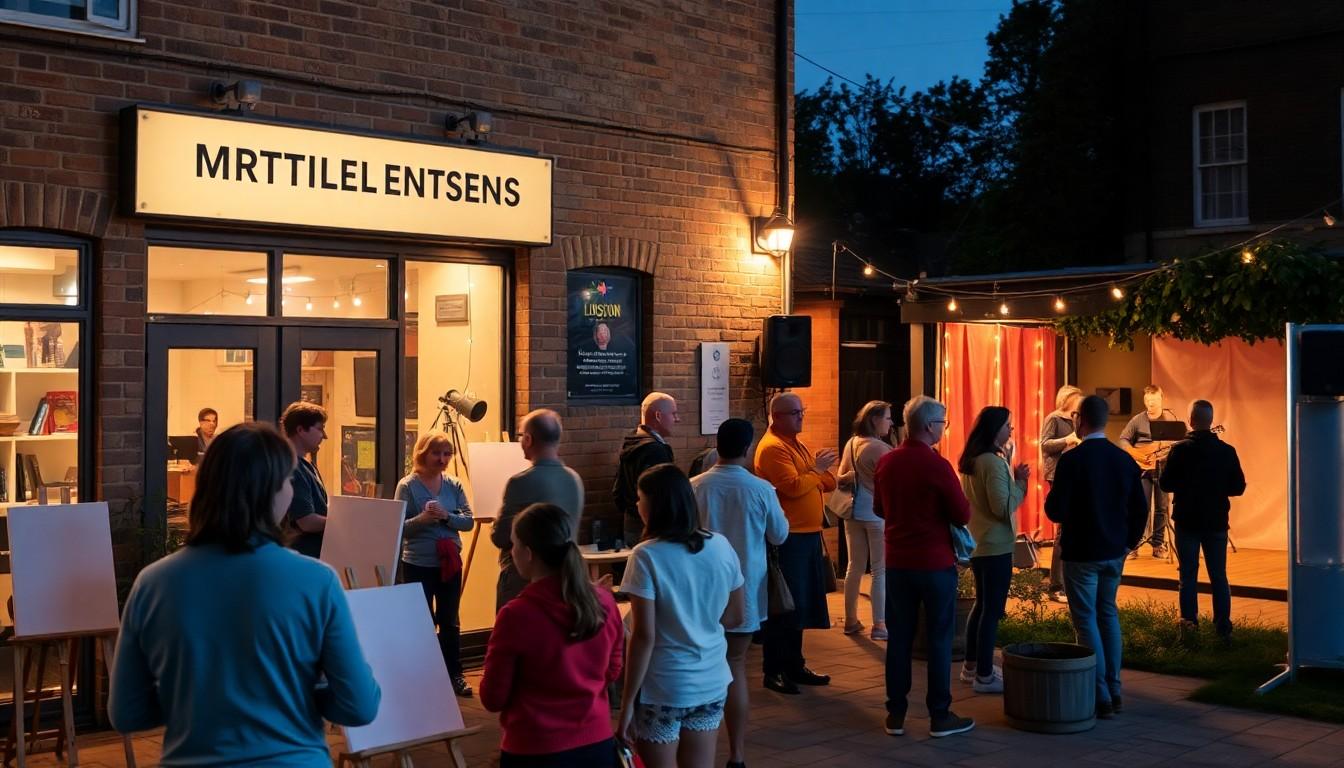
Visitors from across Northamptonshire gathered at Lumina Community Hub and George’s Tea Room for a vibrant Pride Night, where live music, art and conversation created a warm space for self-expression. The event mattered because it turned inclusion into something people could see, hear and feel together.
Essential Takeaways
- A welcoming setting: Lumina Community Hub and George’s Tea Room gardens were transformed with colour, lighting and handmade decorations.
- Creative programme: Live music, art workshops, photography, tarot readings, glitter and hair braiding gave guests plenty of ways to join in.
- Young people helped: Participants from the Saints Foundation work experience programme contributed decorations, props and garden displays.
- Community at its centre: The evening focused on visibility, acceptance and helping people feel valued.
- Local talent on stage: Performers included Katie Paton, Dutti B, That Joe Payne and Niall Skinner, with Sian Essam joining a special duet.
Northampton Pride Night put belonging centre stage
The strongest impression was one of warmth. Guests moved between the lively performance areas and the decorated garden, surrounded by rainbow colour, soft lighting and the easy buzz of people meeting, chatting and enjoying themselves.
According to the Northampton Chronicle and Echo, Lumina Arts Alliance designed the event as a celebration of identity, creativity and connection. It wasn't simply a night of entertainment. The organisers wanted to create an environment where people could express themselves without fear or judgement.
That distinction matters. Pride is often pictured as a parade or a splash of bright colour, but its deeper purpose is visibility and acceptance. In Northampton, those ideas were given a distinctly local shape.
Music, glitter and art made the evening feel personal
The programme had enough variety to keep the atmosphere moving. Live performances from Katie Paton, Dutti B, That Joe Payne and Niall Skinner supplied the soundtrack, while a duet between That Joe Payne and Sian Essam added a memorable highlight.
Away from the stage, guests could choose their own kind of participation. Louise Troy's glitter bar brought a playful sparkle, while Rebecca Duggan of Woven Crown offered festival hair braiding. Jack Savage's photography booth captured the evening's more colourful moments, and Shelly Knight's tarot readings created space for quieter conversations.
Northants Mag reported that the event combined performance with hands-on creative experiences. That's a smart approach for an inclusive gathering, because not everyone wants to stand in a crowd or take the microphone. Sometimes joining in means making something, posing for a photograph or simply finding a comfortable corner to talk.
Local young people helped shape the setting
Some of the most important work happened before the first song began. Young people from the Saints Foundation work experience programme helped make decorations, props and displays, contributing to the transformation of the venues.
The foundation's Engage Plus programme supports 16 to 19-year-olds through employability-focused opportunities, according to the Saints Foundation. In this case, participants gained practical experience while helping create an event with a clear community purpose.
There is something especially satisfying about that connection. The young people weren't just present at the celebration. Their work helped give it its visual identity, from the decorated garden to the handmade details around the hub.
Why inclusive community events still matter
For LGBTQ+ guests, particularly younger people, positive representation can have an impact well beyond one evening. Seeing a space where people are welcomed openly can help build confidence, reduce isolation and make community feel more accessible.
Lumina Arts Alliance's work centres on using creativity to bring people together, according to the organisation. Pride Night showed how that can work in practice: music opened the event up, art encouraged participation and informal activities helped strangers find common ground.
One attendee, Andrew Kirkwood, told the Northampton Chronicle and Echo that the main thing he noticed was the sense of belonging and the positive atmosphere. It is a simple observation, but perhaps the most telling one. The best community events don't just look colourful in photographs. They leave people feeling lighter when they go home.
A collaborative model for Northamptonshire
The evening depended on a broad mix of performers, volunteers, creative practitioners, local partners and attendees. Lumina's own account highlights how each group contributed to the final result, from event design and entertainment to practical support behind the scenes.
The organisation's wider work is built around inclusive creative opportunities, according to its about-us information. That makes Pride Night feel less like a one-off spectacle and more like an example of an ongoing approach: use the arts to create room for people to meet, participate and feel seen.
As community events continue to evolve, that model is worth watching. A successful celebration doesn't need to be complicated. It needs thoughtful spaces, genuine welcome and enough ways for people to take part at their own pace.
It's a small but powerful reminder that belonging can be built through music, colour and a place to be yourself.
Source Reference Map
Story idea inspired by: [1]
Sources by paragraph:
- Paragraph 1: [2], [3]
- Paragraph 2: [5], [7]
- Paragraph 3: [2], [3]
- Paragraph 4: [2], [6]
- Paragraph 5: [3], [5]
- Paragraph 6: [4], [5]
- Paragraph 7: [4], [7]
- Paragraph 8: [2], [3]
- Paragraph 9: [5], [7]
- Paragraph 10: [2], [3]
- Paragraph 11: [5], [7]
- Paragraph 12: [4], [5]
- Paragraph 13: [2], [3]
- Paragraph 14: [5], [7]
- Paragraph 15: [2], [3]
- Paragraph 16: [5], [7]