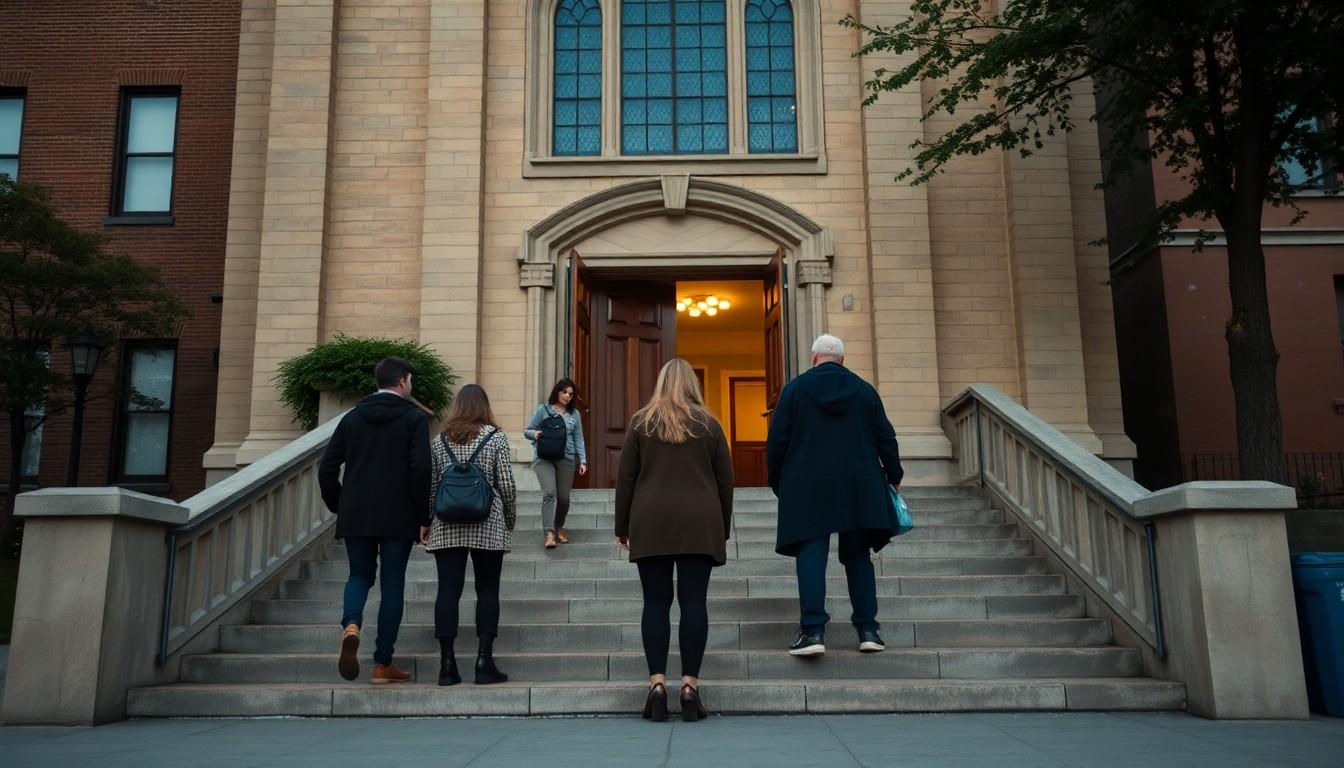
Viewers are being invited into the complicated heart of Black church life through a new documentary about Black LGBTQ+ Christians, their faith and the cost of hiding who they are. With intimate testimony, worship imagery and screenings planned across the US, the film turns a difficult conversation into a vivid act of recognition.
Essential Takeaways
- A personal focus: The film follows Black trans, lesbian and gay Christians discussing faith, identity and church life.
- A central conflict: It examines what happens when spiritual belonging and LGBTQ+ identity are treated as opposites.
- A changing backdrop: Pew data shows support for same-sex marriage has risen among Black Protestants.
- A wider conversation: Screenings are designed to lead into panels and practical discussions about inclusion.
- A festival journey: The documentary is appearing at arts and film events in Washington, New York and Chicago.
When faith and identity collide
The documentary opens with an uneasy visual contrast: jubilant church worship set against Phoenix Black O’Hara, a Black trans woman and drag performer, trying to find her place inside a staged service. The effect is immediate. The music feels uplifting, but the scene carries the quiet discomfort of someone wondering whether they’re truly welcome.
That tension gives the film its emotional centre. Rather than presenting faith as something its subjects simply abandoned, it shows how church traditions shaped their language, resilience and sense of community, even when congregations made them feel unsafe. Toward Pride’s work focuses on that often-overlooked part of the story, according to the organisation’s background information. [4]
For many viewers, that distinction may be the film’s most powerful idea. Leaving a church doesn’t necessarily mean leaving belief behind, and staying connected to spirituality can be complicated when acceptance comes with conditions.
A dozen voices, not one fixed experience
Directed by Nicholas Ashe, the short film brings together interviews with Black trans and lesbian Christians, alongside wider reflections on being closeted in Black church settings. Its subjects don’t speak as a single bloc, which matters in a conversation often flattened into simple arguments about religion and LGBTQ+ rights.
The film’s approach is also personal rather than purely institutional. It looks at how childhood worship, family expectations and church language can linger into adult life, sometimes as a source of comfort and sometimes as a painful reminder of exclusion. The documentary’s listed credits and film details identify Ashe’s involvement and its focus on these lived experiences. [5]
That intimacy should make the film especially suitable for discussion groups. It’s one thing to debate policy from a distance; it’s another to sit with someone describing the feeling of editing themselves before walking through a church door.
Black Protestant attitudes are shifting
The documentary arrives as public opinion among Black Protestants becomes more varied. Pew Research Centre found that 56% supported same-sex marriage in 2025, compared with 40% in 2014, suggesting a notable change over the past decade. [2]
But greater support among worshippers hasn’t automatically translated into uniform denominational policies. The African Methodist Episcopal Church, for example, remains part of a wider institutional debate over same-sex relationships and LGBTQ+ leadership, while a proposed discussion on same-sex marriage was withdrawn at its 2024 General Conference. [3]
That gap between individual attitudes and official positions is where many conversations become especially tense. A congregation may contain people who are personally accepting while still operating within rules, traditions or leadership structures that leave LGBTQ+ members uncertain about their place.
Why the screenings matter as much as the film
The documentary premiered at Washington’s March On! Festival and is also scheduled for events including Urbanworld in New York and Chicago’s Black Harvest Festival. Those settings give the film an arts audience, but its planned journey into seminaries, churches and theological spaces could prove more consequential.
According to Toward Pride, the organisation behind the project, screenings are intended to create room for discussion rather than end with the credits. Events connected with Louisville Seminary, the Queer+Called retreat and Union Theological Seminary are expected to include panel conversations. [4]
That format feels deliberate. A film can open a door, but the conversation afterwards is where people may have to confront what inclusion actually demands, from leadership access to language used in worship and pastoral care.
A small film with a larger invitation
The project’s strength lies in its refusal to treat Black LGBTQ+ Christians as a footnote in either religious life or queer history. It places them at the centre, with all the contradiction that entails: devotion alongside anger, cultural pride alongside exclusion, and belonging that can feel both real and fragile.
As the film moves through festivals and faith communities, its impact will depend on what audiences do next. Watching is easy; changing a church’s habits, policies and assumptions is harder. Still, a candid story can be the first useful spark, especially when it lets people recognise their own experiences in someone else’s voice.
It’s a thoughtful invitation to make faith communities large enough for the people already inside them.
Source Reference Map
Story idea inspired by: [1]
Sources by paragraph: