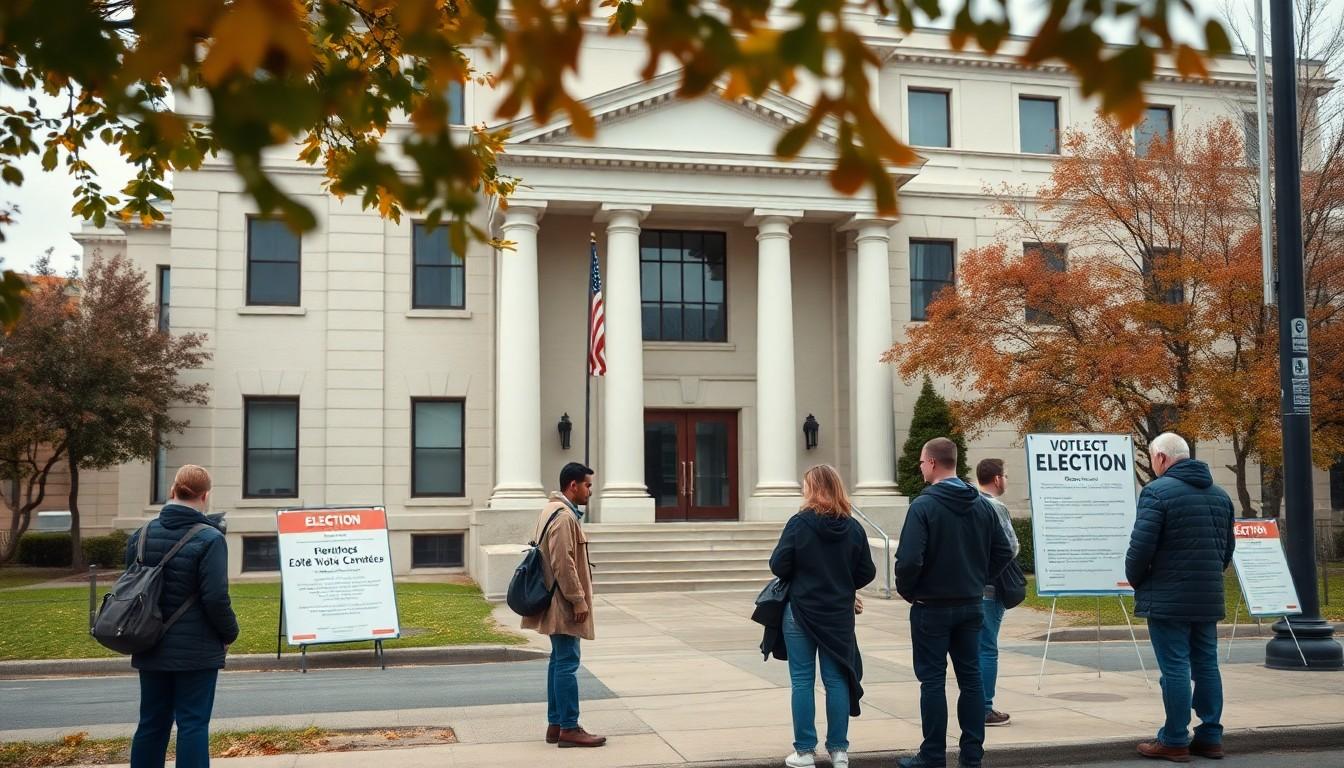
Voters across six US states are facing eight LGBTQ+-related ballot measures this November, covering transgender participation in sport, youth healthcare, school privacy and marriage equality. Here's what the proposals could mean for families, students and LGBTQ+ communities.
Essential Takeaways
- Eight measures are in play: Six states will vote on proposals affecting LGBTQ+ rights and protections.
- Sports rules dominate: Colorado, Arizona, Nebraska and Washington are considering restrictions on transgender students in school sport.
- Healthcare proposals differ: Colorado targets certain surgeries, while Missouri would restrict puberty blockers and hormone treatment for minors.
- Washington privacy is contested: One initiative would expand parental access to sensitive school and counselling records.
- Virginia offers a rights-based measure: Voters could remove the state's dormant constitutional ban on same-sex marriage.
Why these ballot questions matter beyond election day
The measures are arriving at a moment when LGBTQ+ rights have become a regular feature of state-level political campaigns. Anti-trans proposals, in particular, are often presented as narrow questions about sport or parental authority, but their consequences could reach classrooms, changing rooms, medical practices and family life.
The Ballot Initiative Strategy Center's Adam Snipes described the approach as a turnout tactic during a GLAAD media briefing reported by LGBTQ Nation. That framing helps explain why proposals about a relatively small number of students have attracted such intense political attention.
GLAAD figures cited in the same briefing suggest that roughly 91% of anti-trans bills fail in state legislatures. Even so, repeated campaigns can shift public debate, normalise hostile language and leave families feeling as though ordinary parts of childhood are suddenly under inspection.
Four states are weighing transgender sports bans
Arizona, Colorado, Nebraska and Washington are considering measures that would limit which school and youth sports teams transgender students can join. Although the wording varies, the common thread is using sex assigned at birth, reproductive anatomy or official documentation as the deciding factor.
That sounds tidy on a ballot paper. In practice, it raises uncomfortable questions about who checks, what evidence counts and how schools protect children's privacy. Colorado's Proposition 134, for example, would cover school, college and athletic associations, while Nebraska's Measure 442 would place existing restrictions into the state constitution, according to reporting from Chalkbeat Colorado and Ballotpedia.
Washington's proposal is particularly prescriptive. It would require girls seeking to compete in female-only sports to obtain medical verification, with options including genetic testing, testosterone measurement or a visual examination. Critics say the burden could fall on any student whose appearance does not fit someone else's expectations of femininity.
The policy debate also touches a wider issue: participation. Sport is not simply about elite competition. It can be a place where children make friends, find confidence and feel included, which is why opponents argue that blanket rules could affect far more young people than the campaigns suggest.
The practical questions parents should ask
Families trying to understand these measures should look beyond the slogans. Start by checking whether a proposal applies to public schools only or also to private schools, colleges, community leagues and teams that compete against public institutions.
It's also worth asking how sex would be verified, who would store the information and whether medical appointments or tests would be covered by insurance. In Washington, critics cited by LGBTQ Nation warn that some options could be expensive or invasive, while Arizona's proposal could also affect access to toilets, showers and changing facilities connected with sport.
Another important detail is enforcement. Some measures would allow athletes or families to bring legal claims against schools or leagues, potentially creating years of disputes over eligibility. Local school boards and sporting associations could also lose the flexibility to create policies suited to their own pupils.
For parents, the most useful approach is to read the full ballot language, not just campaign leaflets. Terms such as "biological sex", "gender transition" and "parental rights" can sound familiar while carrying highly specific legal meanings.
Colorado and Missouri take different approaches to youth healthcare
Colorado's Proposition 135 focuses on surgery for people under 18 and would also prevent public funds, Medicaid and private insurance from covering the procedures described in the measure. The proposal does not ban puberty blockers, hormone treatment or counselling, but critics say its wording is broad enough to create uncertainty for doctors and families.
The Colorado Medical Society and LGBTQ+ organisations have argued that medical decisions should remain between patients, families and clinicians. Ballotpedia reported that the initiative was among a group of Colorado proposals submitted for consideration, while Colorado Public Radio has placed it within the state's wider 2026 debate over transgender youth policy.
Missouri's Amendment 3 goes further on medication. Alongside major abortion provisions, it would prohibit gender-transition procedures for minors and restrict puberty blockers and hormone treatment. Because Missouri already has limits in place, the ballot question could turn temporary restrictions into longer-lasting constitutional rules.
That distinction matters. A ban on a rare surgical procedure is not the same as a rule affecting prescriptions and ongoing clinical care. Families comparing the two proposals should check exactly which treatments are named, what exceptions exist and whether the changes would sit in ordinary law or the state constitution.
Washington puts school privacy under the spotlight
A separate Washington initiative would give parents broad access to school, medical and mental-health counselling records, including information about a student's sexual orientation or gender identity. Supporters describe the proposal through the language of parental access, but opponents say it could expose young people who are not safe or supported at home.
The ACLU of Washington has warned that confidential relationships with counsellors can be crucial for students dealing with anxiety, family conflict or questions about identity. LGBTQ Nation also cited figures indicating that many homeless queer young people say they were forced from home after relatives learned about their identity.
That makes the privacy question intensely practical. A pupil may need a trusted adult at school before they are ready, or able, to speak with a parent. Removing that confidential space could discourage students from seeking help when they need it most.
Voters should therefore separate the broad appeal of parental involvement from the detail of unrestricted record access. The central question is not whether parents matter. It's whether every child has a safe home in which disclosure will lead to support rather than punishment or rejection.
Virginia's proposal offers a different direction
Virginia's Question 2 would remove the state's dormant constitutional ban on same-sex marriage and add language recognising marriage as a personal right regardless of a partner's sex, gender or race. The existing prohibition cannot currently be enforced because of the US Supreme Court's 2015 decision in Obergefell v. Hodges.
Its presence still matters, however. If federal protections were ever weakened, the old wording could become relevant again. Removing it would give same-sex couples clearer protection in the state constitution rather than relying solely on a federal precedent.
The Movement Advancement Project has tracked similar dormant bans across the US, and voters in Nevada, California, Colorado and Hawaii have already removed theirs in recent years. Virginia's vote could therefore become part of a broader effort to clear outdated restrictions from state law.
Taken together, the 2026 measures show two very different visions of civic life. Some would narrow access to sport, care or privacy, while Virginia's proposal would remove a barrier that no longer reflects the lives of many residents.
The choices are technical, but the human stakes are not. For a child, a team, a doctor's appointment or a trusted school counsellor can be the difference between feeling isolated and feeling seen.
Read the full ballot wording, check your state's election guidance and make sure your vote reflects the consequences beyond the campaign slogans.
Source Reference Map
Story idea inspired by: [1]
Sources by paragraph:
- Paragraph 1: [2], [3]
- Paragraph 2: [4], [5]
- Paragraph 3: [2], [3]
- Paragraph 4: [5], [6]
- Paragraph 5: [3], [4]
- Paragraph 6: [5], [6]
- Paragraph 7: [2], [4]
- Paragraph 8: [3], [6]
- Paragraph 9: [4], [6]
- Paragraph 10: [3], [5]
- Paragraph 11: [4], [5]
- Paragraph 12: [2], [4]
- Paragraph 13: [3], [7]
- Paragraph 14: [7], [2]
- Paragraph 15: [4], [7]