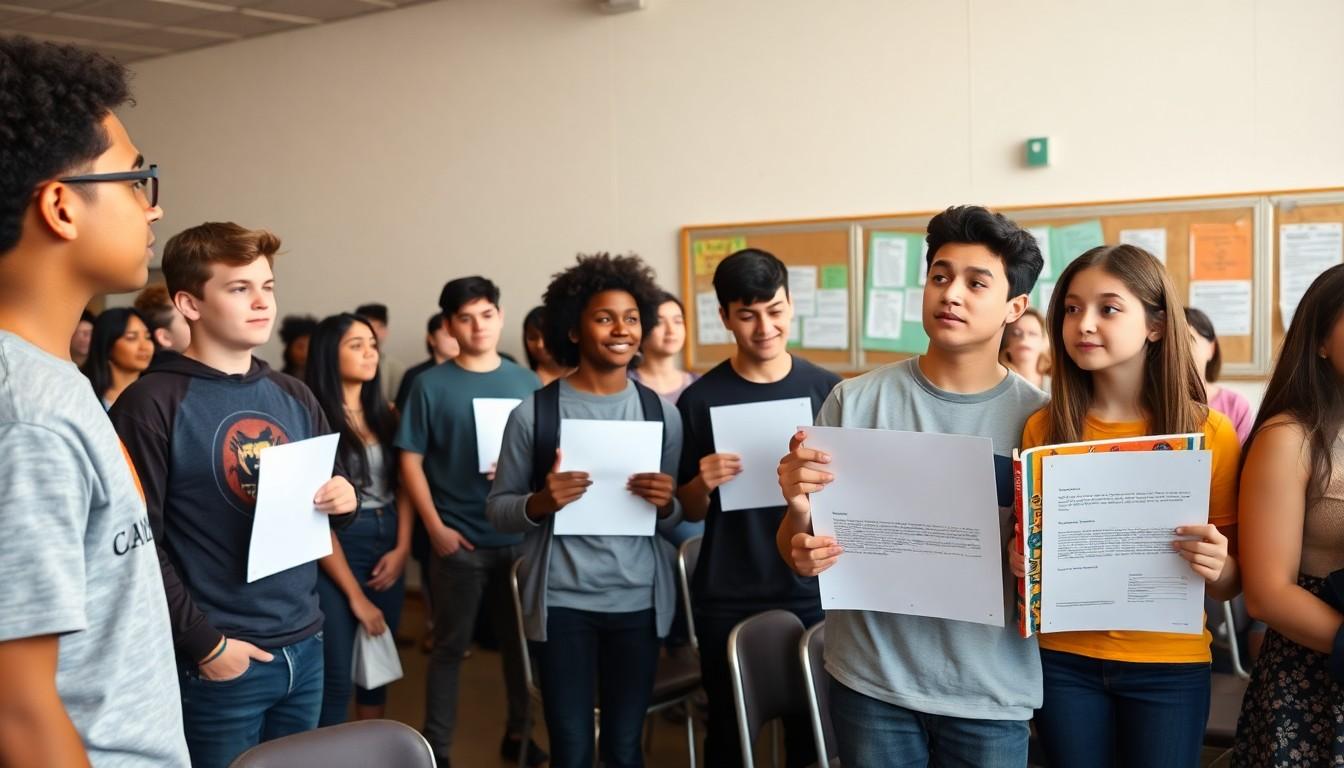
Students are proving that speaking up can change what happens at school, from challenging discrimination to improving everyday classroom life. In Paso Robles, California, young journalists turned a hateful Pride flag incident into a powerful campaign for accountability, while teachers found that listening closely can build confidence, trust and stronger learning.
Essential Takeaways
- Student journalism mattered: Teen reporters documented the incident, interviewed witnesses and kept attention on the issue.
- Small actions can grow: Handwritten rainbow signs and a public forum helped turn private hurt into collective action.
- Listening improves learning: Classroom discussions give pupils practice expressing concerns and influencing decisions.
- Teachers set the tone: Admitting mistakes shows students that authority figures can be accountable too.
- Voice needs structure: Clear questions, reporting standards and supportive guidance helped students use their freedom responsibly.
A hateful incident became a national story
The original shock was physical and deeply upsetting: a Pride flag was torn down at Paso Robles High School, mistreated and filmed before the footage reached social media. LGBTQ+ students and allies saw it as an act of hate, while the school district's delayed response left many feeling overlooked, according to LGBTQ Nation and Metro Weekly.
The eventual policy response focused on limiting the size of classroom Pride flags. That decision landed badly because it appeared to address the symbol rather than the hostility directed at LGBTQ+ students. PinkNews reported that students and community members quickly pushed back, refusing to let the episode disappear from public view.
For affected pupils, the message was about more than a piece of fabric. A classroom or school bathroom should feel ordinary and safe, not like somewhere students must scan for judgement before they can relax.
Students refused to let adults control the story
The most striking development was how quickly students moved from reaction to organisation. They displayed small rainbow messages around campus, demanded an apology and called for stronger LGBTQ+ representation in district decision-making, according to KCBX and the San Luis Obispo Tribune.
They also helped organise a public forum attended by more than 300 people. Students spoke about identity, safety and the exhausting effect of everyday prejudice, bringing personal experiences into a room where adults had previously been setting the terms of the conversation.
That shift matters. A student campaign can look modest at first, perhaps a poster on a corridor wall or a meeting after lessons. But when pupils see that their words draw a crowd, prompt questions and attract scrutiny, civic confidence starts to feel real rather than theoretical.
Student journalists gave the community a record
The school newsmagazine played a particularly important role. Its student reporters covered the incident from multiple angles, interviewed people involved and published a sustained series of articles rather than a single emotional response. Their work drew attention from larger news organisations, including the Los Angeles Times and The Washington Post.
KCBX and local reporting also highlighted the importance of the planned forum and the students' continuing advocacy. Their journalism gave the wider community something firmer than rumours or social media posts: a documented account shaped by young people who were close to the events.
That doesn't mean student reporting should be treated casually. Teachers still need to explain sourcing, consent, fairness and the difference between evidence and assumption. But with the right support, a school newspaper can become more than an extracurricular activity. It can be a practical lesson in democracy.
Why listening changes the classroom
The wider lesson reaches well beyond LGBTQ+ activism. The lead account describes younger pupils challenging a teacher who had stopped using an agreed quiet signal, as well as a child whose repeated requests were dismissed even though he was right. In both cases, the teacher had to acknowledge an error publicly.
That moment can feel uncomfortable for adults. Yet apologising does not weaken authority; it shows pupils that rules and relationships work both ways. Students learn that they must listen, but also that their concerns deserve a fair hearing.
Research cited in the original feature links meaningful student voice with more supportive and responsive learning environments. In practical terms, that might mean regular class meetings, anonymous suggestion boxes, student-led discussions or a clear route for raising safeguarding concerns. The method matters less than the follow-through.
Give young people freedom, then teach them how to use it
The Paso Robles students benefited from guidance without having every decision made for them. Their teacher encouraged documentation, multiple sources and careful preparation, while allowing the young reporters to decide which questions mattered and how to tell the story.
That balance is useful for schools everywhere. Students need boundaries around privacy, accuracy and safety, but they also need enough room to make choices. If adults edit away every difficult edge, pupils may produce something polished but powerless.
A good starting point is simple: ask what students think, listen without rushing to defend the institution, and explain what will happen next. Even when the answer is no, a clear reason is better than silence. Young people may not win every argument, but they should be able to see that speaking up can influence the conversation.
It is easy to imagine student voice as a grand campaign or a packed public meeting. Often, it begins with one pupil saying, quietly but firmly, that something isn't working. The adult response in that moment can shape whether the student speaks again.
When schools listen seriously, students don't just find their voice; they learn what it can do.
Source Reference Map
Story idea inspired by: [1]
Sources by paragraph:
- Paragraph 1: [2], [4]
- Paragraph 2: [5], [6]
- Paragraph 3: [3], [7]
- Paragraph 4: [3], [5]
- Paragraph 5: [2], [4]
- Paragraph 6: [6], [7]
- Paragraph 7: [3], [5]
- Paragraph 8: [2], [6]
- Paragraph 9: [4], [5]
- Paragraph 10: [3], [7]
- Paragraph 11: [2], [5]
- Paragraph 12: [4], [6]
- Paragraph 13: [3], [7]
- Paragraph 14: [5], [6]
- Paragraph 15: [2], [4]