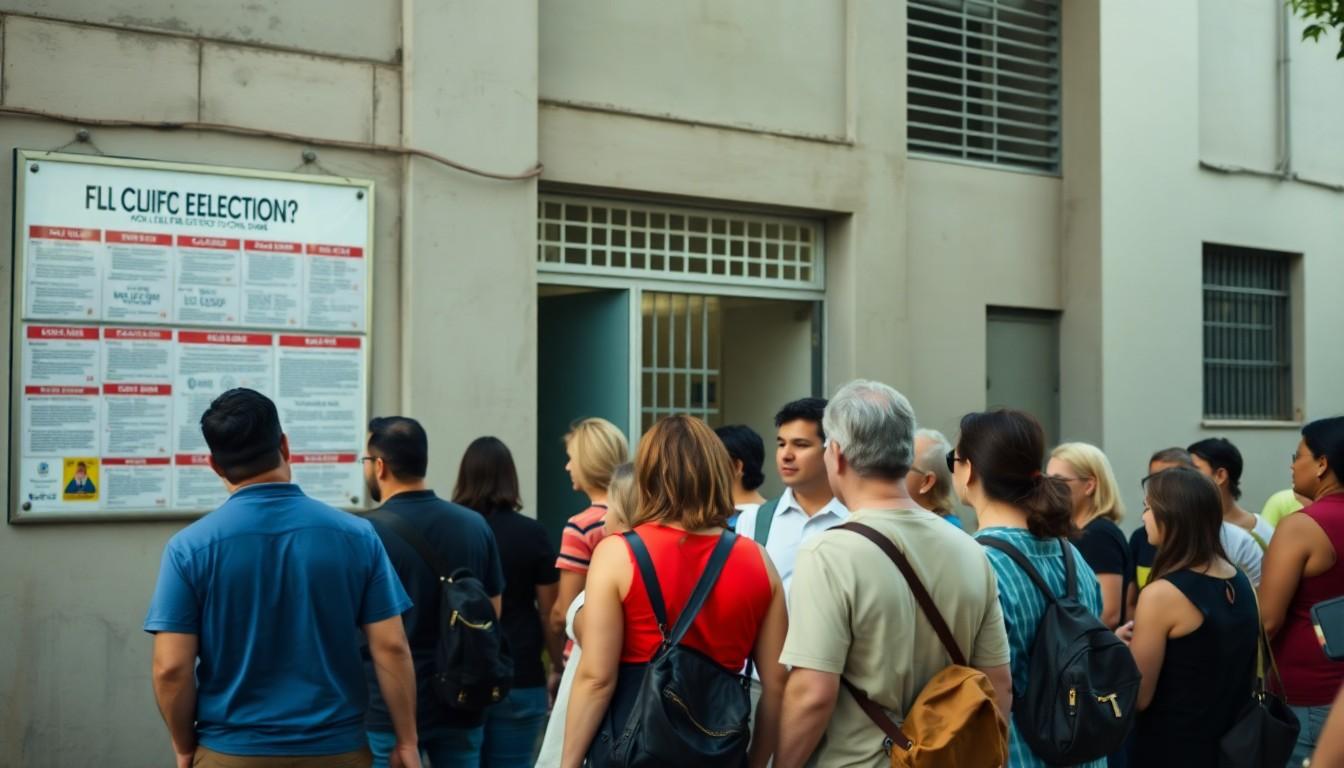
Voters across Brazil are heading to the polls as a record 529 openly LGBTQ+ candidates seek office, including 109 trans and travesti candidates. Their campaigns matter beyond identity alone, putting education, healthcare, climate justice, racism, Indigenous rights and public safety firmly into the national conversation.
Essential Takeaways
- Record participation: 529 openly LGBTQ+ candidates are standing in Brazil's 2026 election.
- Trans representation grows: 109 candidates are trans or travesti, including prominent congressional figures.
- Politics meets lived experience: Candidates are campaigning on healthcare, education, climate, labour and equality.
- A broader coalition: LGBTQ+ candidates are standing across multiple parties and regions.
- Representation still carries risk: Violence, discrimination and political hostility remain part of the backdrop.
A record number of LGBTQ+ candidates is changing the picture
Brazil's election is offering voters something that has long been missing from political institutions: a much wider range of people who understand marginalisation from personal experience. VoteLGBT says 529 openly LGBTQ+ candidates are running, with trans and travesti candidates making up a notable share.
The scale is striking, especially in a country where political debate can feel fiercely polarised. Agência Brasil reported that LGBTQ+ candidacies have reached a record level and are now spread across more political parties, suggesting that representation is no longer confined to a small corner of the left. CNN Brasil also reported a sharp rise in LGBTQ+ candidacies compared with the previous election cycle. Sources: Agência Brasil and CNN Brasil.
That doesn't mean every candidate shares the same politics. It does mean voters are seeing more LGBTQ+ people contesting seats in different states, parties and policy areas. The result is a political field that looks a little more like Brazil itself. Sources: SpaceMoney and CNN Brasil.
Erika Hilton and Duda Salabert helped open the door
Congresswomen Erika Hilton and Duda Salabert made history in 2022 as the first travesti and first trans women respectively to win seats in Brazil's Congress. Their presence has helped make trans political leadership visible rather than theoretical.
Hilton, a member of the Socialism and Liberty Party, now chairs the Chamber of Deputies' Women’s Rights Commission. Salabert represents Minas Gerais. Both have also challenged the treatment of trans people in international institutions, including after US visas reportedly listed their gender as male. Sources: SpaceMoney and CNN Brasil.
Their careers also show why representation cannot be reduced to symbolism. Hilton's work has included women's rights and social inequality, while Salabert has built her profile around education, environmental concerns and human rights. For many voters, that practical focus matters just as much as the historic headline. Sources: SpaceMoney and Agência Brasil.
Candidates are bringing local realities into national politics
The new field includes people with very different backgrounds. Benny Briolly is seeking a seat for Rio de Janeiro, while Thabatta Pimenta is running in Rio Grande do Norte. In Mato Grosso, Mãe Kaká Garcia is campaigning as a Black travesti woman and a leader in an African-derived religious community.
Garcia has said her campaign is rooted in the need to bring historically excluded voices into Congress. Her priorities include tackling violence against trans people, racism and religious intolerance, while strengthening protections for women and LGBTQ+ communities. Those issues are deeply personal, but they're also public policy questions affecting millions of people. Sources: SpaceMoney and CNN Brasil.
Uédem Lima, a bisexual Makuxi Indigenous man from Roraima, is highlighting education, healthcare, climate justice and Indigenous rights. His candidacy reflects the particular challenges of representing a northern state bordering Venezuela and Guyana, where geography, infrastructure and identity all shape political life. Sources: SpaceMoney and Agência Brasil.
The movement is broader than one party
One of the more important shifts is that LGBTQ+ candidates are appearing across a wider range of parties. That matters because representation becomes more durable when it isn't dependent on a single political organisation or ideological bloc.
The collective candidature Banca Transformer, described as entirely trans-led, is another example of experimentation within Brazil's electoral system. Rather than simply asking one person to carry an entire community's expectations, collective models can bring several experiences and policy priorities into the campaign. Sources: SpaceMoney and CNN Brasil.
Former congressman Jean de Wyllys is also returning to the race after leaving Brazil in 2019 following death threats. His decision adds another layer to the election, linking LGBTQ+ representation with the country's recent history of political violence, democratic tension and debates about human rights. Sources: SpaceMoney and Agência Brasil.
Why representation matters after election day
Bruna Benavides of the National Association of Travestis and Transsexuals has argued that trans politicians already work across areas including education, health, employment, culture, public safety and the environment. That's a useful reminder that LGBTQ+ candidates aren't running only on LGBTQ+ issues.
Mônica Benício's Senate campaign makes a similar point. The Rio de Janeiro councillor, whose wife Marielle Franco was murdered in 2018, has linked her bid to the need for LGBTQ+ and intersex people to occupy more decision-making roles. Her campaign combines personal grief with a demand for institutional protection and political voice. Sources: SpaceMoney and CNN Brasil.
The election will also be shaped by the presidential contest between Luiz Inácio Lula da Silva and Flávio Bolsonaro, son of former president Jair Bolsonaro. Against that tense national backdrop, LGBTQ+ candidates are asking voters to see representation not as a side issue, but as part of how democracy functions in everyday life. Sources: Agência Brasil and CNN Brasil.
For supporters, the hope is straightforward: once more people can enter the room, more realities can influence what happens inside it. The harder test will be whether elected candidates can turn visibility into lasting laws, safer communities and better public services.
It's a small democratic shift on paper, but a powerful one in real life.
Source Reference Map
Story idea inspired by: [1]
Sources by paragraph:
- Paragraph 1: [2], [4]
- Paragraph 2: [2], [4]
- Paragraph 3: [3], [5]
- Paragraph 4: [3], [4]
- Paragraph 5: [3], [4]
- Paragraph 6: [5], [6]
- Paragraph 7: [2], [3]
- Paragraph 8: [3], [4]
- Paragraph 9: [5], [6]
- Paragraph 10: [2], [4]
- Paragraph 11: [3], [5]
- Paragraph 12: [2], [4]
- Paragraph 13: [3], [6]
- Paragraph 14: [2], [4]