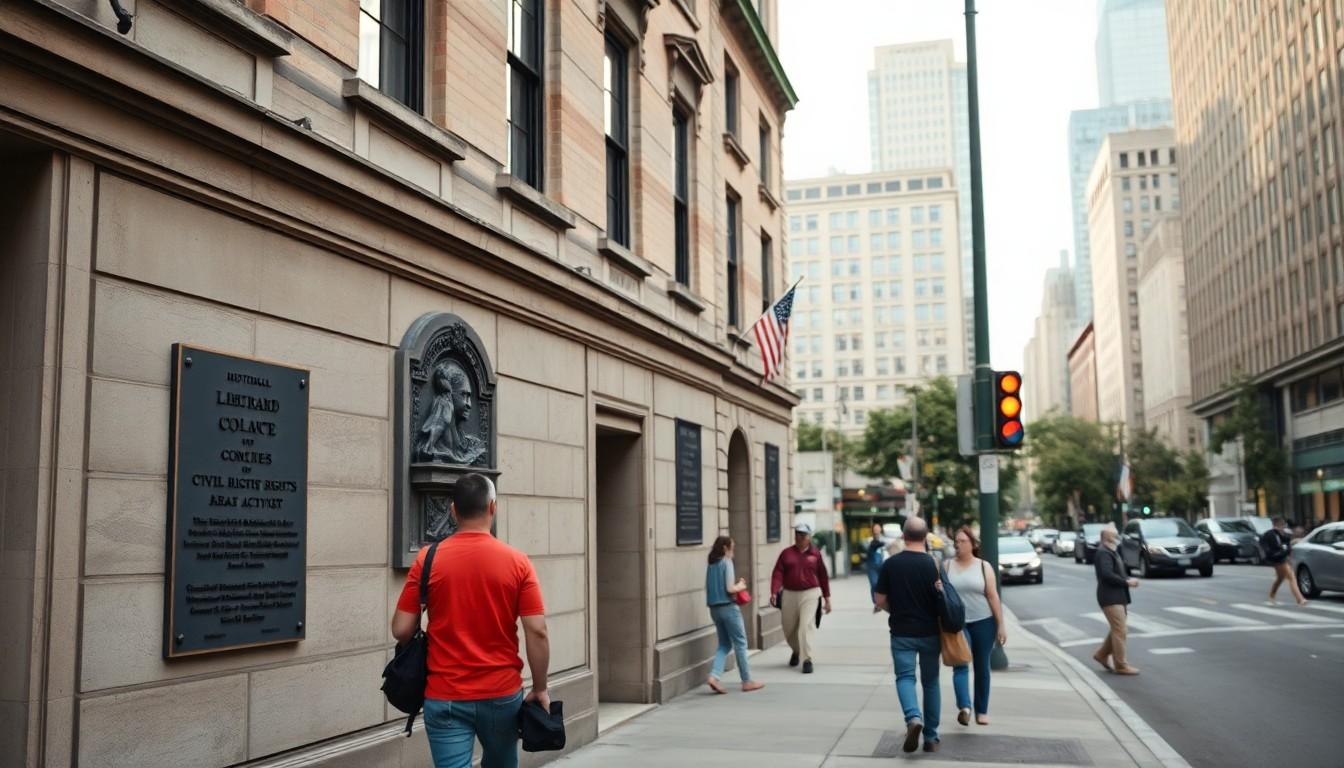
Readers are being reminded that Black LGBTQ+ history is built on courage, creativity and community care. From New York’s streets to the March on Washington, figures such as Marsha P. Johnson and Bayard Rustin helped reshape civil rights, leaving lessons that still matter for activists today.
Essential takeaways
- Their work crossed movements: Black LGBTQ+ leaders connected racial justice, queer liberation, housing and public health.
- Bayard Rustin organised at national scale: He helped coordinate the 1963 March on Washington and advanced non-violent protest.
- Marsha P. Johnson supported vulnerable people: Her activism included practical help for homeless transgender young people.
- Cultural influence mattered too: Ma Rainey and Langston Hughes expanded conversations around identity, desire and self-expression.
- The legacy remains active: Today’s campaigners are building on earlier work rather than starting from scratch.
History was made in streets, stages and meeting rooms
The most powerful lesson from Black LGBTQ+ history is that change rarely arrives through one grand gesture. It grows from marches, performances, organising, shelter, fundraising and the stubborn decision to keep showing up.
That spirit is visible in the lives of people who refused to fit neatly into the categories imposed on them. Some were openly queer, while others left clues in their writing, music and relationships that later generations have explored with fresh attention.
Marsha P. Johnson remains one of the clearest examples of activism rooted in immediate need. As LGBTQ+ Nation has reported, her work went beyond protest, helping provide food, shelter and support for transgender young people through STAR House.
Bayard Rustin proved that organising can change the course of history
Rustin's contribution to the civil rights movement was both strategic and immense. The National Park Service identifies him as a central organiser of the 1963 March on Washington, the landmark demonstration that brought demands for jobs and freedom to the heart of American politics.
The march wasn't simply a symbolic gathering. Its official programme, preserved by the US National Archives, shows how carefully the event was structured around speeches, music, religious participation and collective political pressure. Rustin understood that movements need emotion, but they also need logistics.
His sexuality meant he was often pushed away from the spotlight, yet his organisational influence was difficult to erase. The National Park Service's accounts of Rustin's life and places connected to his work offer a useful reminder that public recognition doesn't always match actual impact.
Marsha P. Johnson turned survival into solidarity
Johnson's legacy feels especially urgent because she linked liberation with care. Supporting people who had nowhere safe to sleep wasn't an optional extra to her activism; it was part of the fight itself.
That practical approach still resonates. Campaigns for LGBTQ+ equality often make headlines through demonstrations and legal victories, but community support is what helps people survive between those moments. A warm meal, a safe room or an advocate who knows where to turn can be as important as a speech.
There is also a sharper edge to her story. Johnson was a visible Black transgender figure in an era when many institutions offered little protection, and the circumstances surrounding her death have continued to prompt questions. Remembering her means celebrating her leadership while acknowledging the risks she faced.
Music and literature opened doors to more honest lives
Activism didn't happen only through organisations. Black queer and queer-associated artists challenged expectations from the stage and the page, creating room for audiences to imagine lives less constrained by public respectability.
Ma Rainey's blues carried a boldness that was unusual for a Black woman performing in the 1920s. Her reputation as the "Mother of the Blues" sits alongside a body of work and public persona that allowed space for bisexual expression at a time when openness could be dangerous.
Langston Hughes presents a more complicated case. He never publicly identified as gay, but scholars and readers have examined queer themes, same-sex desire and coded identity across his writing and social world. That uncertainty is part of the point: history doesn't always leave tidy labels, and it shouldn't be forced into them.
What today's activists can learn from their example
The shared lesson isn't that everyone must become a famous organiser, performer or writer. It's that progress depends on people using whatever tools they have, whether that's a fundraiser, a community group, a poem, a protest sign or a conversation at home.
For anyone wanting to support Black LGBTQ+ communities now, practical action matters. Donate to organisations led by affected communities, volunteer consistently, challenge discrimination when it appears and make sure local projects have the money and visibility to continue. Listening is useful, but backing that listening with time and resources is better.
The past also offers a warning. Movements can celebrate their most visible figures while overlooking the people who cooked, housed, marched beside or protected others. A fuller history makes space for those quieter forms of labour, too.
Their legacy isn't a museum piece
Black LGBTQ+ trailblazers didn't inherit easy conditions, and they didn't wait for permission to build something better. Their example asks today's generation to be brave, organised and generous in equal measure.
The work continues, but so does the inspiration. As one generation looks back, another is already deciding what future it wants to leave behind.
Carry the legacy forward through action, not admiration alone.
Source Reference Map
Story idea inspired by: [1]
Sources by paragraph:
- Paragraph 1: [2], [7]
- Paragraph 2: [3], [4]
- Paragraph 3: [7], [2]
- Paragraph 4: [2], [5]
- Paragraph 5: [4], [5]
- Paragraph 6: [3], [4]
- Paragraph 7: [7], [2]
- Paragraph 8: [7], [3]
- Paragraph 9: [2], [5]
- Paragraph 10: [3], [4]
- Paragraph 11: [4], [7]
- Paragraph 12: [2], [3]
- Paragraph 13: [4], [7]
- Paragraph 14: [2], [5]
- Paragraph 15: [3], [4]
- Paragraph 16: [2], [7]
- Paragraph 17: [3], [4]
- Paragraph 18: [2], [5]