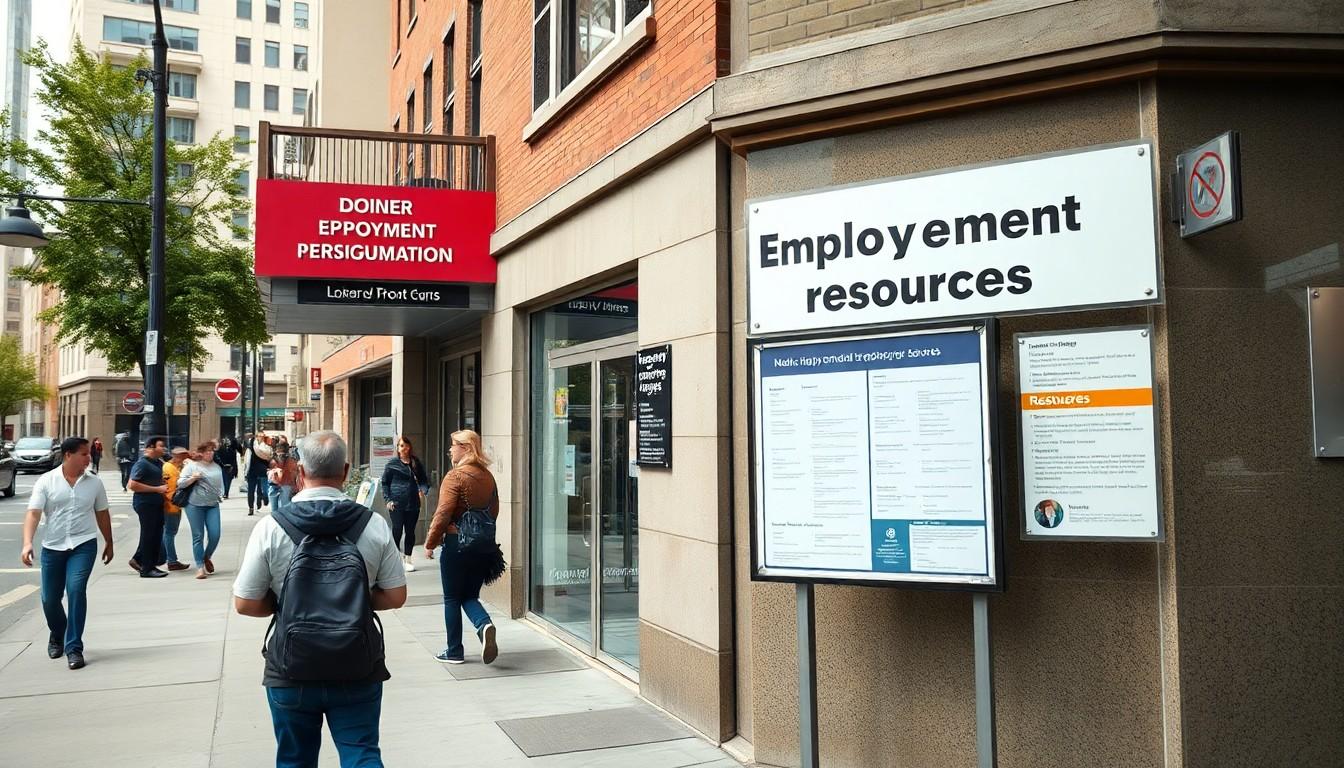
Job hunting can feel especially risky for trans and non-binary people, but practical support is available. From employment rights and inclusive job boards to legal advice, crisis services and community networks across the US, UK and beyond, these resources can make the search safer, clearer and less isolating.
Essential Takeaways
- Know your rights: Employment protections vary by country, state and sector, so check current local guidance before acting.
- Use specialist support: Trans-led legal organisations, LGBTQ+ charities and community centres can offer advice beyond a standard careers service.
- Protect your privacy: Decide in advance what you want employers to know about your name, documents, identity and transition.
- Look beyond job boards: Housing services, helplines and peer networks can be vital when work and personal safety overlap.
- Check the workplace culture: Policies, benefits, pronoun practice and restroom access often reveal whether an employer is genuinely inclusive.
A job search shouldn't come with a safety warning
For many trans men, trans women and non-binary people, employment isn't simply about finding a suitable salary and commute. A name mismatch on paperwork, an intrusive interview question or a hostile colleague can turn an ordinary application into a high-stakes experience.
The wider pattern is difficult to ignore. The US Transgender Survey found substantial unemployment and reported workplace discrimination, while UK research has described people hiding their identity during recruitment. Community support organisations, including the Transgender Law Center and Stonewall, continue to point jobseekers towards rights advice, workplace guidance and specialist services.
That context explains why a good transgender employment resource needs to do more than list vacancies. It should help someone understand their options, decide what to disclose and find support if a job search collides with housing, health or legal problems.
Start with rights, not guesswork
In the United States, the Supreme Court's Bostock decision confirmed that firing someone for being gay or transgender breaches Title VII's ban on sex discrimination. That protection covers areas such as hiring, dismissal, pay and promotion, although state rules and particular settings can add complexity. The Transgender Law Center offers employment information and further help for people trying to understand their position.
In the UK, gender reassignment is a protected characteristic under the Equality Act 2010. Acas guidance is an important starting point, particularly because protection can apply when someone proposes to transition, not only after medical treatment or a formal change of documents. Stonewall also provides signposting to support services and sector-specific help.
The details vary elsewhere. Canada, Australia, India and countries across Europe have different complaint routes and protections, while local rules can change. A community organisation or equality body is often the safest place to confirm what applies before confronting an employer.
Make applications work for you
Documents can create unnecessary friction, especially when an applicant's current name differs from older identity records. Where possible, use the name and contact details you want recruiters to use, then ask privately how the employer handles payroll, identity checks and display names.
A short, confident CV is usually better than a detailed explanation of every gap. You can describe time away as a career break, training period, caring responsibility or volunteering, provided the wording is accurate. References should ideally come from people who know your current name and can speak clearly about your work.
Interviews deserve a little preparation too. Decide which questions you're comfortable answering and practise a calm response to anything that wanders into medical history, bodies or bathrooms. It can also help to ask about anti-harassment procedures, benefits, flexible working and how the organisation supports trans staff. The answer, and the tone behind it, can tell you a great deal.
Specialist boards are useful, but local networks matter more than you might expect
Searching for "transgender friendly jobs near me" can produce a mixed bag. LGBTQ+ job boards are a useful first filter, but they shouldn't be treated as a guarantee. Read the employer's equality policy, look for evidence of trans-inclusive benefits and check whether current staff describe a respectful culture.
Local LGBT centres, trans-led groups and community organisations can be even more valuable. They may know which employers have a good reputation, offer mentoring or connect people with training and legal advice. The Transgender Law Center's employment resources and broader help pages are particularly useful for US-based readers, while Stonewall's support directory can guide people in the UK.
The same principle applies internationally. In India, employment fairs and community organisations have created routes into work, although access remains uneven. In Australia, Canada and Europe, national equality bodies and local LGBTQ+ groups can help jobseekers navigate regional rules rather than relying on a generic global promise.
When employment and housing problems overlap
A job search becomes much harder when someone is facing homelessness, family rejection or an urgent safety concern. In those moments, a shelter, crisis line or community advocate may be more immediately useful than another application form.
National LGBTQ+ directories such as QORRN and PCCN offer routes into wider support, while specialist organisations can help locate services by region. Some providers offer emergency accommodation, food, counselling, legal referrals or help replacing important documents. Availability can change, so call ahead and ask directly whether the service supports trans and non-binary people.
Keep identification, medication and essential contact details together, and tell someone you trust where you're staying if it's safe to do so. These are small preparations, but they can make a frightening situation feel slightly less chaotic.
What inclusive employers should do now
Employers don't need a complicated manifesto to improve the experience. They need clear non-discrimination rules, confidential complaint routes and managers who understand names, pronouns and privacy. All-gender toilets and inclusive health benefits matter too, but everyday respect is the foundation.
Recruitment teams should avoid unnecessary questions about transition or personal history, make it possible to use a chosen name where systems allow and explain any legal-name requirement plainly. Advertising roles through trans-focused boards and community partners is another practical way to show that inclusion isn't just decorative wording on a careers page.
For jobseekers, the best workplaces usually make expectations clear before the first day. That transparency is reassuring. Nobody should have to decode whether they're safe simply by studying an employer's logo.
Start with one trusted resource, one realistic application or one call for advice. It's a small step, but it can make the search feel less lonely and more manageable.
Source Reference Map
Story idea inspired by: [1]
Sources by paragraph:
- Paragraph 1: [2], [3]
- Paragraph 2: [4], [5]
- Paragraph 3: [2], [6]
- Paragraph 4: [3], [7]
- Paragraph 5: [2], [6]
- Paragraph 6: [3], [5]
- Paragraph 7: [2], [7]
- Paragraph 8: [4], [5]
- Paragraph 9: [2], [6]
- Paragraph 10: [4], [5]
- Paragraph 11: [3], [7]
- Paragraph 12: [2], [6]
- Paragraph 13: [3], [5]
- Paragraph 14: [2], [7]
- Paragraph 15: [4], [6]
- Paragraph 16: [3], [5]