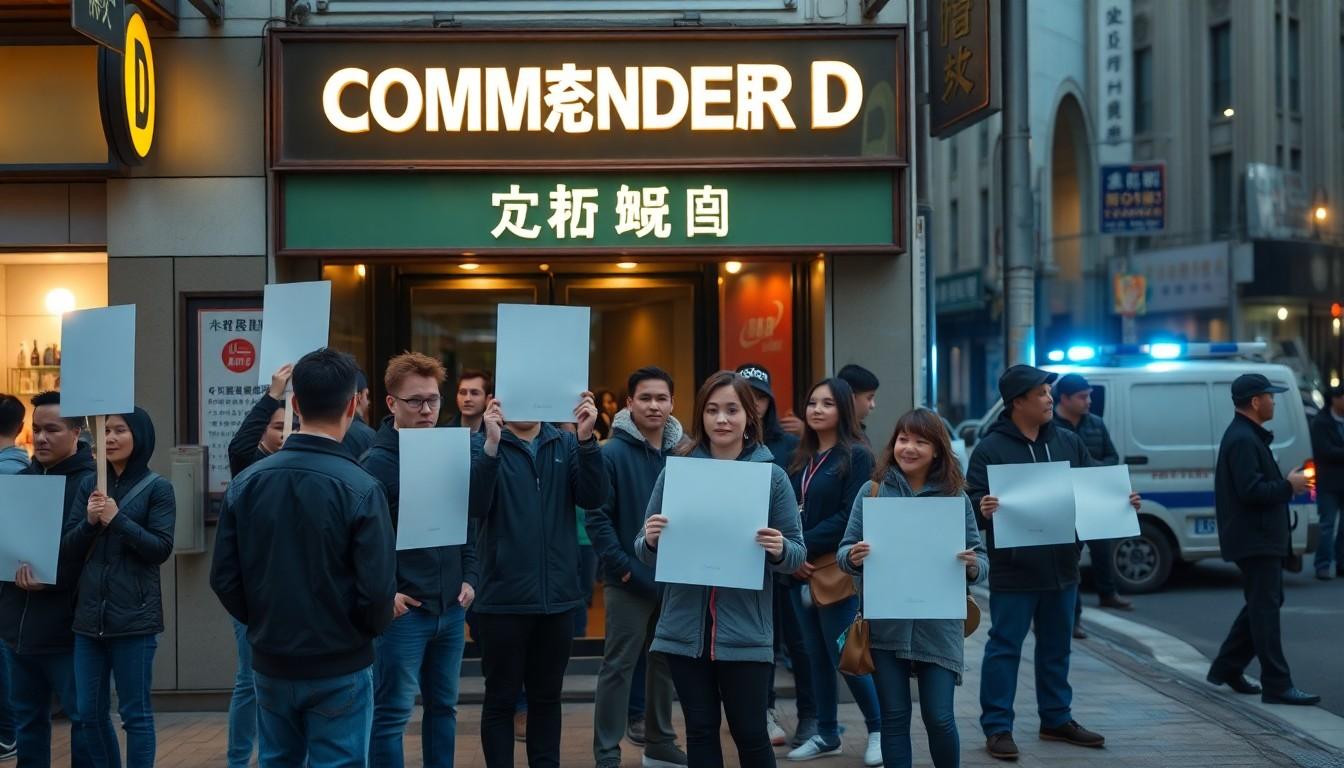
Activists have gathered outside Taipei's Red House after a police raid on Commander D, a well-known LGBTQ bar, triggered accusations of discriminatory enforcement and inappropriate remarks about disabled people. The dispute has reignited questions about police accountability, privacy and whether Taipei's reputation as a friendly city matches experiences on the ground.
Essential Takeaways
- Police action disputed: Officers entered Commander D with a search warrant, according to campaigners, while police reportedly described the visit as an identity check.
- Five-hour operation: The action continued for several hours, intensifying concerns among customers and nearby supporters.
- Three demands issued: Groups want an explanation, apologies and accountability from the Wanhua precinct, Taipei police and the city government.
- Equality concerns: Campaigners say the incident echoes earlier controversies over policing LGBTQ spaces and marginalised communities.
- Investigation matters: Claims about officers' conduct, media access and the treatment of the venue manager require a clear, independent account.
Protesters say the raid crossed a line
The dispute began after repeated complaints alleging nudity or improper clothing inside Commander D, a popular LGBTQ venue in Taipei's Ximending district. Police from the Wanhua precinct arrived with legal authority to enter, but the operation quickly became contentious.
Campaigners say officers declined to show the warrant to people at the scene and made remarks that were offensive towards disabled people. They also allege that the venue manager was handcuffed and forced to kneel while challenging the police action. Those are serious claims, and they deserve evidence-led answers rather than a battle of competing statements.
The atmosphere outside the Red House was tense but determined, with civic groups gathering to protest what they described as excessive enforcement. The Taiwan News, Taipei Times and China Post reports listed for this story provide related context for the wider dispute.
Why the five-hour search has caused confusion
One of the sharpest points of disagreement concerns what actually happened inside the bar. Activists describe a search lasting roughly five hours, while police reportedly said officers were carrying out checks and confirming identities rather than conducting a search.
That distinction isn't merely semantic. A search warrant, an identity check and a wider inspection carry different legal implications, especially when private customers, staff and journalists are present. If the police account differs from what witnesses experienced, a detailed timeline would help settle the argument.
It also matters because public confidence is built on clarity. A dismissive response to criticism can make an already fraught situation feel even more adversarial, particularly for communities that have long worried about unequal treatment.
The privacy question is just as important
Campaigners further objected to journalists entering the venue alongside police and taking what they called sensational images. They argue that this may have compromised investigative confidentiality and exposed customers in a highly sensitive setting.
For LGBTQ venues, privacy isn't an abstract concern. People may be visiting a bar with friends, exploring their identity or simply looking for a safe night out. Images that turn private customers into spectacle can cause real harm, even when no criminal allegation is ultimately proved.
That doesn't mean journalists should never report on police operations. It does mean access, consent and the public interest need careful handling. The related coverage from Taiwan News, Taipei Times and China Post underscores why the issue has attracted attention beyond the immediate confrontation.
Activist groups set out three demands
The protesting organisations want the Wanhua precinct to explain the operation and apologise for officers' alleged attitude and discriminatory language. They also want Taipei police to clarify why the venue was targeted and whether the enforcement was proportionate.
Their third demand is aimed at Taipei City Hall. Activists are asking Mayor Chiang Wan-an to explain the city's approach to LGBTQ communities and review whether recent enforcement decisions are consistent with its claims of being inclusive.
Those requests don't decide whether the police acted lawfully. They do establish a practical route forward: publish the relevant facts, examine any complaints impartially and explain what safeguards will prevent similar disputes. A transparent review would be more useful than trading accusations through the media.
Taipei's LGBTQ-friendly image faces a test
Taipei has long promoted itself as one of Asia's more progressive cities, so allegations involving an LGBTQ venue carry symbolic weight. Supporters say the city should be judged not only by festivals, policies or international branding, but also by how officials behave during difficult, ordinary encounters.
The police may argue that the operation was legally justified, and that position should be tested against the warrant, witness accounts and any available footage. At the same time, legality alone doesn't settle every question about language, dignity or proportionality.
For now, the most constructive next step is a clear account from all sides. People should be able to enjoy a night out without feeling that their identity makes them a softer target, and public authorities should be able to enforce the law without leaving avoidable doubts behind.
It's a small venue dispute with much bigger questions about trust, equality and accountability.
Source Reference Map
Story idea inspired by: [1]
Sources by paragraph:
- Paragraph 1: [2], [3]
- Paragraph 2: [4], [5]
- Paragraph 3: [6], [7]
- Paragraph 4: [2], [4]
- Paragraph 5: [3], [5]
- Paragraph 6: [6], [7]
- Paragraph 7: [2], [3]
- Paragraph 8: [4], [5]
- Paragraph 9: [6], [7]
- Paragraph 10: [2], [4]
- Paragraph 11: [3], [5]
- Paragraph 12: [6], [7]
- Paragraph 13: [2], [3]
- Paragraph 14: [4], [5]
- Paragraph 15: [6], [7]