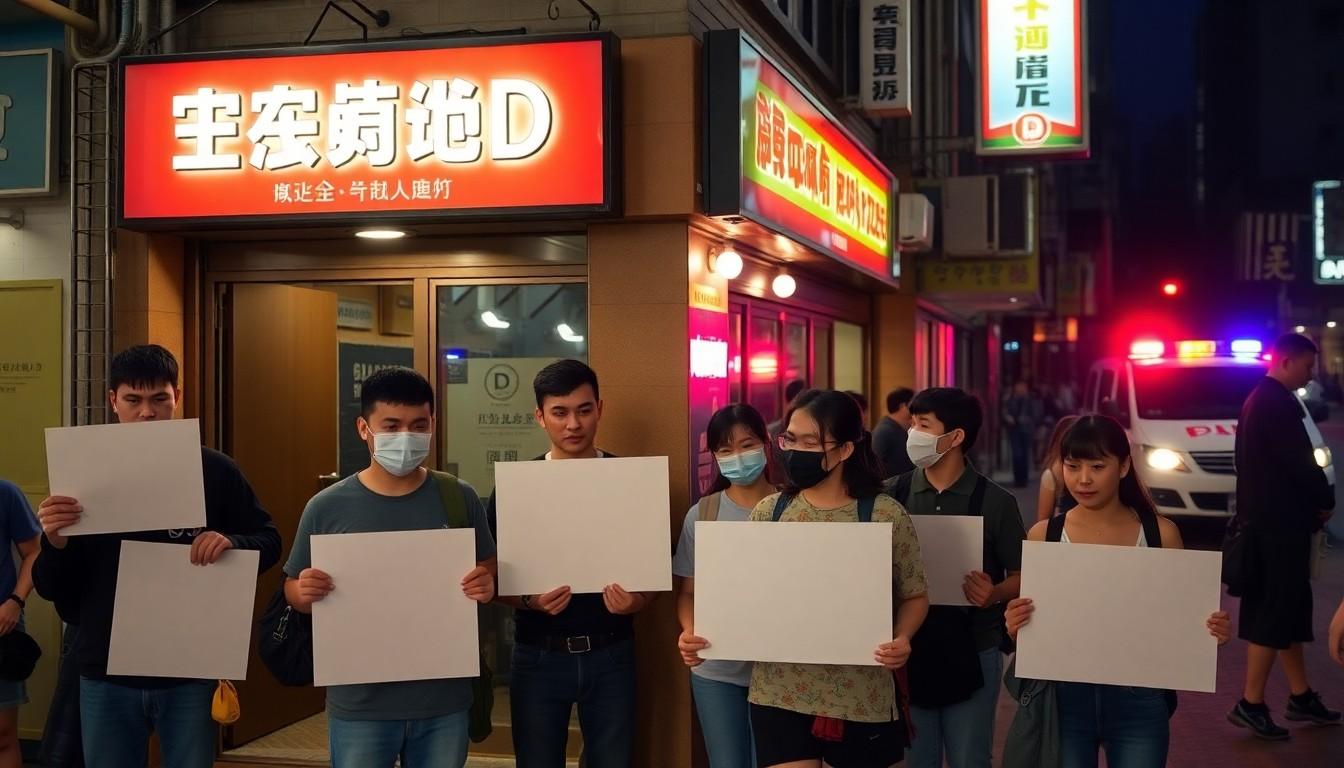
Protesters have challenged a rare police raid at a Taipei gay bar, saying the action clashes with Taiwan's liberal reputation and legal protections. The incident comes just before the city's major Pride event, raising fresh questions about public-decency laws, police conduct and what queer-friendly really means in practice.
Essential Takeaways
- Police action: Officers took 51 people in for questioning and arrested the bar's owner.
- Legal basis: Police cited suspected breaches of Taiwan's public-decency rules.
- Community response: About 100 LGBTQ+ supporters marched to a police station in protest.
- Wider significance: Taiwan legalised same-sex marriage in 2019, making the raid especially jarring for many residents.
- Timing matters: The incident happened shortly before Taipei's large Pride celebration.
A raid that shocked Taipei's LGBTQ+ community
The strongest reaction wasn't simply to the use of a warrant. It was to the sight of police entering Commander D, a gay bar in Taipei's Wanhua district, and removing customers for questioning. For a community used to seeing Taiwan presented as one of Asia's most welcoming places for LGBTQ+ people, the scene felt deeply unsettling.
Police detained 51 people during the Saturday afternoon operation and arrested the bar's owner, according to Reuters reports carried by several international outlets. Authorities said the raid followed a complaint and involved suspected offences against public morality. The timing, so close to Pride, made an already controversial action feel even more pointed.
Why public-decency laws are at the centre of the dispute
Police said those detained were suspected of breaching a law that prohibits deliberately exposing the body or displaying a lascivious pose in a public or publicly accessible place. Officials described the operation as a response to a complaint, rather than a move aimed at LGBTQ+ people specifically.
That explanation hasn't eased the anger. Critics argue that broad morality laws can be applied unevenly, particularly in spaces associated with sexual minorities. The debate is therefore about more than one venue. It's about whether rules intended to protect public standards can end up making private lives feel publicly policed.
Taiwan's progressive image faces an uncomfortable test
Taiwan became the first place in Asia to legalise same-sex marriage in 2019, a milestone that helped establish its reputation for LGBTQ+ rights. Taipei's Pride event is also one of East Asia's biggest, drawing large crowds and international attention.
But legal progress doesn't automatically remove prejudice, uncertainty or heavy-handed enforcement. The raid has exposed that gap in a very visible way. A city can celebrate diversity in public and still leave minority communities wondering how secure their everyday spaces really are.
Protesters say the police response felt frightening
Roughly 100 people marched to the relevant police station on Sunday, turning up the volume on a dispute that might otherwise have remained buried in procedural language. Protesters described the raid as violent and frightening, while others said it damaged Taipei's claim to be queer-friendly.
One detained customer, identified by the family name Wen, told Reuters that the operation had been scary. Protester Kang Yang also said he was angry, particularly because the incident happened during Pride season. Those reactions underline the human cost of a raid: for people inside the bar, this wasn't an abstract argument about statutes. It was a sudden loss of safety.
What happens next for Taipei's Pride reputation?
A precinct chief briefly addressed the protesters and said police respected a pluralistic society and would protect citizens' rights. The mayor, Chiang Wan-an, has previously attended Taipei Pride and voiced support for the LGBTQ+ community, adding a political layer to the controversy ahead of an election.
The immediate question is whether authorities will clarify what happened inside the bar, how the warrant was obtained and why so many people were detained. Longer term, Taiwan's reputation will depend not only on its landmark legislation, but on whether LGBTQ+ residents can trust institutions to treat them fairly when complaints involve sexuality and public morality.
For many in Taipei, the issue is painfully simple: rights feel meaningful only when they hold up in ordinary places, including a crowded bar on an ordinary afternoon.
A progressive image matters, but consistent protection matters more.
Source Reference Map
Story idea inspired by: [1]
Sources by paragraph: