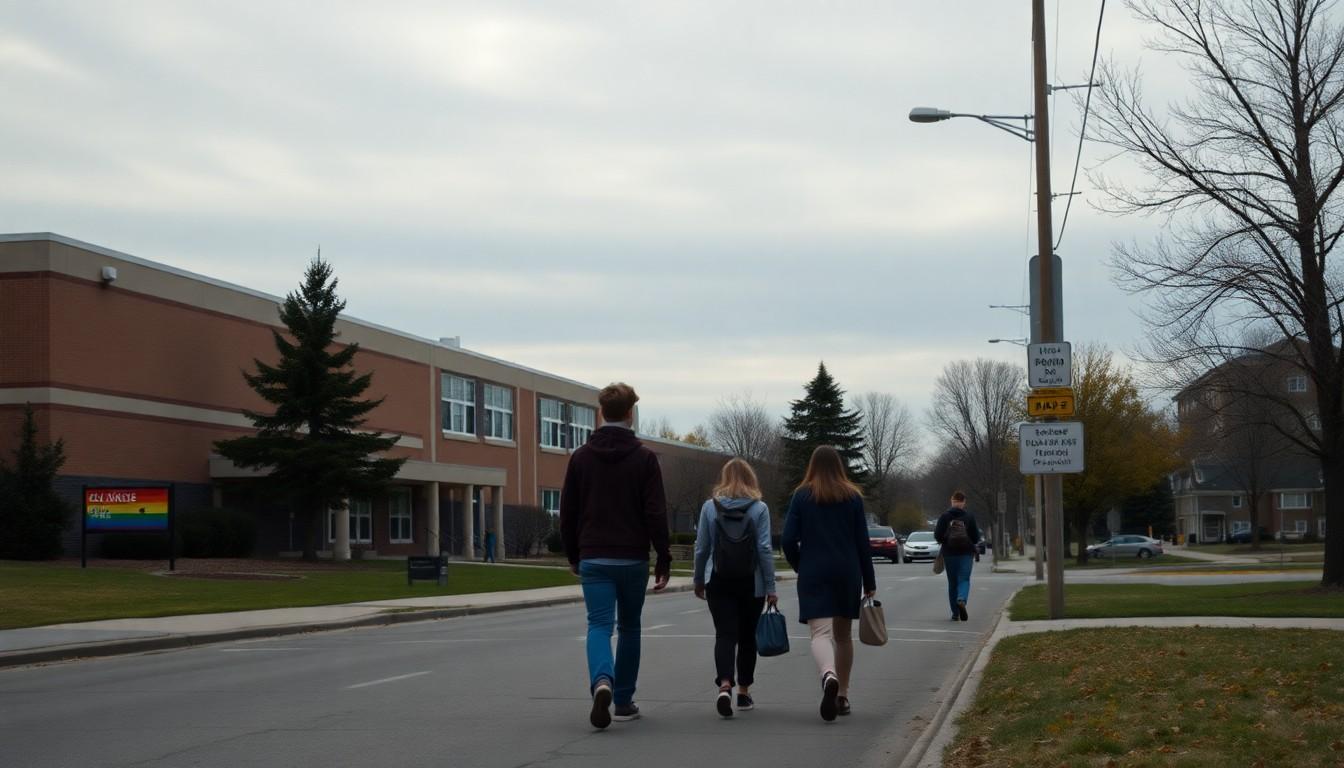
The latest US CDC figures suggest a modest fall in teenagers identifying as bisexual, particularly among girls. The change matters because sexuality surveys reflect more than identity alone: they can also reveal how safe young people feel discussing who they are in a tense political climate.
Essential Takeaways
- Bisexual identification has dipped: The decline is most visible among younger US teenagers, especially girls.
- Levels remain historically high: A small fall doesn't erase the broader rise seen over previous years.
- The climate may matter: Greater political and social hostility can affect how openly teenagers answer surveys.
- Older groups moved differently: Some adult age brackets continued to report small increases in LGB identification.
- The data needs care: Changes to the published survey have prompted questions about what can be compared reliably.
A small fall with a much bigger question behind it
The headline figure is a dip in bisexual identification among US teenagers, but the more revealing detail sits beneath it. According to reporting on the latest CDC Youth Risk Behaviour Survey data, younger high-school cohorts show the clearest movement, with girls accounting for much of the decline.
That doesn't automatically mean fewer teenagers experience attraction to more than one gender. A survey answer is shaped by language, trust and the feeling that it's safe to be candid. In a hostile environment, even a simple tick-box can feel surprisingly public. The CDC's survey programme provides the wider framework for tracking health and behaviour among American pupils. [7]
Why girls are at the centre of the change
The shift appears especially marked among teenage girls, according to coverage from Gospeller and The Maine Wire. That makes the result notable because girls have been a major part of the long-term rise in bisexual identification among young people.
There are several possible explanations, and none can be proved by one survey alone. Some teenagers may be reconsidering labels as they grow older, while others may still feel bisexual but choose a broader or less specific description. The most uncomfortable possibility is that social pressure is making honesty less attractive. [3], [4]
Identity figures can follow the mood of the country
Over the past decade, more visible representation and legal recognition helped make LGBT identities easier to discuss. Earlier research linked reduced stigma with better outcomes for queer people, including changes in reported suicidal thoughts after same-sex marriage protections expanded across the US.
Now the political atmosphere is moving in the opposite direction. Public arguments over LGBT rights, school policies and gender diversity can turn identity into a culture-war badge rather than a personal description. As reporting from The Maine Wire and Inkl suggests, that background is important when interpreting lower figures among younger pupils. [4], [5]
Is it a phase, or a change in confidence?
The phrase "just a phase" is tempting, but it's a blunt tool. Sexuality can develop over time, and some people do change the label they use. That doesn't make an earlier identity false, nor does it explain why one age group might shift more sharply than another.
A more useful reading is that the figures may capture confidence as much as identity. If a teenager worries about family reactions, school gossip or political judgement, they may avoid a label that once felt comfortable. For parents, teachers and youth workers, the practical lesson is simple: privacy and non-judgement matter. [3], [5]
Adult trends point to a more complicated picture
The broader pattern isn't moving in one direction. Reporting on the data indicates small increases in LGB identification among several adult age groups, including people aged 18 to 24, 35 to 44 and 45 and over, while the 25 to 34 group recorded a modest reduction.
That contrast makes a single explanation difficult. If bisexuality were merely fading as a fashionable teenage label, we'd expect a cleaner pattern across the population. Instead, age, politics, wording and willingness to disclose may all be interacting. Gallup's wider tracking of LGBT identification offers useful context, but the numbers still need to be read as a snapshot rather than a verdict. [2], [6]
What to watch in the next surveys
There are two obvious tests ahead. First, researchers will want to know whether similar changes appear in other countries where LGBT young people face rising hostility, including the UK. Second, future US figures may show whether identification rises again if the political climate becomes less punitive and misinformation loses its grip.
There is also a data-quality question. Reports have noted that parts of the CDC material were edited before publication, including the removal of information relating to gender diversity. That makes comparisons more difficult and gives readers another reason to avoid dramatic conclusions from a single release. [5], [7]
The numbers have dipped, but the story is still about visibility, trust and who feels safe enough to answer honestly.
Source Reference Map
Story idea inspired by: [1]
Sources by paragraph: