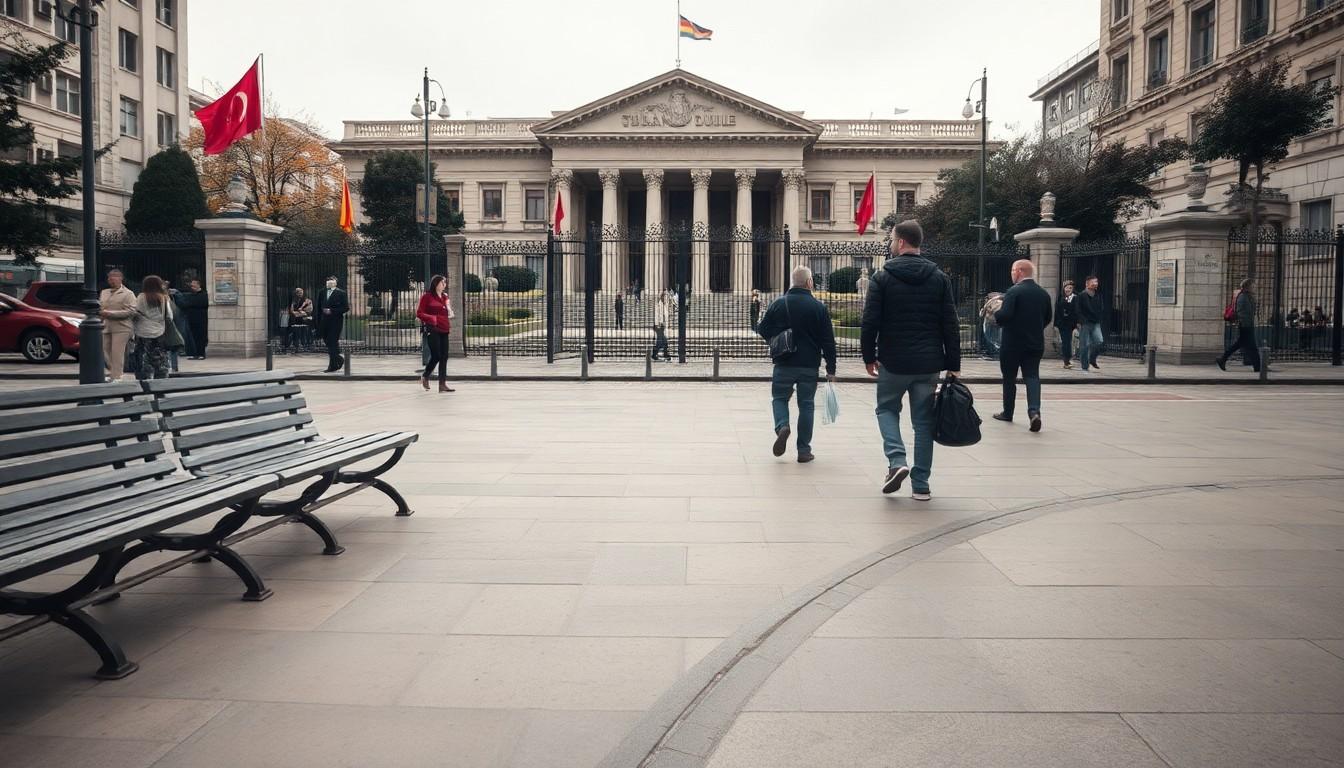
Rights groups and journalists are reporting a sharp escalation in pressure on LGBTQ people in Turkey, from restrictions on Pride gatherings to hostile political rhetoric and alleged attacks. The pattern matters well beyond Istanbul: it raises urgent questions about safety, free expression and whether basic protections are being steadily dismantled.
Essential Takeaways
- Pride restrictions are growing: Authorities have repeatedly blocked or tightly controlled LGBTQ demonstrations.
- Hostility is becoming institutional: Reports describe anti-LGBTQ rhetoric and policies spreading across public life.
- Violence remains a serious concern: Activists have documented discriminatory, racist and hate-motivated attacks.
- Civil society is under pressure: LGBTQ organisations and rights defenders face surveillance, legal threats and public vilification.
- The outlook is uncertain: Campaigners warn that normalising repression could make everyday discrimination harder to challenge.
A new level of pressure is being felt
The warning signs are no longer isolated. Across Turkey, LGBTQ people are facing a mix of restrictive policing, hostile messaging and legal uncertainty that can make ordinary public life feel precarious. Amnesty International has described restrictions on Pride events alongside violence and intimidation directed at protesters.
For many people, the impact is intensely practical. A march that once offered visibility and solidarity can instead involve roadblocks, arrests or the fear of being photographed. The atmosphere isn't merely political; it reaches into workplaces, universities, families and online spaces.
Pride bans have become a recurring flashpoint
Pride events have increasingly become a test of Turkey's approach to peaceful assembly. Amnesty International reported that authorities used bans, police deployments and force against Pride protesters, arguing that such measures should not be repeated.
The restrictions are often defended by officials on public-order or morality grounds. Critics say that explanation turns a peaceful gathering into a supposed threat before anyone has even raised a banner. That matters because freedom of assembly isn't a special privilege for popular causes; it's a core democratic protection.
Anti-LGBTQ rhetoric is spreading through public life
The pressure also appears in the language used by politicians and public institutions. Le Monde reported on an increasingly aggressive anti-LGBTQ campaign in Turkey, while Freedom House described a broader crackdown involving state-linked hostility and shrinking civic space.
This kind of rhetoric can have a chilling effect even when it doesn't immediately produce a new law. It signals who may be treated as suspicious, unwelcome or expendable. Human Rights Foundation of Turkey reporting, cited by Kaos GL, has also documented discriminatory, racist, anti-LGBTQ and hateful attacks, showing how public language can echo in everyday abuse.
Why legal uncertainty makes people more vulnerable
Turkey's LGBTQ community isn't facing only one clearly defined prohibition. Instead, campaigners describe a patchwork of administrative pressure, prosecutions, public threats and restrictions that can be difficult to predict or challenge.
Kaos GL has reported that anti-LGBTQ practices became increasingly systematic in 2024. That word is important. When pressure appears repeatedly across policing, political communication and public institutions, people may begin censoring themselves before authorities take direct action. The quiet effects can be as damaging as the dramatic ones.
What happens next?
Rights organisations are urging Turkish authorities to protect peaceful assembly, investigate attacks and stop using discriminatory language. Amnesty International has stressed that protesters' rights must be respected, while Freedom House has linked the treatment of LGBTQ people to Turkey's wider democratic decline.
The international response will matter, but so will sustained attention inside the country. Every blocked march and every unchallenged hate incident risks making repression look routine. For LGBTQ people and their allies, visibility remains difficult, but disappearing from public life would hand the loudest opponents an even easier victory.
It's a small distinction with huge consequences: disagreement is not a licence for persecution.
Source Reference Map
Story idea inspired by: [1]
Sources by paragraph: