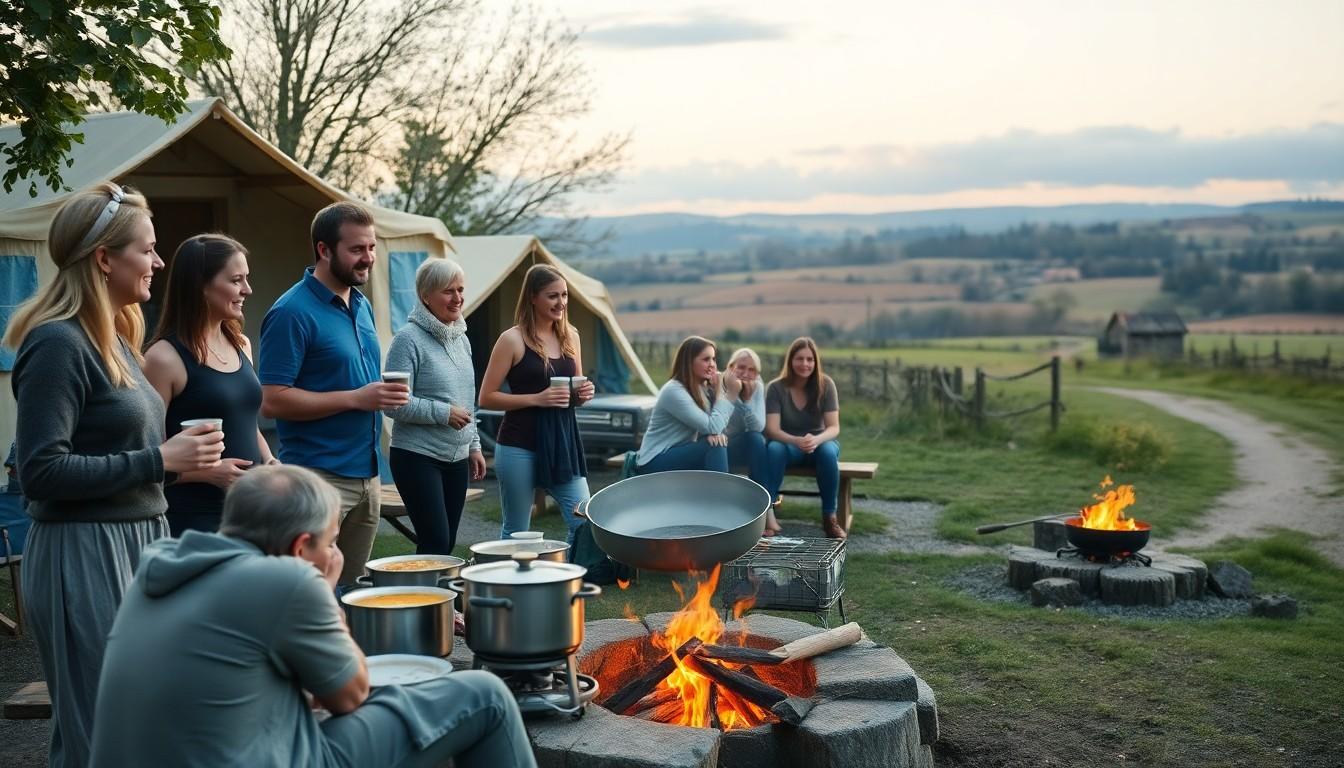
A new wave of queer residential retreats is giving women, non-binary and trans people space to relax, connect and feel unapologetically themselves. From countryside campfires to creative workshops, these gatherings offer something many people are quietly craving: community without explanation.
Essential takeaways
- Nature creates breathing room: Rural venues can make queer gatherings feel private, calm and genuinely restorative.
- Participation matters: Shared cooking, cleaning and activities help strangers become a temporary community.
- The appeal is broader than nightlife: Hiking, crafts, swimming, music and low-key conversation all have a place.
- These spaces meet a real need: Queer attendees often value environments where intrusive questions and constant self-explanation disappear.
- There are different ways to connect: Residential retreats sit alongside online communities, creative networks and queer sports groups.
Queer retreats offer more than a weekend away
There’s something quietly powerful about singing around a fire with people who understand the joke, the reference and the occasional awkward question you’re relieved not to hear. At Dyketopia, a countryside residential brought queer women, non-binary and trans attendees together for music, shared meals and a distinctly campy sense of escape.
Metro’s account of the event describes a farmhouse setting near Oswestry, complete with glamping accommodation, animals, workshops and a campfire singalong. The details matter because this wasn’t simply a party transplanted into a field. It was designed as a slower, more collaborative kind of queer social space.
That idea reflects a wider appetite for gatherings built around belonging rather than performance. Dykepool, for instance, presents itself as a community-led space for connection and shared queer culture, while Saturn Returned and 10th Muses point towards other forms of identity-led creativity and community building.
Why rural settings feel so restorative
For many people, queer life is associated with busy bars, packed club nights and cities where meeting others can feel easier. Those spaces can be brilliant, but they aren’t everyone’s idea of a good time, particularly when what you need is rest rather than another loud room.
The rural setting described by Metro offered a different rhythm, with rolling countryside, outdoor activities and enough space for conversations to unfold naturally. A three-hour hike crossing the England-Wales border sounds ambitious, but it also gives people something to do together when small talk starts to run dry.
There’s practical value in that balance. A good queer residential doesn’t demand constant emotional openness; it lets people join a yoga session, make something, wander outdoors or sit quietly with a drink. Sometimes belonging begins with simply not having to fill every silence.
Shared chores turn strangers into a community
One of the most effective details in the Dyketopia format is that attendees are expected to contribute. Cooking, tidying and helping with activities may sound ordinary, but those jobs create easy, low-pressure contact between people who might otherwise remain in separate friendship groups.
The result is less like attending a formal event and more like joining a temporary household. Metro’s writer described a weekend filled with crafts, wild swimming, hiking, a gay prom and music, with the collaborative structure running underneath it all.
That approach has echoes across queer community projects. Dykepool’s online presence focuses on bringing people together, while Dyke Soccer offers another route into connection through sport. Not everyone wants to bond over a workshop or campfire, so the strongest communities tend to offer several doors in.
What to look for in a queer residential retreat
If you’re considering a queer residential retreat, start with the basics. Check who the event is for, whether the accommodation is shared, what accessibility support is available and how travel works once you arrive. A beautiful rural site can be wonderful, but it should also be transparent about practical arrangements.
It’s worth looking at the programme too. A packed schedule may suit energetic social butterflies, while a looser weekend might work better if you’re anxious about joining a group. Look for a mix of organised activities and unstructured time, plus clear guidance about alcohol, pronouns, safeguarding and expected behaviour.
You don’t need to arrive with a ready-made friendship group. The experience described by Metro began with familiar nerves about meeting strangers, but the shared setting and gentle activities made introductions easier. In other words, you probably won’t be the only person wondering where to stand on the first evening.
A growing ecosystem of queer connection
Residentials are part of a much bigger picture. Queer community now stretches across grassroots events, online spaces, creative projects, sport and informal friendship networks. Organisations such as 10th Muses show how creativity can become a meeting point, while Dykes Soccer demonstrates the social pull of activity and teamwork.
Dyketopia’s appeal lies in bringing several of those ingredients together. There’s nature, silliness, music, movement and the rare luxury of being around people who don’t need a glossary for your life. The event’s campfire, prom and countryside hike sound playful, but the emotional effect is more serious.
For anyone who has felt isolated, newly out, burnt out or simply tired of explaining themselves, that kind of weekend can offer a reset. It won’t solve everything, of course, but a few days of ease can remind people what connection feels like. And sometimes that reminder arrives at exactly the right moment.
A little queer joy, shared generously, can make the world feel more liveable.
Source Reference Map
Story idea inspired by: [1]
Sources by paragraph:
- Paragraph 1: [5], [3]
- Paragraph 2: [1], [5]
- Paragraph 3: [2], [4]
- Paragraph 4: [1], [6]
- Paragraph 5: [1], [7]
- Paragraph 6: [3], [5]
- Paragraph 7: [6], [7]
- Paragraph 8: [5], [3]
- Paragraph 9: [1], [5]
- Paragraph 10: [5], [6]
- Paragraph 11: [1], [4]
- Paragraph 12: [3], [7]
- Paragraph 13: [1], [5]
- Paragraph 14: [4], [6]
- Paragraph 15: [1], [5]
- Paragraph 16: [2], [3]
- Paragraph 17: [4], [7]
- Paragraph 18: [5], [6]
- Paragraph 19: [1], [3]
- Paragraph 20: [1], [5]
- Paragraph 21: [2], [4]
- Paragraph 22: [3], [6]
- Paragraph 23: [1], [5]
- Paragraph 24: [4], [7]
- Paragraph 25: [1], [5]
- Paragraph 26: [3], [6]
- Paragraph 27: [1], [5]