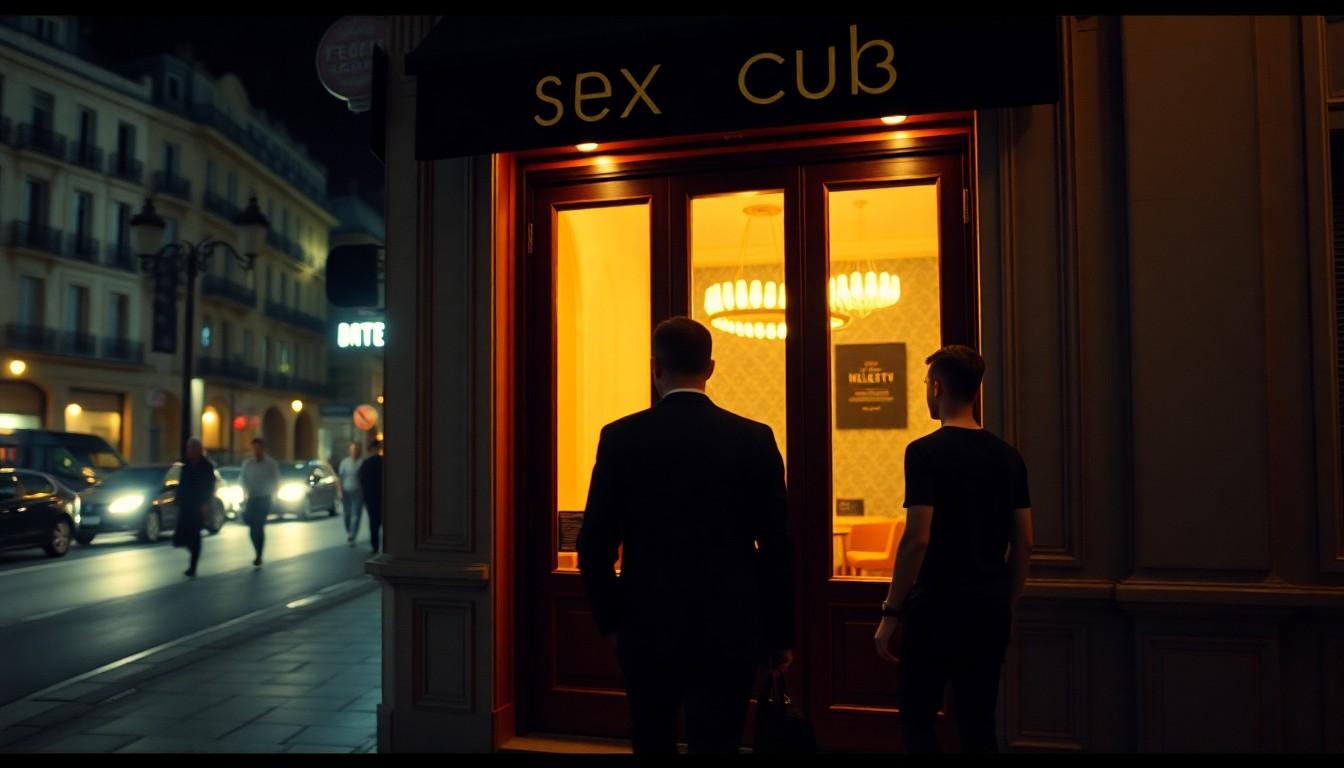
Viewers are revisiting the most memorable gay sex scenes in queer film and television, from Parisian club intimacy to the tender tension of British romance. These moments matter because they pair erotic charge with character, vulnerability and story, proving that the best scenes linger for far more than their shock value.
Essential Takeaways
- Intimacy beats spectacle: The most memorable scenes often balance desire with tenderness, uncertainty or emotional risk.
- Paris sets the tone: Paris 05:59: Théo & Hugo remains a standout for its immersive, unusually direct opening.
- British romance still resonates: My Beautiful Laundrette, Weekend and God’s Own Country use sex to explore connection and identity.
- Fantasy has its place: American Gods pushes queer television into surreal, mythic territory with striking visual effects.
- Context matters: Consent, safer sex and emotional stakes can make an erotic scene feel more believable and affecting.
Why these scenes stay with viewers
The strongest gay sex scenes aren't necessarily the most explicit. Often, it's the pause before a kiss, a nervous glance or the quiet aftermath that gives them staying power. Desire feels more compelling when characters seem changed by what has happened.
That balance is especially clear in Paris 05:59: Théo & Hugo. The film begins inside a Paris sex club, immersing viewers in a crowded, ecstatic environment before narrowing its focus to two men who must confront the consequences of a night that suddenly feels more serious. Roger Ebert's review highlights how the film moves from physical immediacy towards romance and emotional responsibility.
It’s a bold opening, but not an empty provocation. As the film develops, the night becomes a question about trust, health and whether an instant connection can survive daylight.
Paris 05:59: Théo & Hugo makes sex part of the story
What makes Paris 05:59: Théo & Hugo distinctive is its lack of tidy separation between sex and plot. The encounter isn't presented as a detachable set piece. Instead, it establishes the characters, their attraction and the unease that follows.
The film's extended opening can feel confrontational, yet its real achievement is tonal. According to Ioncinema, the directors combine explicit physicality with an increasingly intimate portrait of two strangers trying to work out what they mean to one another.
That approach has influenced the way viewers talk about queer cinema. A scene can be frank without being emotionally vacant, and the most persuasive erotic storytelling often leaves room for awkwardness, care and uncertainty.
From My Beautiful Laundrette to Weekend, realism wins
Older films remain part of the conversation because they understand that chemistry doesn't need constant nudity. My Beautiful Laundrette uses a cramped, working environment to heighten the tension between Omar and Johnny, while its wider story examines race, class, family pressure and sexuality.
The film's laundrette is more than a backdrop. Its bright machines, public setting and hidden corners create a delicious contrast between ordinary commercial life and private desire. Recent critical discussion of the film has also returned to its complicated politics and enduring emotional appeal.
Andrew Haigh's Weekend takes a quieter route. Its central encounter feels spontaneous and slightly awkward, with the kind of physical closeness that seems to belong to real people rather than polished fantasy. That naturalism is precisely why many viewers remember it.
Why British queer romance still hits differently
God's Own Country is often compared with Brokeback Mountain, but its northern English setting gives the story a harsher, more tactile atmosphere. Mud, cold weather, farm work and isolation make every moment of tenderness feel hard-won.
The attraction between Johnny and Gheorghe grows through proximity and labour rather than grand declarations. Their physical relationship is charged, but it also becomes a route towards trust and change. That combination helps explain why the film's intimate scenes feel powerful without needing elaborate staging.
Maurice offers a more restrained version of the same idea. Its bedroom-window encounter depends on anticipation, secrecy and the thrill of crossing a social boundary. Sometimes suggestion does the heavy lifting, and cinema knows that the imagination can be an enthusiastic collaborator.
When television turns desire into fantasy
American Gods takes a very different path. The encounter between Salim and the Jinn transforms a hotel-room meeting into something mythic, using fire, shifting bodies and dreamlike imagery to make desire feel otherworldly.
The sequence is memorable because its visual language is inseparable from its emotional meaning. The supernatural elements don't simply decorate the scene; they reflect a moment of surrender, curiosity and escape. It’s flamboyant television, but the tenderness underneath keeps it from becoming mere spectacle.
Sense8 similarly treats desire as a shared, interconnected experience. Its group intimacy is ambitious and stylised, while the show's individual encounters often bring the focus back to longing, secrecy and the need to be seen. The result is less about one perfect fantasy than a whole range of queer experiences.
What makes an erotic scene feel genuinely hot?
Across these films and series, a few ingredients keep recurring: clear chemistry, believable consent, emotional stakes and a sense that the characters are paying attention to one another. That last detail is easy to overlook, but it can make a scene feel dramatically alive.
The first-time intimacy in Heated Rivalry has attracted attention for precisely that reason. Careful communication and visible consideration make the physical moment feel connected to the characters' relationship, rather than dropped in for decoration.
For viewers choosing what to watch, tone is a useful guide. Go for Paris 05:59: Théo & Hugo if you want frankness and emotional consequence, Weekend for conversational realism, My Beautiful Laundrette for layered social drama, or American Gods for something lavishly surreal. The best choice depends on whether you're after tenderness, tension or a little fire-breathing fantasy.
Queer cinema's hottest moments are often the ones that reveal something the characters can't say aloud.
Source Reference Map
Story idea inspired by: [1]
Sources by paragraph:
- Paragraph 1: [3], [5]
- Paragraph 2: [4], [7]
- Paragraph 3: [6], [3]
- Paragraph 4: [5], [3]
- Paragraph 5: [4], [7]
- Paragraph 6: [4], [1]
- Paragraph 7: [1], [6]
- Paragraph 8: [1], [3]
- Paragraph 9: [1], [5]
- Paragraph 10: [1], [7]
- Paragraph 11: [1], [6]
- Paragraph 12: [1], [3]
- Paragraph 13: [1], [6]
- Paragraph 14: [1], [5]
- Paragraph 15: [1], [4]
- Paragraph 16: [1], [3]
- Paragraph 17: [1], [6]
- Paragraph 18: [1], [5]
- Paragraph 19: [1], [3]
- Paragraph 20: [1], [4]
- Paragraph 21: [1], [6]
- Paragraph 22: [1], [3]
- Paragraph 23: [1], [5]
- Paragraph 24: [1], [6]
- Paragraph 25: [1], [3]
- Paragraph 26: [1], [4]
- Paragraph 27: [1], [6]
- Paragraph 28: [1], [5]
- Paragraph 29: [1], [3]
- Paragraph 30: [1], [4]