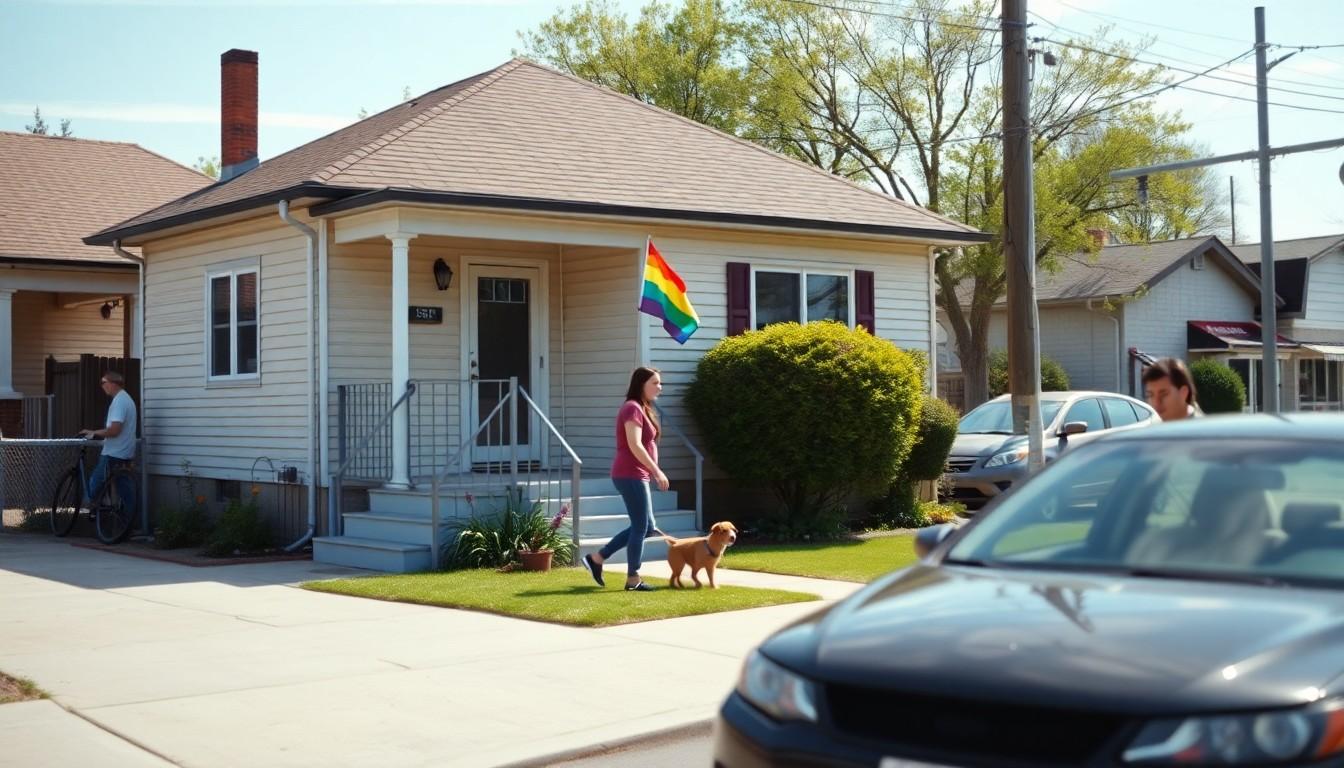
Shoppers are looking beyond America’s famous LGBTQ+ enclaves as high mortgage rates and steep home prices reshape the search for somewhere to live. For first-time buyers, remote workers and retirees, the best LGBTQ+ friendly cities now need to offer more than visibility: they must balance community, safety, healthcare, lifestyle and a monthly payment that feels manageable.
Essential Takeaways
- The map is widening: Buyers are considering cities beyond long-established LGBTQ+ destinations such as San Francisco, New York and Palm Springs.
- Affordability matters more: House prices, mortgage rates, taxes and everyday costs are shaping decisions as strongly as nightlife or Pride events.
- Community still counts: Buyers want visible LGBTQ+ networks, welcoming neighbourhoods and affirming healthcare nearby.
- More choice can mean more leverage: Rising inventory and price reductions may give buyers extra room to negotiate in some markets.
- Local knowledge is vital: Housing conditions can change dramatically between cities, suburbs and even neighbouring streets.
LGBTQ+ homebuyers are changing the map
The familiar shortlist of LGBTQ+ destinations still has plenty of appeal. New York, San Francisco, Los Angeles, Palm Springs, Provincetown, Fort Lauderdale and Wilton Manors remain associated with visible communities and established social networks.
But the financial reality of buying there can be sobering. Kiplinger’s research on high-cost American cities shows how quickly property prices can narrow a buyer’s options, particularly when mortgage payments, insurance and maintenance are added to the equation.
That’s why the phrase “LGBTQ+ friendly” increasingly means more than a lively gay village or a packed Pride calendar. Buyers are weighing whether they can actually build a comfortable life there, with enough money left over for travel, healthcare, hobbies and the occasional restaurant bill.
Affordability is becoming part of LGBTQ+ real estate
For many first-time buyers, the biggest question isn’t how many bedrooms they can get. It’s whether the monthly payment will leave room to breathe.
Research highlighted by Zillow has found that LGBTQ+ renters and buyers can face distinctive housing challenges, including discrimination and financial barriers. Those pressures make the search for a welcoming, attainable city especially important, rather than simply choosing the most famous destination.
Several guides to LGBTQ+ friendly housing markets point towards a broader mix of possibilities, including Minneapolis, Columbus, Pittsburgh, Richmond, Atlanta and parts of the Tampa Bay area. They don't all offer the same costs, culture or political climate, but they can provide different trade-offs between housing, employment, healthcare and community life.
That balance is the real prize. The cheapest home isn't necessarily the best choice if it leaves you isolated, while an expensive city may become workable if transport, work and social connections line up neatly.
Which cities should buyers put on the shortlist?
There isn't one universal winner, because the right city depends on income, career plans, family needs and tolerance for winter, heat or long commutes. Still, national round-ups from Realtor.com and other property specialists suggest that buyers are increasingly looking at established communities in the Midwest, Southeast and Mid-Atlantic, as well as the traditional coastal favourites.
Smaller or mid-sized cities can be attractive because they may offer a gentler pace and less punishing entry prices. They can also have active LGBTQ+ organisations, independent businesses and cultural venues without the enormous cost of living associated with the biggest metropolitan areas.
For remote and hybrid workers, the choice is wider still. A home search no longer has to stay within easy reach of an office five days a week, although buyers should check broadband quality, airport access and the practical realities of occasional travel before falling for a bargain property.
A useful shortlist should compare more than asking prices. Look at local protections, healthcare access, insurance costs, property taxes, public transport and the strength of community organisations. A sleek flat in the perfect postcode is less appealing if the wider support network doesn't exist.
Retirement is redrawing the search too
Retirees are asking many of the same questions, but with healthcare, social connection and climate pushed further up the list. A lower-cost home may look tempting, yet proximity to LGBTQ+ affirming medical providers and a reliable social network can matter just as much as the size of the garden.
Palm Springs and the Fort Lauderdale-Wilton Manors area remain prominent choices, while other buyers are exploring smaller communities with more manageable housing costs. Market round-ups from OK.com and New American Funding reflect this wider interest in cities that combine acceptance with everyday practicality.
That doesn't mean retirees want to disappear somewhere anonymous. Many are looking for a place where they can live openly, meet people naturally and stay connected as their needs change. Access to airports, restaurants, arts venues and community groups can make a surprisingly large difference to day-to-day happiness.
The best retirement destination may therefore be the one that feels easy rather than glamorous. A quiet home, a friendly café and a nearby support network can beat a famous postcode if they make life feel more secure.
Buyers have more room to negotiate, but shop locally
A more balanced housing market can give buyers extra time to inspect homes, compare options and request repairs or closing-cost help. Realtor.com’s market coverage has highlighted the growing importance of price reductions and increased choice in parts of the country.
That leverage isn't guaranteed everywhere. Some neighbourhoods remain highly competitive, while others have plenty of listings sitting on the market. Even within one city, the experience can vary between a popular historic district, a new-build suburb and a less familiar outer neighbourhood.
Before making an offer, compare recent sales with the homes currently competing for attention. Ask how long similar properties have been listed, whether prices have already been cut and which repairs are likely to become bargaining points.
For sellers, the same shift demands sharper pricing and presentation. A clean, well-photographed home with obvious maintenance dealt with can stand out when buyers have options, while an optimistic asking price may simply send them scrolling elsewhere.
The right adviser can make the search feel safer
Buying a home is personal for anyone, but LGBTQ+ buyers may also want confidence that their agent understands concerns around neighbourhood comfort, discrimination, family structure and affirming local services.
Zoocasa and other housing guides emphasise the value of researching both the city and the micro-community around a prospective home. That means looking beyond broad labels and checking what daily life is actually like: who runs local businesses, where community events take place and whether healthcare feels genuinely welcoming.
An LGBTQ+ or allied estate agent can also bring useful local context to a complicated decision. They may know which areas have strong community ties, how insurance is affecting prices and where buyers are finding better value.
Ultimately, the search is becoming less about finding one perfect gay destination and more about matching a home with the life you want to lead. That feels like a healthier, more realistic way to choose where to settle.
The best LGBTQ+ friendly city for homebuyers may be the one where community and affordability finally meet.
Source Reference Map
Story idea inspired by: [1]
Sources by paragraph:
- Paragraph 1: [2], [4]
- Paragraph 2: [7], [3]
- Paragraph 3: [4], [5]
- Paragraph 4: [3], [6]
- Paragraph 5: [2], [4]
- Paragraph 6: [5], [6]
- Paragraph 7: [3], [5]
- Paragraph 8: [4], [7]
- Paragraph 9: [6], [7]
- Paragraph 10: [3], [5]
- Paragraph 11: [4], [6]
- Paragraph 12: [2], [4]
- Paragraph 13: [6], [7]
- Paragraph 14: [3], [5]
- Paragraph 15: [4], [6]
- Paragraph 16: [7], [6]
- Paragraph 17: [3], [5]
- Paragraph 18: [4], [7]
- Paragraph 19: [6], [7]
- Paragraph 20: [3], [5]