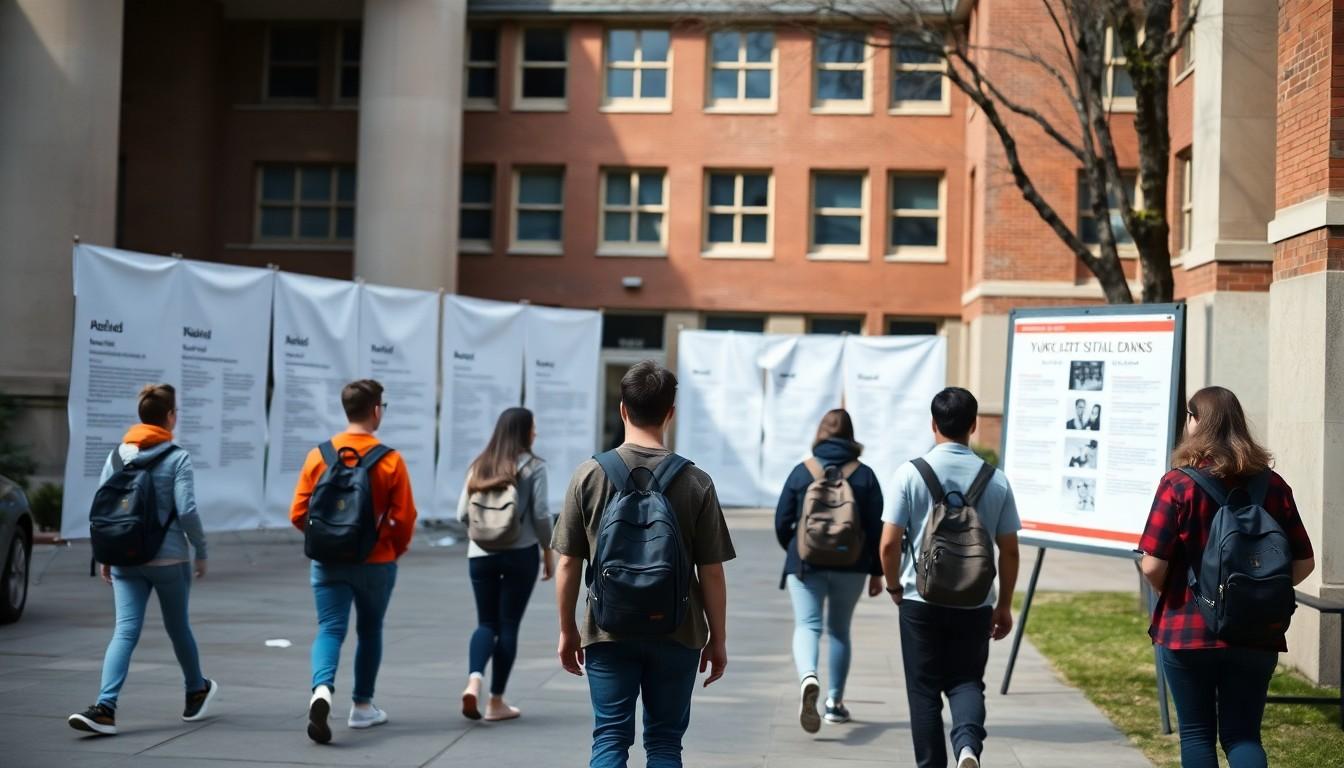
Students are increasingly using collective refusal to challenge school traditions, political messaging and institutional decisions. From declining a themed day to walking out over alleged discrimination, these actions matter because they show how young people are finding their voice when formal channels feel too slow or too distant.
Essential Takeaways
- Refusal can be a message: Choosing not to participate may signal disagreement without a formal walkout.
- Student protests vary widely: Recent actions have involved identity, racism, artificial intelligence and campus policy.
- Context matters: A school-wide response can reflect genuine concern, peer pressure or both.
- Leaders face a delicate task: Administrators must protect expression while keeping classrooms safe and orderly.
- The bigger trend is engagement: Apparent apathy can sometimes mask frustration and a desire for clearer direction.
When a quiet refusal becomes impossible to ignore
A student body declining to take part in a school activity can look remarkably ordinary from the outside. No placards, chants or dramatic exit are required. The empty participation, awkward silence or sea of students ignoring a planned event can do the talking.
That is what makes these moments so potent. According to reporting shared by Twitchy, students at Burlington schools reportedly refused to take part in a Pride-related day, turning a scheduled activity into a test of authority, belief and belonging. The detail that matters isn't simply that students said no, but that the refusal was collective enough to attract attention.
Schools often rely on participation to create a sense of shared community. When that participation disappears, even briefly, the institution is forced to ask whether an event truly brought students together or merely assumed they would agree.
Students aren't always protesting in the same language
The modern student protest doesn't have one look. At Central Catholic High School in Portland, students staged a walkout over an alleged racial chant connected with a baseball team, according to KPTV. That's a much more direct form of protest, with a clear demand for recognition and accountability.
Other students choose a quieter route. A refusal to attend, wear something, post a message or follow a theme can be harder to interpret, but it can still communicate strong disagreement. The contrast is useful: one action creates an immediate public spectacle, while the other leaves administrators to read the room.
There is also a wider debate about whether students are disengaged or simply unconvinced. A recent Substack essay argued that what looks like laziness may instead be a signal that young people feel directionless or unheard. That idea gives school protests a broader backdrop. Sometimes the complaint is about a particular event; sometimes it's about years of feeling that decisions are made around students rather than with them.
From identity days to AI, the issues keep expanding
Student activism now reaches well beyond traditional campus politics. The Day of Silence, for example, has been presented by Pride Belongs as an organised way to draw attention to LGBTQ+ experiences and encourage supportive participation. Events like this can be meaningful for some students, while others may object to the framing, the expectations or the way participation is presented.
Artificial intelligence has also entered the conversation. At Lebanon Valley College, student discussion reportedly touched on AI, protest apathy and a desire for stronger direction, according to La Vie. That combination is revealing. Students aren't only asking whether a technology is useful; they're also questioning who sets the rules and what education is meant to protect.
Meanwhile, Stanford's 2026 commencement coverage offers another reminder that student voices sit within a much larger institutional conversation. Universities and schools are expected to prepare young people for public life, yet they can struggle when those young people bring disagreement directly back to the institution.
What should schools do when participation collapses?
The first practical step is to separate peaceful refusal from disruption. Students should be able to express disagreement, but schools still need clear rules around intimidation, harassment, property damage and interference with lessons. A calm policy applied consistently is far more useful than a hurried response shaped by the day's headlines.
Administrators should also explain the purpose of an event before asking students to join it. What is the activity trying to achieve? Is participation voluntary? How will disagreement be handled? Those basic details can prevent confusion and make it easier for students to object without feeling they must stage a confrontation.
Parents and pupils, meanwhile, should look for the full context before sharing dramatic claims online. The original blog post carries broad disclaimers about accuracy and updates, so readers should treat unverified accounts carefully and seek confirmation from schools or established local reporting. A viral version of events may be emotionally satisfying, but it isn't necessarily complete.
A refusal may be the beginning, not the end
Collective non-participation rarely settles the underlying argument. It may prompt a meeting, a policy review or a sharper divide, depending on how leaders respond. The most constructive outcome is usually a conversation that acknowledges disagreement without pretending everyone has reached the same conclusion.
That is why these incidents deserve more than a quick culture-war label. They show students experimenting with influence, sometimes clumsily, sometimes courageously and often with an instinctive understanding that attention is power. For schools, the challenge is to hear the message without allowing every dispute to become a permanent showdown.
Young people aren't passive simply because they don't use the traditional vocabulary of protest. Sometimes the folded arms, missing badges or empty seats say plenty.
It's a small act of refusal, but it can expose a much bigger question about who gets heard at school.
Source Reference Map
Story idea inspired by: [1]
Sources by paragraph: