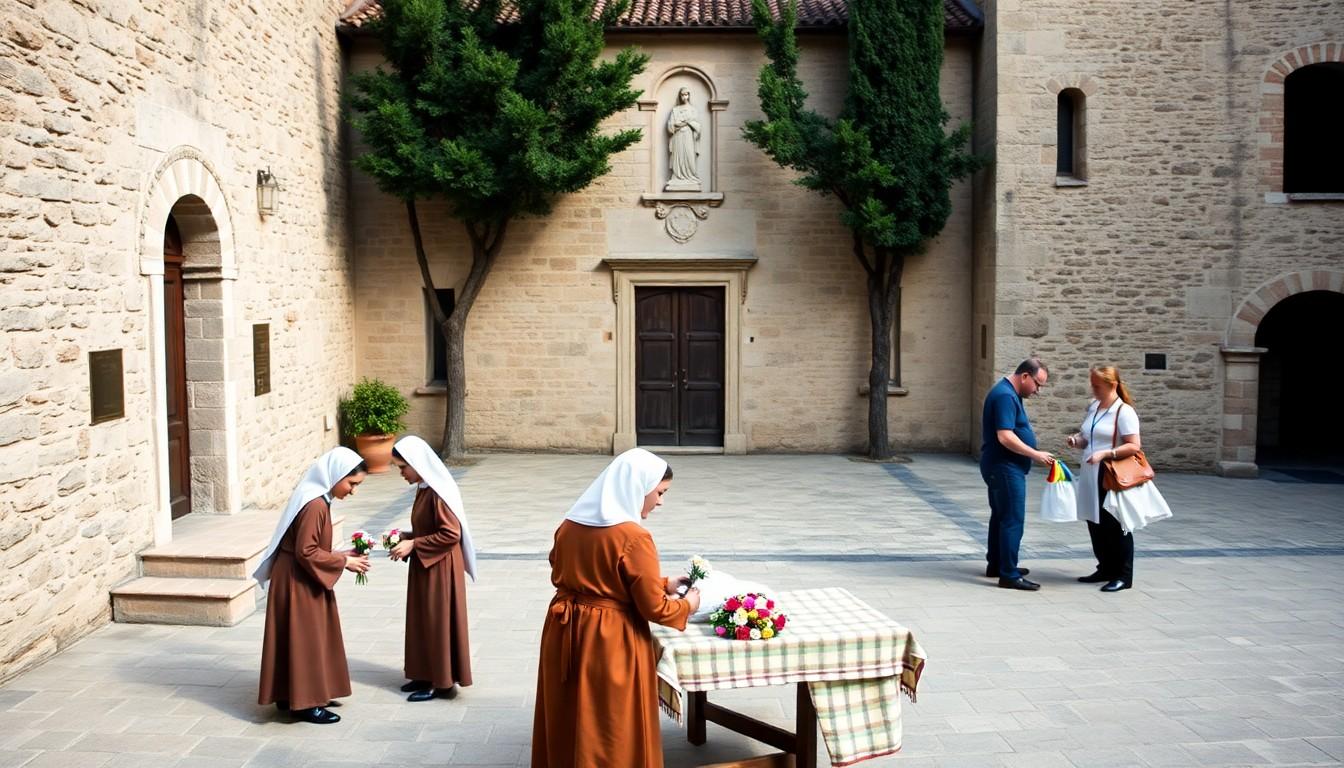
Readers are revisiting St Francis of Assisi through a queer lens as Catholics mark the Transitus on 3 October 2026. The Franciscan remembrance, held before his feast day, celebrates his passage into eternal life while highlighting a gentler idea of spiritual family: people can nurture, guide and welcome one another regardless of gender, sexuality or biological ties.
Essential Takeaways
- The Transitus: This Franciscan service remembers St Francis's passage from earthly life, focusing on hope rather than grief.
- A surprising image: Francis described himself through maternal language, presenting spiritual care as something anyone can offer.
- A wider welcome: His relationships with Clare of Assisi, Jacoba of Settesoli and marginalised communities broaden the story of Franciscan belonging.
- A modern connection: Queer communities use "mother" for trusted mentors, a tradition rooted in Black and Latine ballroom culture.
- A timely reflection: The 800th anniversary invites believers to consider care, chosen family and solidarity at the edges of society.
Why the Transitus matters beyond a date in the calendar
The Transitus is observed on the evening before the feast of St Francis, which falls on 4 October. Franciscan communities describe it as a passage into fuller life, making the service feel less like a sombre memorial and more like a communal pause for hope, memory and renewal.
Events listed by Catholic parishes and institutions across the United States show how widely the service is marked, from Cleveland and Milwaukee to San Luis Rey and New Orleans. There is something quietly powerful about the format: candles, prayer and remembrance create a space where history feels close rather than dusty. (Diocese of Cleveland; St Francis Parish, Bend.) [2], [3]
This year's observance carries added significance because it marks 800 years since Francis's death. That anniversary gives familiar stories a fresh charge, particularly for Catholics wondering what his radical simplicity and concern for outsiders might say to the Church today. (St Francis Parish, Milwaukee; St Clement Catholic Church.) [4], [5]
Francis's most unexpected role was "mother"
Francis is usually remembered as the friar who embraced poverty, cared for lepers and challenged the comfort of his wealthy upbringing. Yet accounts of his life also present him using maternal imagery to describe spiritual leadership, family and responsibility.
In the interpretation explored by New Ways Ministry, Francis imagined himself as Lady Poverty, guiding his followers towards God. He also encouraged members of his community to become mothers of Christ through the way they carried faith within themselves and expressed it through action. It's a striking idea for a medieval religious leader: motherhood here isn't confined to biology or conventional gender roles. (New Ways Ministry; Loyola University New Orleans.) [1], [7]
That language also helps explain why Francis's connection with Clare of Assisi remains so compelling. Their spiritual partnership made room for forms of kinship that were not based on marriage, inheritance or conventional domestic life. Clare's decision to adopt the appearance of a monk further underlined how fluid religious identity could look in practice. (New Ways Ministry; St Francis Parish, Bend.) [1], [3]
Chosen family gives the old story a modern pulse
For many LGBTQ+ people, the word "mother" can describe a mentor, protector or guide rather than a biological parent. The term is closely tied to Black and Latine queer ballroom communities, where houses offered young people companionship, instruction and shelter when their birth families had rejected them.
That history matters. It prevents the language from becoming a fashionable metaphor detached from the communities that shaped it, while also showing why Francis's emphasis on nurturing others feels unexpectedly contemporary. His invitation was not simply to be kind in the abstract. It was to take responsibility for people who needed somewhere safe to belong. (New Ways Ministry; Loyola University New Orleans.) [1], [7]
The comparison isn't a claim that Francis understood modern queer identity or ballroom culture. He couldn't have. Instead, it places two different traditions side by side: one medieval and religious, the other modern and community-led. Both recognise that care can create family where blood ties have failed. (New Ways Ministry; Diocese of Cleveland.) [1], [2]
A Franciscan welcome for people on the margins
Francis's decision to live among lepers has long been central to his story. These communities were feared, isolated and often treated as socially untouchable. By moving towards people others avoided, Francis turned compassion into something physical and demanding, not merely a pleasant sentiment.
That instinct also shaped his expanding movement. Women such as Clare of Assisi and Jacoba of Settesoli were part of the wider Franciscan story, despite the order's predominantly male structure. The details may belong to the 13th century, but the underlying question remains current: who gets welcomed, who gets protected and who is left outside the gates? (New Ways Ministry; St Clement Catholic Church.) [1], [5]
Franciscan remembrance services keep returning to that question through prayer and ritual. The events may differ in scale, but their shared emphasis on hope and fellowship makes the Transitus feel especially relevant to people who know how much a welcoming community can change a life. (San Luis Rey Parish; Loyola University New Orleans.) [6], [7]
What St Francis can offer LGBTQ+ Catholics now
The most useful lesson isn't that Francis should be turned into a modern political symbol. It's that his life leaves room for a broader understanding of spiritual care. He challenged wealth, crossed social boundaries and asked his followers to embody their beliefs through service rather than status.
For LGBTQ+ Catholics, that can create a meaningful point of connection. The image of a saint who spoke about motherhood beyond the limits of body and blood may resonate with queer and trans people building families through friendship, mentorship and shared faith. It may also speak to affirming parents, who often learn to protect their children more fiercely because they understand what exclusion costs. (New Ways Ministry; Diocese of Cleveland.) [1], [2]
As the 800th anniversary approaches, the Transitus offers more than a look backwards. It encourages a practical form of holiness: notice who is alone, offer support without demanding sameness and make room for people whose lives don't fit inherited categories. That's a simple message, but it has plenty of bite. (St Francis Parish, Milwaukee; Loyola University New Orleans.) [4], [7]
St Francis's legacy suggests that belonging is something we make for one another.
Source Reference Map
Story idea inspired by: [1]
Sources by paragraph: