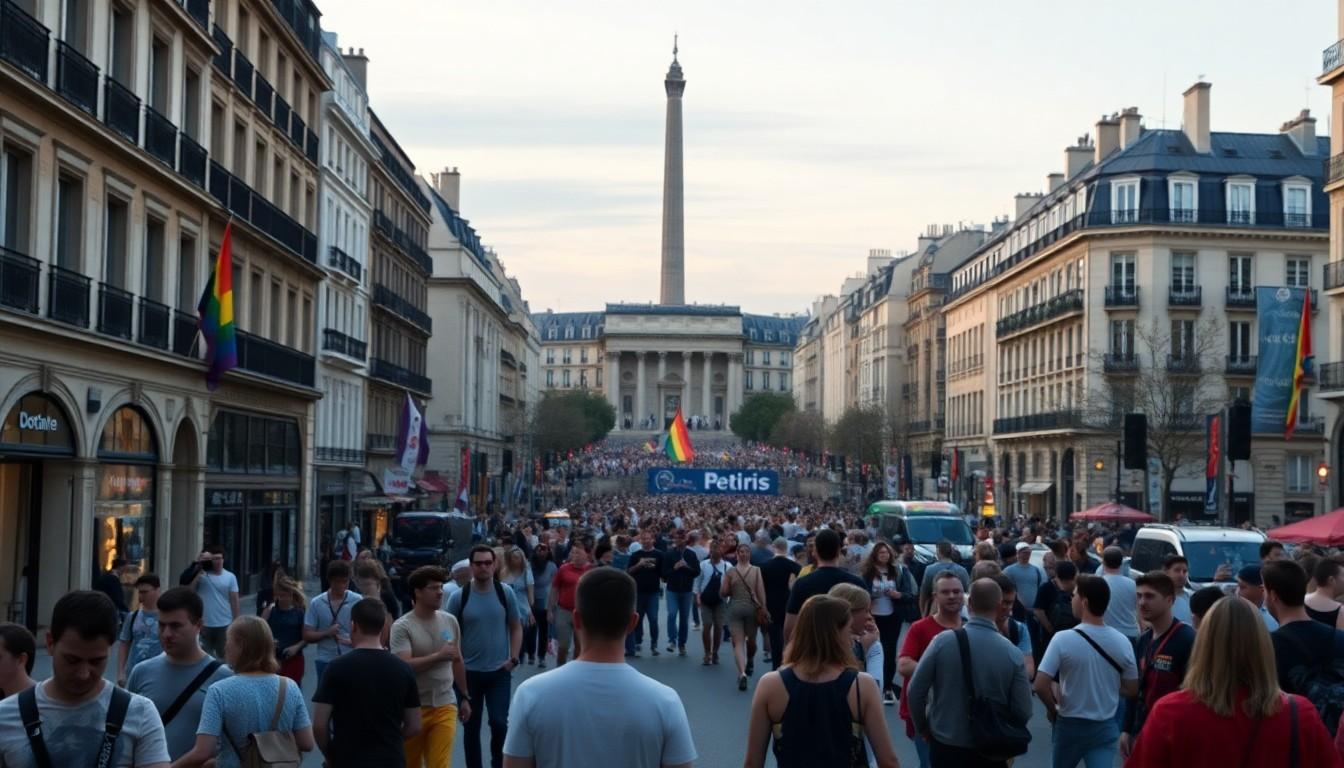
Paris Pride returns on Saturday 3 October 2026 after its summer date was cancelled during the heatwave. The LGBTQIA+ march will set off from Place d'Italie at 1pm, cross the city through several central landmarks and finish at Place de la Bastille, followed by a free music programme.
Essential takeaways
- New date: Paris Pride takes place on Saturday 3 October 2026, after the June event was postponed.
- Starting time: Speeches are expected from 12.30pm, with the procession due to leave at 1pm.
- Route: The march runs from Place d'Italie to Place de la Bastille via the Latin Quarter, central Paris and Rue de Rivoli.
- Evening event: A free podium programme is scheduled from 4pm to 10pm.
- Practical note: Expect crowds, diversions and busy public transport along the route.
Paris Pride gets a cooler autumn setting
The most important change is the date. Paris Pride, traditionally held in June, was cancelled during the summer because of extreme heat and has now been rescheduled for early October.
That shift may make the day more comfortable for people walking the full route, although autumn weather can be unpredictable. A light waterproof layer, comfortable shoes and a charged phone are sensible additions to any Pride-day outfit.
The event remains both celebration and protest. Organisers use the march to call for equality and respect for LGBTQIA+ people, while the streets fill with music, colour and a distinctly Parisian sense of occasion.
The 2026 Paris Pride route, step by step
The procession will begin at Place d'Italie in the 13th arrondissement at 1pm. From there, it will head along Avenue des Gobelins, Rue Claude-Bernard and Rue Gay-Lussac before reaching the central boulevards.
The published route continues through Boulevard Saint-Michel, Boulevard du Palais and Boulevard de Sébastopol. Marchers will then follow Rue de Rivoli and Rue Saint-Antoine towards the finish at Place de la Bastille.
It's a substantial cross-city route, so visitors meeting friends should agree on a clear landmark rather than relying on a single mobile signal. Place d'Italie is convenient for joining at the start, while Bastille offers a natural rendezvous point after the procession.
What happens before and after the march?
The day is expected to begin with speeches from around 12.30pm, before the march gets under way an hour later. Arriving early should make it easier to find your group, take in the atmosphere and avoid the tightest parts of the crowd.
Once the procession reaches Bastille, the mood turns towards the evening's free podium event. The music programme is planned to run from 4pm until 10pm, giving visitors a reason to stay in the area rather than treating the march as a quick afternoon stop.
For families, first-time visitors and anyone who doesn't want to walk the entire distance, watching from one section of the route can be a good compromise. Bring water, plan regular breaks and remember that large gatherings are tiring, even when the atmosphere is joyful.
How to prepare for Paris Pride 2026
Public transport is likely to be affected around Place d'Italie, the central boulevards and Bastille. Check live travel information before leaving, and consider getting off a few stops away from the busiest areas rather than trying to reach the exact departure point by metro.
Pack lightly, but not too lightly. Water, snacks, sunscreen if the October sun appears, and a portable battery can all prove useful. Comfortable trainers will be kinder than fashionable but unforgiving shoes by the time the route reaches the Seine and eastern Paris.
Most importantly, keep an eye on official updates. Route arrangements, access points and transport advice can change close to the event, and the official Paris Pride route page is the best place to check for last-minute information.
A major Paris event with a clear message
Paris Pride has become one of the capital's biggest annual public gatherings, attracting hundreds of thousands of people and combining political demands with a large-scale street celebration.
The 2026 edition will feel different because it arrives outside the usual Pride season, but the purpose hasn't changed. It remains a visible reminder that progress deserves to be celebrated, defended and extended.
For visitors, the appeal is easy to understand: a lively walk through Paris, a powerful collective atmosphere and free performances at the end. Just allow extra time, expect diversions and leave room for the day to unfold.
Plan your route carefully, then enjoy the colour, noise and solidarity of Paris Pride.
Source Reference Map
Story idea inspired by: [1]
Sources by paragraph:
- Paragraph 1: [2], [4]
- Paragraph 2: [3], [7]
- Paragraph 3: [5], [6]
- Paragraph 4: [2], [3]
- Paragraph 5: [4], [7]
- Paragraph 6: [2], [5]
- Paragraph 7: [3], [4]
- Paragraph 8: [2], [6]
- Paragraph 9: [3], [7]
- Paragraph 10: [4], [5]
- Paragraph 11: [2], [3]
- Paragraph 12: [5], [6]
- Paragraph 13: [3], [7]
- Paragraph 14: [2], [4]
- Paragraph 15: [5], [6]
- Paragraph 16: [2], [3]
- Paragraph 17: [4], [7]
- Paragraph 18: [5], [6]