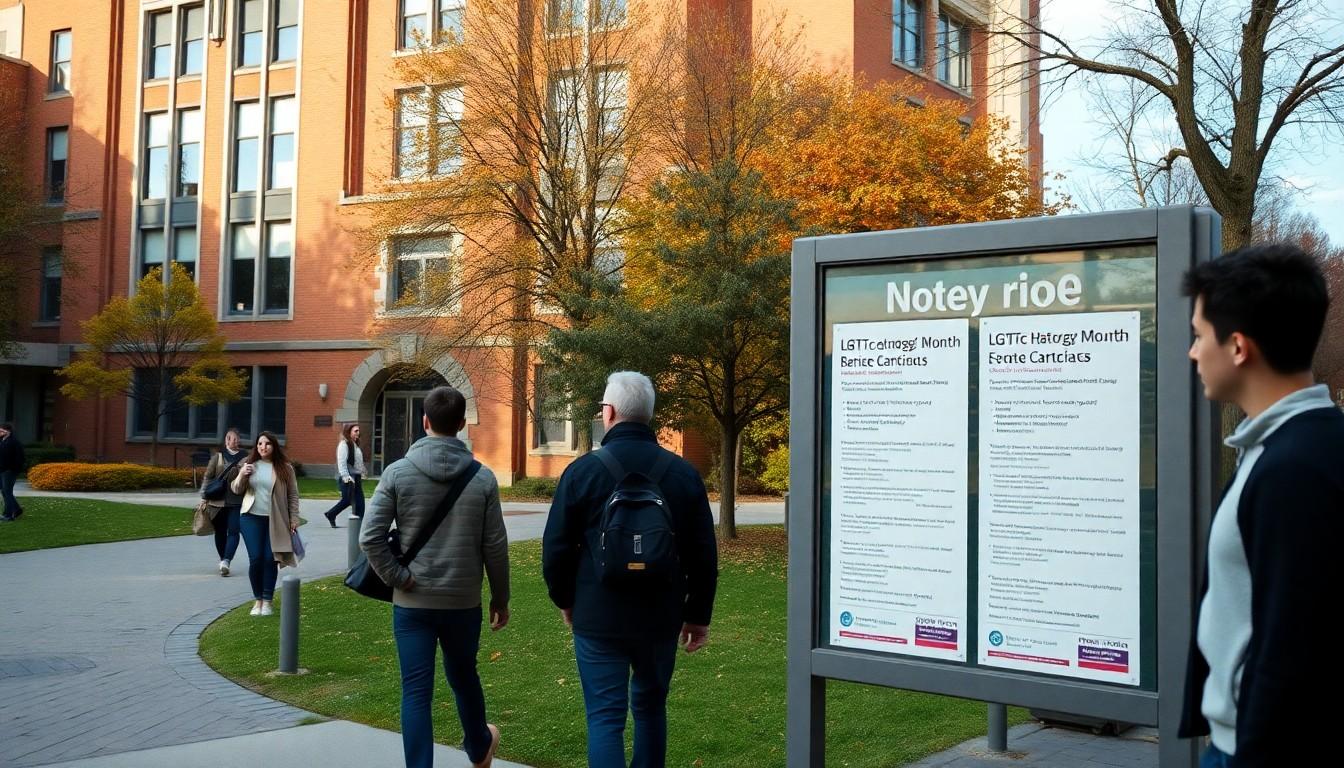
Communities, colleges and cultural organisations are preparing to mark LGBTQ+ History Month with films, talks, books and celebrations. What began as a modest 1994 event at the University of Missouri-St Louis has grown into an international reminder that queer history isn't confined to the past.
Essential Takeaways
- A small beginning: The first public event took place at UMSL in October 1994.
- Film set the tone: Early organisers used documentaries and personal testimony to bring LGBTQ+ history to life.
- Universities became key venues: Campuses now host lectures, screenings, dinners, exhibitions and discussion groups.
- The idea travelled: LGBTQ+ History Month has spread beyond the US, including to the UK and other regions.
- The central message: Remembering history also means recognising the people shaping it today.
It started with two films and a determined organiser
There was no glossy campaign, instant social media reach or online event calendar when LGBTQ+ History Month first appeared in St Louis. Instead, organisers relied on printed proposals, postal correspondence and plenty of patience before gathering at the University of Missouri-St Louis for an October film festival.
The opening event featured Before Stonewall and Word Is Out, two documentaries built around community memory and personal stories. That choice mattered. Rather than presenting history as a dry list of dates, the programme put real voices, lived experience and hard-won visibility at the centre.
According to the Advocate, the month grew from an effort to create a dedicated annual space for LGBTQ+ stories and education. It was influenced by established history observances, including Black History Month and Women's History Month, but developed its own distinct purpose and character.
Why October became such an important month
The timing was practical as well as symbolic. October sat neatly within the academic year, making colleges and universities natural places for discussions, film screenings and public events.
UMSL's LGBTQ+ History Month materials show how the campus helped establish that early foundation. In the years since, higher education institutions have expanded the format considerably, bringing together student groups, libraries, academics and local communities.
That campus connection has given the month a useful mix of seriousness and welcome. A lecture might sit alongside a book club, while an archive exhibition can share a calendar with a film night or a celebratory dinner. It feels less like a single annual ceremony and more like a month-long invitation to keep looking.
From local experiment to worldwide observance
The original event was modest, but the idea proved remarkably portable. LGBTQ+ History Month is now recognised in countries and regions well beyond the United States, with different communities adapting the concept to their own histories and calendars.
LGBTQ+ History Month UK, founded by Sue Sanders and Paul Patrick, began its first observance in February 2005. Other celebrations have emerged across Europe, Australia, Canada, Asia, Africa and the Caribbean, reflecting both shared experiences and significant local differences.
LGBTQ Nation has highlighted the international reach of the movement while tracing its beginnings back to the original campaign. That global spread is important because queer history isn't one single story. It includes different languages, laws, struggles, migrations and cultural traditions.
What events can offer beyond a history lesson
The most effective programmes don't simply ask audiences to remember famous names. They create room for overlooked stories, family conversations and connections between past events and present-day life.
For anyone planning to take part, a good starting point is a local library, university, LGBTQ+ centre or community archive. Look for events that offer context as well as celebration, whether that's an oral-history project, a reading group, a museum tour or a documentary followed by discussion.
If you're organising something yourself, keep the format approachable. A short film, a guest speaker or a shared reading can be enough to begin a thoughtful conversation. The best events often feel warm and ordinary: a few chairs, a good story and people willing to listen.
We're not just remembering history, we're making it
The phrase "we're living through LGBTQ+ history right now" captures the month's most compelling idea. History isn't sealed away in archives; it's being shaped by the people campaigning, creating families, making art, teaching, caring for one another and showing up in public life today.
That perspective also makes the month more honest. Celebration and remembrance can sit alongside grief, uncertainty and debate. Looking back helps communities recognise progress, but it can also clarify what still needs protecting.
Three decades after that first UMSL gathering, the event's growth offers a quietly powerful lesson. A national or international tradition can begin with a small room, a few committed people and the belief that these stories deserve to be heard.
Take part in an event, explore an archive or start a conversation. LGBTQ+ history is all around us, and it keeps unfolding.
Source Reference Map
Story idea inspired by: [1]
Sources by paragraph:
- Paragraph 1: [2], [4]
- Paragraph 2: [3], [5]
- Paragraph 3: [4], [6]
- Paragraph 4: [2], [7]
- Paragraph 5: [3], [5]
- Paragraph 6: [2], [4]
- Paragraph 7: [6], [7]
- Paragraph 8: [2], [3]
- Paragraph 9: [4], [6]
- Paragraph 10: [3], [7]
- Paragraph 11: [2], [4]
- Paragraph 12: [3], [5]
- Paragraph 13: [2], [7]
- Paragraph 14: [4], [6]