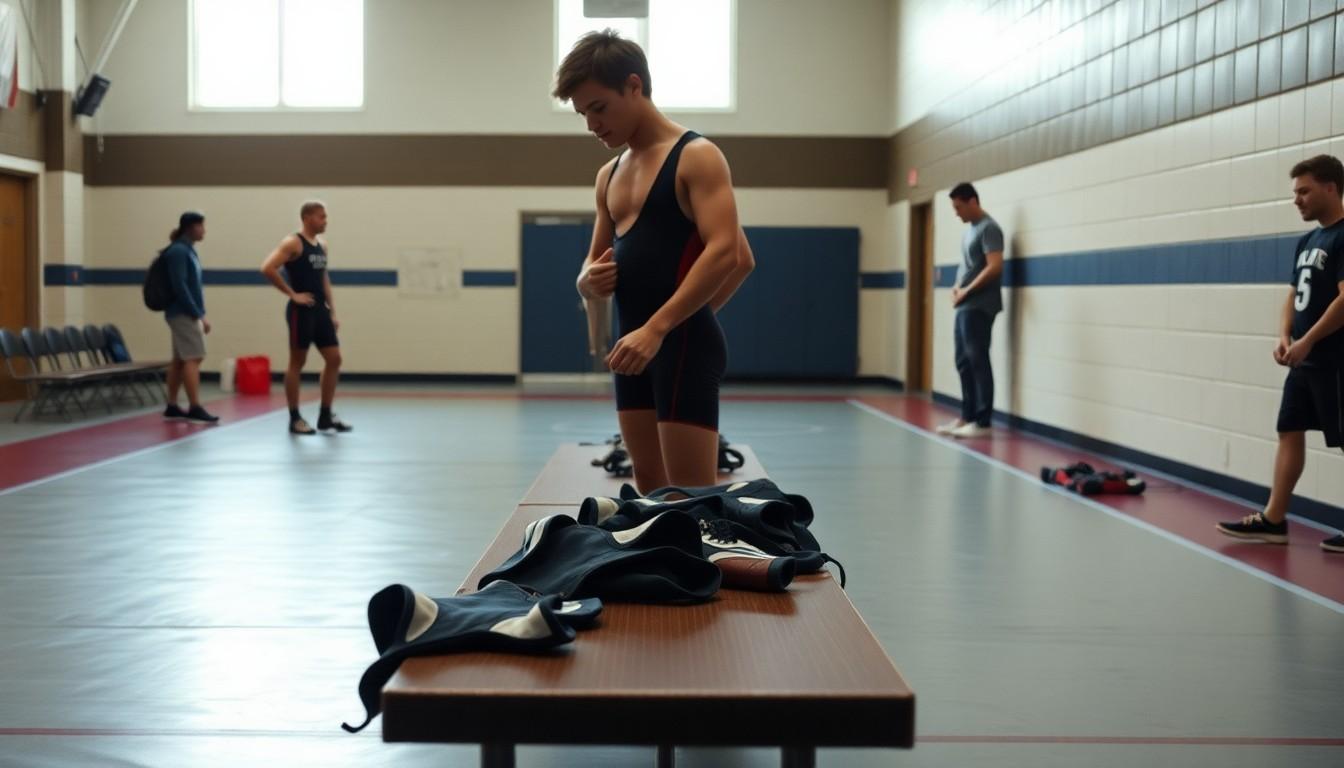
A high-school wrestling star’s decision to come out openly in Illinois became a powerful lesson in team culture, confidence and visibility, showing why LGBTQ athletes still need support in locker rooms and beyond.
Essential Takeaways
- Coming out changed the conversation: Geick told classmates and teammates he was gay, prompting messages from athletes across the Chicago area.
- Performance mattered, but support mattered too: His strong wrestling record helped challenge assumptions about sexuality and athletic ability.
- Team culture made a difference: Coaches and teammates offered acceptance, while his coach also prepared him for possible abuse from opponents.
- Visibility can travel: Geick’s openness reached beyond school, inspiring other young athletes who felt isolated.
- His story continued evolving: Later coverage followed his move from wrestling into public-facing media and entertainment.
A quiet lunch-table moment became much bigger
Dylan Geick didn't plan a grand announcement. He simply told the students sitting with him at lunch that he was gay, shortly after beginning a relationship with his boyfriend. Within minutes, messages were arriving from classmates, team-mates and wrestlers at other schools.
That speed tells you something about adolescent sport. News moves quickly, but so does curiosity, particularly when an athlete doesn't fit the narrow image some people still carry of a wrestler. As Windy City Times reported, Geick's openness challenged the assumption that toughness and queerness sit on opposite sides of the mat.
He was also hardly a peripheral figure. Geick had become one of Stevenson High School's standout athletes, competing at state level and earning the respect that comes with consistently strong performances. The surprise surrounding his sexuality was, in part, a reminder that people often mistake familiarity with understanding.
His wrestling credentials changed the frame
Geick's results gave his story extra force. He finished fourth at the Illinois Class 3A state tournament in consecutive years, competing in different weight classes, and had already established himself as one of his programme's leading wrestlers.
That sporting credibility didn't make acceptance automatic, but it helped expose how flimsy many stereotypes are. Elite competition demands discipline, physical courage and tactical intelligence; none of those qualities has a sexual orientation. Elite Daily's coverage highlighted how Geick's identity and athletic reputation existed together, rather than cancelling each other out.
His coach also described a lively, magnetic personality, not just a technically gifted competitor. That's an important distinction. Representation works best when it shows a whole person, complete with ambition, humour, relationships and nerves, rather than presenting an athlete as a symbol and nothing more.
The right team culture can make coming out safer
Stevenson's wrestling programme was built around togetherness, and Geick repeatedly credited that atmosphere with making honesty possible. He described the squad as a family, while his coach made clear that support would be there even if other competitors tried to provoke him.
That warning was practical rather than dramatic. Coaches can't control every opponent, spectator or online comment, but they can give athletes a plan, a trusted adult and the confidence that reporting abuse won't be treated as weakness. According to Outsports' reporting, Geick didn't encounter homophobic treatment from his own team, which was significant in a large programme.
There was one hostile message from an opposing wrestler before the state tournament. Geick said it sharpened his focus, and he responded decisively in competition. It's a satisfying sporting moment, but the broader lesson is less cinematic: athletes shouldn't have to win a match before they're treated with basic respect.
Why visibility still matters for young athletes
Geick also shared his relationship publicly, including photographs with his boyfriend and moments from Pride and homecoming. That openness offered something many young LGBTQ athletes struggle to find: evidence that coming out doesn't mean surrendering other parts of life.
The value of that visibility is cumulative. A teenager searching online for gay wrestlers, as Geick once did, might find not a warning or a tragedy but a peer competing, dating, planning university and enjoying himself. Queerty's later coverage of Geick's public profile shows how that early visibility continued to shape his career and audience.
Of course, coming out remains personal. No athlete should be pushed into it by a coach, journalist or fan. But when someone chooses to speak, the response around them matters enormously. A supportive team can turn a frightening disclosure into an ordinary part of knowing someone.
From the mat to a wider public platform
Geick planned to attend Columbia University and continue wrestling at NCAA Division I level, attracted by both the competition and the academic challenge. During his recruitment, he was told that people of different backgrounds, genders and orientations were welcome, a message that clearly resonated.
His story later moved beyond college wrestling. Coverage from Edge Media Network and Bravo-focused entertainment reporting followed Geick as he developed a broader public identity, showing how an athlete's early reputation can become the foundation for work in media and popular culture.
The through-line is authenticity. Whether he's wrestling, discussing queer visibility or appearing on television, Geick's public story began with refusing to split himself into separate versions for the mat, the classroom and his personal life. That remains a useful message for sports organisations trying to build genuinely inclusive environments.
It's a small act of honesty that can give someone else the courage to step forward.
Source Reference Map
Story idea inspired by: [1]
Sources by paragraph: