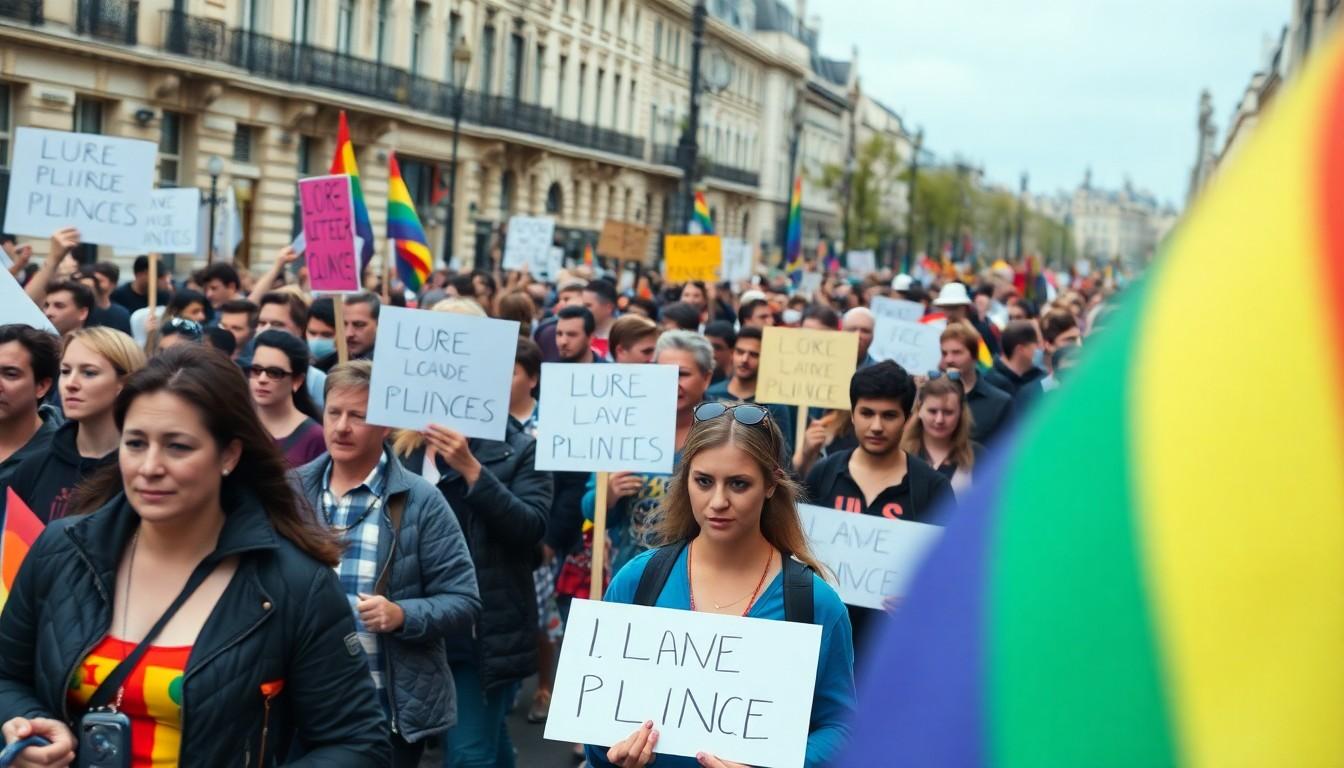
Thousands of people have filled Paris for a rescheduled Pride march, turning a colourful route from Place d'Italie to Bastille into a firm defence of LGBTQ+ rights. With France's presidential election only months away and far-right politics gaining ground, organisers say the popular event carries an increasingly urgent message.
Essential Takeaways
- A major Paris gathering: The march brought together tens of thousands of people and around 50 associations.
- A clear political message: Organisers urged LGBTQ+ people and allies to oppose the far right and defend equality.
- A changed timetable: Paris Pride moved from June after a heatwave, although its original date remains tied to the 1969 Stonewall uprising.
- Ongoing safety concerns: Paris officials warned that LGBTQIA+ venues still face threats, attacks and intimidation.
- A disputed turnout: Organisers reported 500,000 participants last year, while police estimated fewer than 100,000.
Paris Pride becomes a show of resistance
The loudest sound in Paris was not simply music or cheering. It was the steady rumble of a crowd determined to be visible, with rainbow flags moving through the streets from Place d'Italie towards Place de la Bastille. Euronews reported that tens of thousands joined the march, which included roughly 50 associations. [2]
Alexandre Schon, co-president of Inter-LGBT, said the timing mattered because France is approaching a presidential election. His appeal was direct: LGBTQ+ people and their allies should mobilise for a future built around solidarity, rather than allow the far right to define the political conversation. [2]
That made this year's event feel less like a parade and more like a public statement. Pride is still joyful, of course, but the atmosphere carried a sharper edge.
Why the far right is central to the message
Organisers say the concern isn't abstract. Schon warned that LGBTQ+ people could become future targets, pointing to attacks on rights in countries including the United States and Senegal. The message was echoed by left-wing politicians who joined the route, including Jean-Luc Melenchon and Green MP Sandrine Rousseau. [2]
The march also fits a wider pattern of demonstrations in Paris opposing racism and far-right politics. Le Monde has reported on earlier protests drawing people into the streets against the movement's growing influence, underlining how identity, equality and the next election are becoming increasingly intertwined in French public life. [4]
For many campaigners, that connection is the point. Protecting LGBTQ+ rights isn't treated as a niche issue, but as part of a broader argument about democracy, inclusion and who gets to feel safe in public spaces.
Paris officials highlight threats to LGBTQ+ venues
Paris Mayor Emmanuel Gregoire used the occasion to draw attention to the pressure facing LGBTQIA+ spaces. He said venues continue to experience threats, violence, discrimination and intimidation, while calling for stronger protection and more resources for community associations. [2]
That focus on local spaces matters. A march can create spectacular visibility for one day, but clubs, bars, support groups and community centres provide the quieter, everyday infrastructure that keeps people connected. When those places feel unsafe, the harm reaches far beyond a single event.
Gregoire's profile has also grown as Paris's mayor, with French political coverage portraying him as a highly visible figure operating within a strongly centralised city administration. That visibility gives his support symbolic weight, but it also leaves residents looking for practical action after the flags have been packed away. [3]
A postponed Pride with a historic date
Paris Pride normally takes place in June, but this year's event was delayed after a heatwave in France. The later date changed the season, not the symbolism. The traditional June timing is linked to the Stonewall riots in New York in 1969, widely regarded as a defining mobilisation in the modern LGBTQ+ rights movement. [2]
The delay also offered a reminder that large public events now have to contend with increasingly difficult weather conditions. Heat affects crowd safety, transport, volunteers and performers, so postponing a march can be a responsible choice even when it frustrates supporters.
Still, a cooler autumn route brought its own atmosphere: layers instead of summer vests, crisp air instead of intense heat, and a crowd whose political message remained unmistakably warm.
What the turnout says about Pride in France
Attendance figures remain contested. Organisers said last year's march attracted 500,000 people, while police put the number below 100,000. Those very different estimates show how politically charged crowd counts can become, especially when a movement is trying to demonstrate both strength and urgency. [2]
This year's turnout nevertheless sent a visible message. Left-wing figures such as Melenchon have continued to position themselves against the far right, even as his confrontational political strategy has faced scrutiny in French coverage. [7]
The bigger question now is what follows the march. A packed boulevard can show solidarity, but lasting progress depends on safer venues, properly funded associations and political leaders willing to defend rights when the crowd has gone home. As one marcher might put it, Pride is at its strongest when celebration and vigilance walk side by side.
A rainbow route through Paris can be joyful and defiant at the same time.
Source Reference Map
Story idea inspired by: [1]
Sources by paragraph: