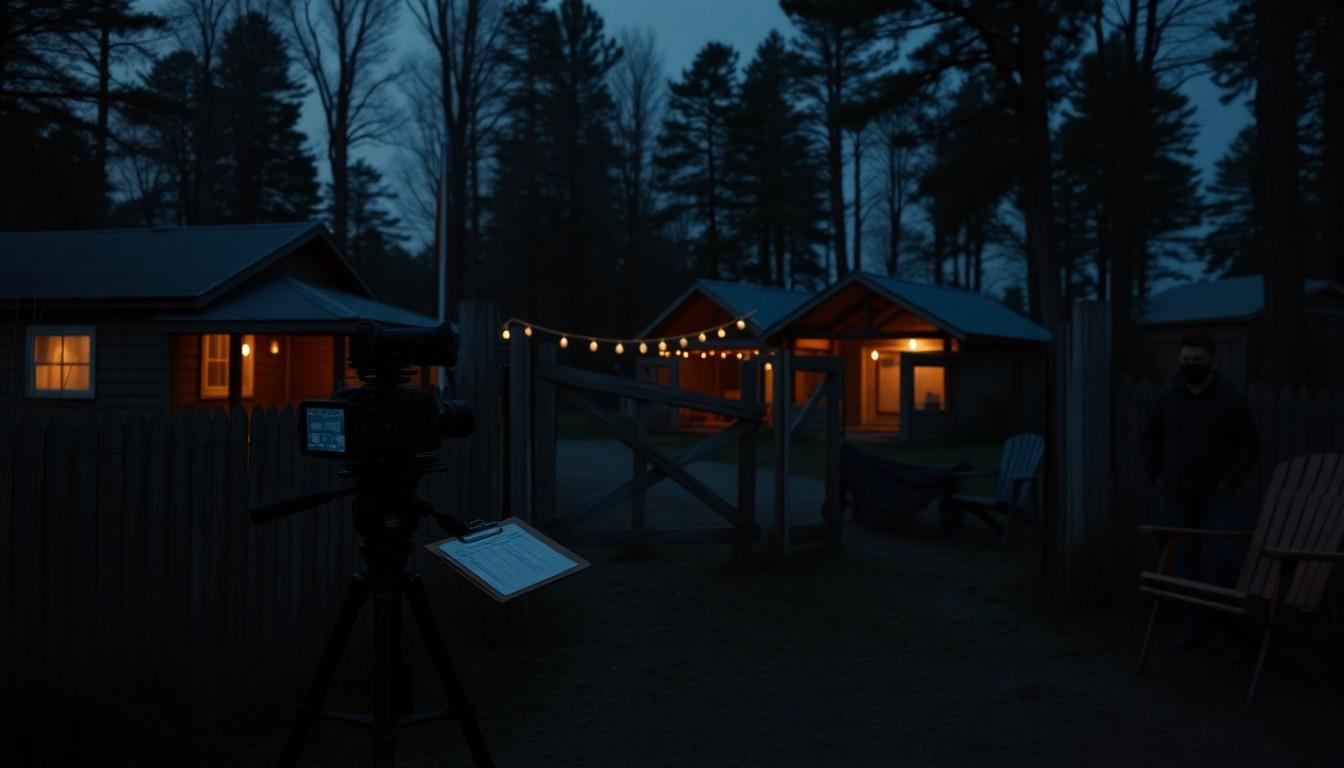
Viewers are turning to Teenage Sex and Death at Camp Miasma for a sharp, surreal take on the slasher film. Jane Schoenbrun's 2026 release mixes abandoned-camp chills, queer desire and film-fan cleverness, while asking whether horror's old rules about sex, gender and survival still deserve to live.
Essential Takeaways
- A familiar setup: Teenagers, a remote camp and a masked killer get a distinctly queer makeover.
- A different final girl: Kris isn't simply waiting to survive. She's trying to reshape the story around her.
- Old tropes, new questions: The film revisits horror's treatment of queer, trans and gender-nonconforming characters.
- Reality keeps slipping: Little Death may be a real threat, a fantasy or something more complicated.
- For genre fans: Its references reward viewers who know films such as Friday the 13th, Scream and Jennifer's Body.
The slasher gets a queer, unsettling makeover
The basic ingredients are instantly recognisable: oversexed teenagers, a lonely cabin and a killer who seems impossible to stop. Yet Camp Miasma isn't interested in simply replaying the formula. It takes the old slasher machine apart, examines its sharp edges and asks who gets punished when desire enters the frame.
Kris, played by Hannah Einbinder, knows the genre inside out. She's a budding filmmaker with an almost academic command of slasher rules, from the masked murderer to the supposedly virtuous survivor. According to RogerEbert.com, the film's self-awareness is central to its appeal, but it also leaves room for vulnerability beneath the genre jokes.
That combination gives the film a warmer pulse than its title might suggest. The setting is eerie, the threat is slippery and the atmosphere can feel damp with dread, but Kris isn't merely another teenager running from a blade. She's trying to decide what kind of story she wants to inhabit.
Meet the final girl who wants to rewrite the rules
Kris is brought to the original Camp Miasma location as she attempts to revive a franchise whose sequels have steadily lost their bite. There, she meets Billy Presley, the first film's celebrated survivor, played by Gillian Anderson.
The attraction between the two women quickly changes Kris's creative plans. What begins as a professional reboot becomes entangled with desire, memory and the possibility of a relationship that doesn't fit the franchise's old moral code. Rotten Tomatoes' coverage reflects the film's strong critical reception, while the New Yorker places its appeal within a broader conversation about genre, identity and reinvention.
Billy is particularly important because she refuses the familiar role of the dangerous older queer woman. She's eccentric and occasionally performs menace, but the film treats consent and emotional care as part of her character rather than as evidence of hidden monstrosity. That's a small but meaningful reversal of horror history.
Horror's queer villains finally face the camera
For decades, horror often turned queer or queer-coded characters into threats. The lesbian vampire, the unstable cross-dresser and the gender-nonconforming killer were frequently presented as warnings, with difference linked directly to corruption or violence.
Camp Miasma knows that history well. Its Little Death echoes earlier trans and cross-dressing horror villains, but the film is less interested in repeating the insult than in exposing the mechanism behind it. The character's gender fluidity isn't offered as a neat explanation for murder.
Instead, Little Death becomes part of Kris's growing understanding of herself. The character helps unsettle the usual divisions between victim and killer, masculine and feminine, active and passive. The Atlantic's cultural coverage frames the film as part of a wider movement towards horror that can hold contradiction rather than tidy it away.
That doesn't mean the film makes every old trope harmless. Its point is more uncomfortable and more useful: even flawed films can become meaningful to queer audiences, while still carrying the prejudice of the period in which they were made.
Why fans of Scream and Jennifer's Body may click with it
The film belongs to the tradition of meta horror, but it doesn't use self-awareness only for laughs. Like Scream, it understands that genre knowledge can be entertaining. Like Jennifer's Body, it also recognises that pop-culture fluency can conceal hurt, longing and emotional confusion.
Kris's endless film talk is both impressive and revealing. She can explain how a scene works, identify the reference and predict the next scare, but that intellectual confidence doesn't protect her from wanting something she can't neatly name. The New Yorker review highlights this tension between cinematic control and personal uncertainty.
That makes the film's references feel less like a quiz for horror devotees and more like emotional clues. A familiar shot or killing sequence may amuse genre fans, but it can also show Kris trying to turn real desire into something she can edit, analyse or switch off.
A strange camp where identity refuses to stay fixed
As the story advances, the boundary between reality and fantasy becomes increasingly unstable. Little Death appears, disappears and changes meaning, while the camp itself starts to feel less like a film location and more like an alternative home.
The idea matters because Kris and Billy are both separated from ordinary family and social structures. Their isolated world becomes a space where different rules might be possible, even if it remains haunted by the old ones. The Atlantic's review coverage connects the film's surreal approach with its interest in queer self-invention and the limits of conventional representation.
There isn't a tidy answer waiting at the end. Camp Miasma doesn't promise that queer horror can be made pure, safe or free of contradiction. Instead, it suggests that the mess is part of the point, and that identity, like a good horror film, can remain frighteningly difficult to predict.
It's a slasher for viewers who'd rather question the rules than simply survive them.
Source Reference Map
Story idea inspired by: [1]
Sources by paragraph:
- Paragraph 1: [2], [3]
- Paragraph 2: [3], [4]
- Paragraph 3: [2], [5]
- Paragraph 4: [4], [5]
- Paragraph 5: [3], [4]
- Paragraph 6: [2], [5]
- Paragraph 7: [4], [5]
- Paragraph 8: [3], [5]
- Paragraph 9: [4], [7]
- Paragraph 10: [3], [4]
- Paragraph 11: [5], [6]
- Paragraph 12: [4], [5]
- Paragraph 13: [5], [6]
- Paragraph 14: [3], [4]
- Paragraph 15: [4], [5]
- Paragraph 16: [5], [7]