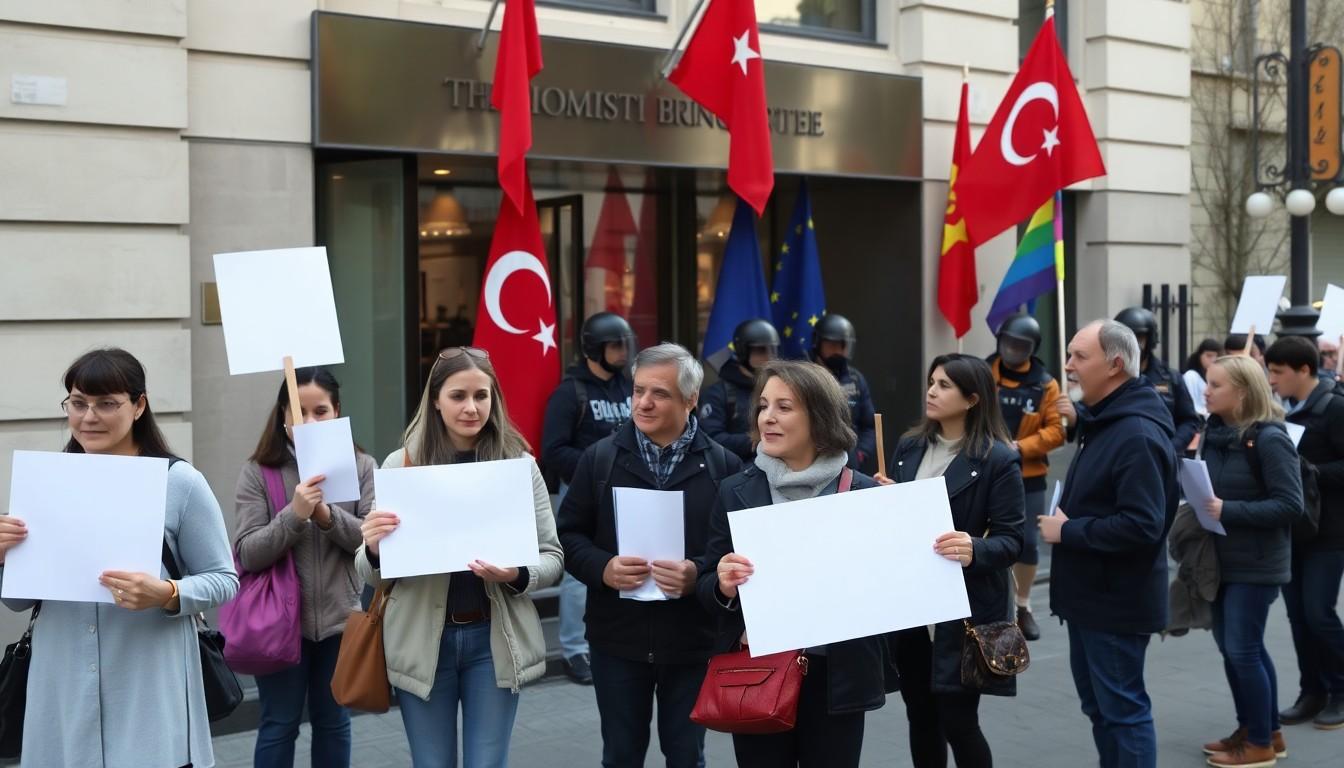
Protesters, diplomats and rights groups are rallying across Europe and the United States as Turkey’s widening LGBT crackdown targets organisations, activists and online spaces. With dozens detained and hundreds of pages restricted, campaigners fear the “My Family Is Safe” drive could signal a much broader assault on queer rights.
Essential Takeaways
- At least 116 detained: Amnesty International says those held include 44 human rights defenders.
- Online restrictions spread: More than 180 social media pages and websites linked to LGBT and rights groups have reportedly been blocked or limited.
- International pressure is growing: The U.N. human rights chief and European diplomats have urged Turkey to end discrimination.
- Activists fear new offences: Campaigners say proposed legislation could criminalise LGBT advocacy and deepen existing intimidation.
- Protests crossed borders: Demonstrations took place outside Turkish missions in Washington, London and elsewhere.
Raids and detentions have put Turkey’s LGBT community on edge
The latest crackdown has brought raids, arrests and digital restrictions into sharper focus, leaving many activists facing an unsettling question: what happens next? Amnesty International says Turkish authorities have detained at least 116 people, including dozens of rights defenders, during operations aimed at LGBT organisations and places associated with the community.
The campaign is being promoted under the name “My Family Is Safe”, led by Justice Minister Akın Gürlek. Officials say the initiative is intended to defend family life, young people and social order. Rights groups strongly reject that justification, arguing that the measures stigmatise LGBT people rather than protect anyone. Amnesty International has described the actions as part of a worsening rights crisis. [2], [3]
The atmosphere is especially tense because the pressure isn't limited to physical raids. More than 180 websites and social media pages connected to LGBT and other rights groups have reportedly been restricted or blocked, making it harder for organisations to communicate, organise and offer support. [2], [4]
Why the campaign is drawing international condemnation
The backlash has quickly moved beyond Turkey's borders. Protesters gathered outside Turkish diplomatic buildings in the United States and Europe, calling for governments to make clear that human rights obligations don't disappear when domestic politics become heated.
At a demonstration outside Turkey's embassy in Washington, Amnesty International's Ben Linden said the United States should tell Ankara to stop. His concern is that the current measures may be only the beginning of repeated waves of repression, rather than an isolated operation. [3], [6]
U.N. human rights chief Volker Türk has urged Turkish officials to uphold everyone's rights without discrimination. Human rights envoys from six European countries have also called on Turkey to respect the European Convention on Human Rights, which the country has signed. [2], [6]
That international language matters, but campaigners say statements must be followed by action. Public criticism, diplomatic pressure and scrutiny of detained activists could all help determine whether the crackdown widens or loses momentum. [3], [4]
Proposed legislation has made the fear feel more permanent
For many queer people in Turkey, the worry isn't only about what has already happened. Activists say legislation introduced last year could criminalise LGBT activism, creating a legal framework for restrictions that may currently be carried out through arrests, raids and administrative pressure.
Yener Bayramoğlu, who protested in London's Trafalgar Square, said queer people in Turkey are already frightened by the direction of travel. He argued that activists appear to be facing unlawful detention even before any new legislation is fully in place. [5], [6]
That distinction is crucial. A hostile political campaign can create a chilling effect without a single new law being enforced, while formal criminal penalties could make community groups, charities and individual campaigners even more vulnerable. Amnesty UK has called for detained activists to be released and for the assault on LGBT rights to end. [4]
What the crackdown means for community organisations
Restrictions on LGBT groups can have consequences far beyond public demonstrations. These organisations often provide legal guidance, mental health support, emergency contacts and a trusted route to help for people who may already feel isolated. When offices are raided or pages disappear overnight, that quiet support network can become difficult to reach.
Digital blocking also changes how people organise. A missing website may look like a technical nuisance from the outside, but for activists it can mean lost safety information, disrupted fundraising and fewer ways to document abuses. Amnesty's reporting points to a pattern that combines arrests with pressure on civil society and online expression. [2], [3]
For readers following developments, the most useful signals to watch are straightforward: whether detainees are charged, whether blocked organisations regain access, and whether proposed legislation advances. Those details will show whether the current campaign is temporary pressure or a more permanent change in the rules. [4], [6]
Activists insist the movement will not disappear
Despite the pressure, campaigners continue to protest and speak publicly. Demonstrations in London, Washington and other cities have given international visibility to people who say they are increasingly unsafe at home, while rights groups continue to call for accountability.
Reporting from Spain's El País has highlighted the determination of imprisoned and threatened LGBT activists, many of whom reject the idea that repression can erase the movement. Their message is defiant but also deeply human: visibility, solidarity and hope still matter when everyday life feels smaller and more dangerous. [5]
The coming weeks will test whether international condemnation can translate into meaningful protection. For Turkey's LGBT community, it isn't an abstract diplomatic dispute; it touches workplaces, homes, friendships and the simple ability to organise openly. [2], [6]
A crackdown may close doors, but it hasn't silenced the people standing outside them.
Source Reference Map
Story idea inspired by: [1]
Sources by paragraph: