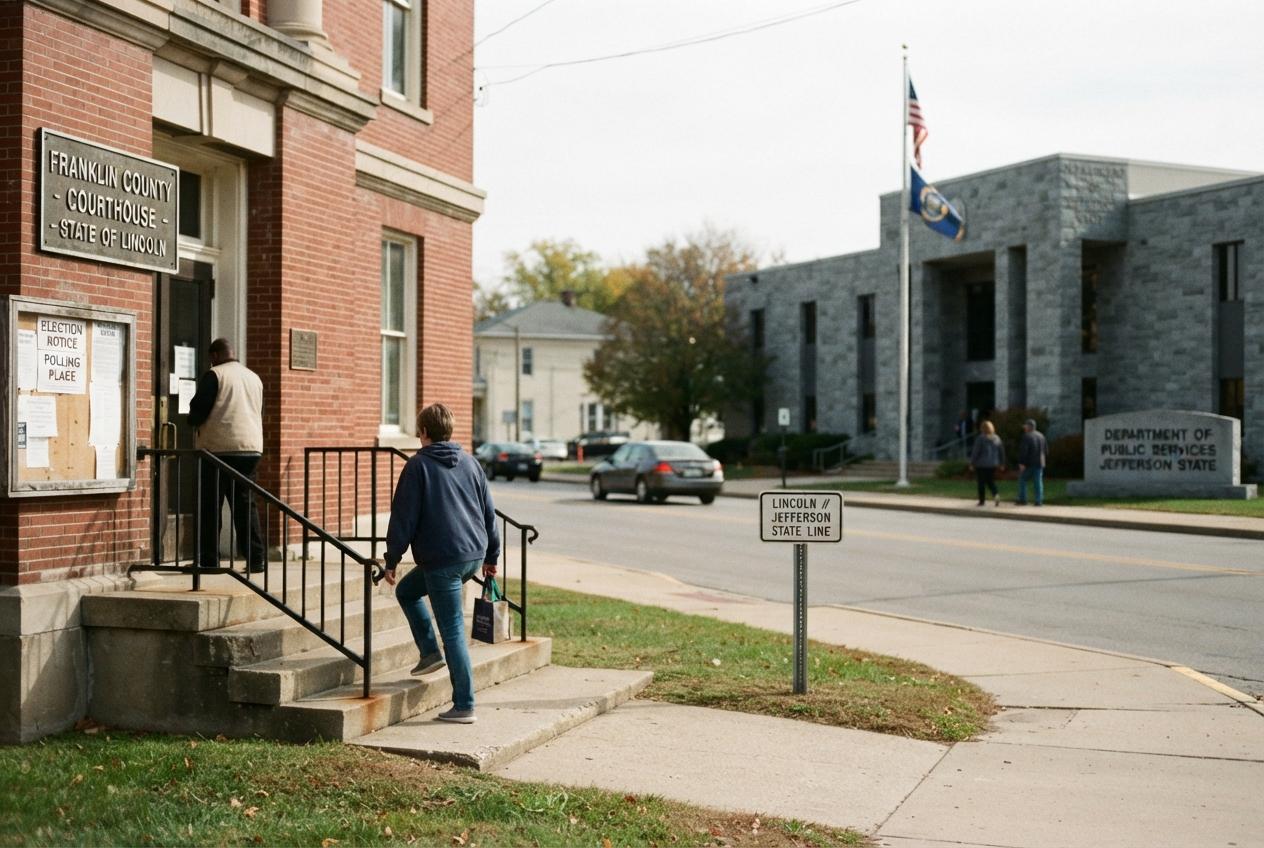
A new Movement Advancement Project report finds that LGBTQ+ protections increasingly depend on where people live in the United States. Since 2020, some states have strengthened safeguards while others have pursued sweeping restrictions, with transgender people bearing the sharpest impact as the 2026 midterm elections approach.
Essential Takeaways
- Rights are diverging: States have moved in sharply different directions since 2020.
- Trans people face the brunt: Most restrictive changes have focused on transgender healthcare, sport and daily life.
- Progress is uneven: Some states have expanded protection, while others have rolled back equality at speed.
- The 2026 ballot matters: Arizona, Colorado, Missouri, Nebraska and Washington are set to feature anti-trans measures.
- Location now carries greater weight: Legal protections can vary dramatically across state lines.
Where you live increasingly shapes LGBTQ+ rights
The most striking finding is also the simplest: crossing a state border can mean crossing into a very different legal reality. The Movement Advancement Project's report, Uneven Ground: Six Years of Diverging LGBTQ+ Policy and What's at Stake in 2026, describes a country pulling apart on queer rights, with transgender people often left standing in the harshest weather.
According to the report, the shift accelerated from 2020 onwards. Some states have continued building protections, while others have introduced restrictions with unusual speed and breadth. That uneven pattern makes everyday security feel less like a national guarantee and more like a postcode lottery.
MAP's research tracks legislation across all 50 states, giving the report a broad view of how quickly the landscape has changed. As GO Magazine reported, the organisation says the result is an increasingly polarised system in which basic LGBTQ+ protections depend more heavily on residence. [[Source Reference Map omitted?]]
Why transgender rights have become the main battleground
Much of the policy change has focused on transgender people, rather than LGBTQ+ protections in general. The MAP report says restrictions have reached areas including healthcare, school life and participation in sport, creating consequences that extend well beyond political slogans.
The organisation describes the post-2020 wave as particularly focused on trans people, while also warning that these campaigns can help advance a broader anti-LGBTQ+ agenda. That matters because a rule aimed at one group can influence the wider climate around equality, dignity and public life.
The details may differ from state to state, but the emotional effect is familiar: uncertainty, paperwork, public scrutiny and the exhausting need to check whether a protection applies before making an ordinary decision. For families and young people, that uncertainty can feel especially heavy.
A split between progress and rollback
This isn't a story of every state moving backwards. MAP says several states have improved their LGBTQ+ protections, and that progress remains significant. The problem is that positive movement and harmful movement aren't cancelling each other out.
Instead, the distance between states is growing. The report characterises this as "asymmetric polarisation", meaning states aren't simply drifting apart at the same pace. Where protections have weakened, they have often weakened dramatically, particularly for trans residents.
That creates a patchwork rather than a shared national experience. A person may have stronger legal cover, easier access to services and clearer workplace protections in one state, then face a very different set of rules after moving a few hours away.
What the 2026 elections could change
The upcoming midterm elections add a fresh layer of uncertainty. MAP says voters in Arizona, Colorado, Missouri, Nebraska and Washington will encounter anti-trans measures on the ballot, covering issues from sport participation to gender-affirming care.
Ballot.org and Trans United Fund have also warned that anti-trans campaigns are becoming a prominent feature of the 2026 political cycle. Their analysis suggests these measures can dominate public debate, even when they distract from wider concerns facing voters.
It's the first time, according to MAP, that voters are being asked directly to decide on measures of this kind. That makes the election more than a collection of local contests. It could become a marker of whether the country moves towards greater protection, deeper restriction or an even more divided legal map.
How to follow the changing rights landscape
For LGBTQ+ people and allies, practical information matters. Before travelling, relocating or accessing healthcare, check current state guidance and consult trusted organisations such as MAP, local advocacy groups and legal support services. Laws can change quickly, and headlines don't always capture the detail of how a rule is enforced.
It also helps to distinguish between a proposal, an enacted law and a court challenge. A measure on a ballot isn't the same as a rule already in force, while court decisions can alter the position again. Reliable, current information is far more useful than social media shorthand, however urgent the conversation feels.
MAP policy research director Logan Casey said in the organisation's press material that the key question is not whether the ground will shift again, but when and in which direction. For LGBTQ+ communities, that uncertainty is more than political theatre. It's part of deciding where to live, work, seek care and build a future.
The legal map is changing fast, so staying informed and supporting local organisations can make a real difference.
Source Reference Map
Story idea inspired by: [1]
Sources by paragraph:
- Paragraph 1: [2], [3]
- Paragraph 2: [4], [5]
- Paragraph 3: [2], [4]
- Paragraph 4: [3], [5]
- Paragraph 5: [2], [3]
- Paragraph 6: [4], [5]
- Paragraph 7: [2], [3]
- Paragraph 8: [6], [7]
- Paragraph 9: [2], [4]
- Paragraph 10: [3], [5]
- Paragraph 11: [2], [6]
- Paragraph 12: [3], [7]
- Paragraph 13: [2], [4]
- Paragraph 14: [5], [6]
- Paragraph 15: [2], [3]
- Paragraph 16: [4], [7]