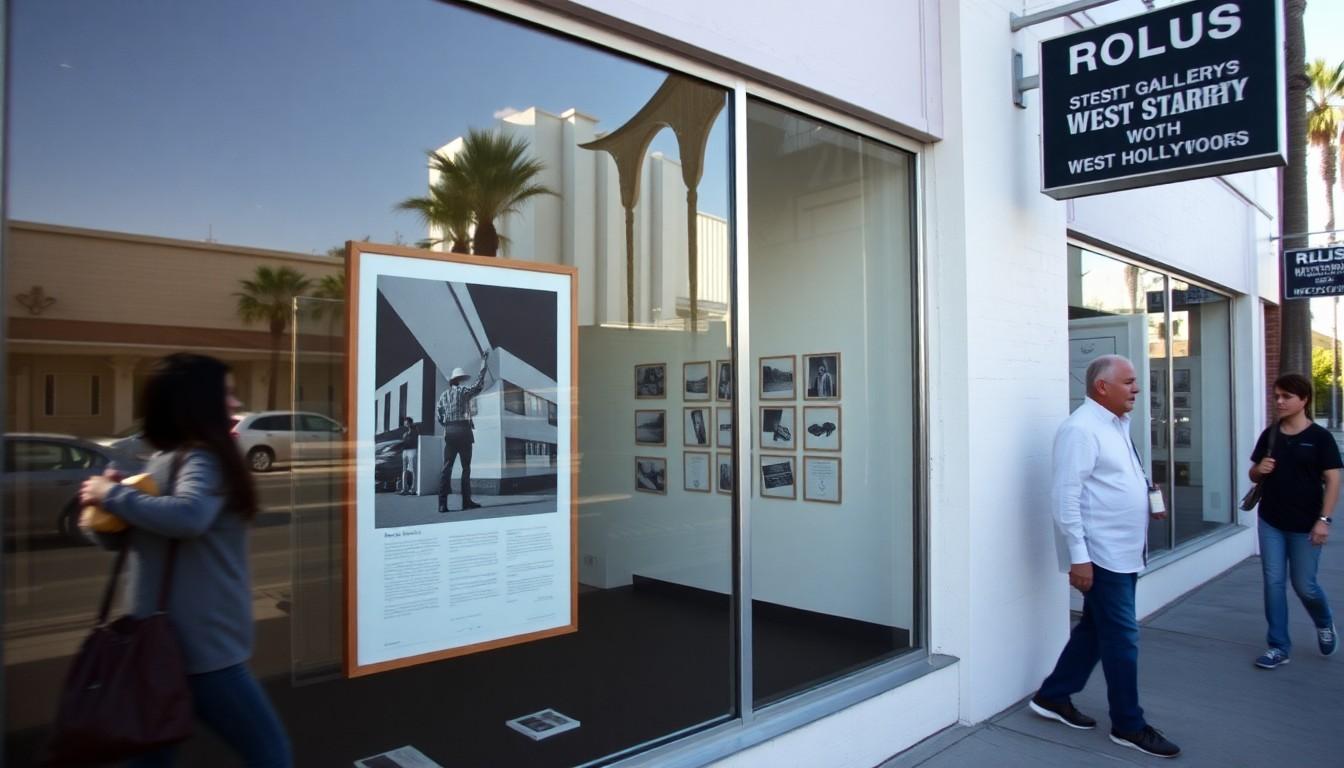
Visitors in West Hollywood can explore more than five decades of gay rodeo history through photographs, posters, clothing and memorabilia at One Gallery. The exhibition connects a small 1970s fundraiser with a wider LGBTQ+ tradition of sport, community and visibility, giving locals and visitors a vivid reason to look beyond the usual Hollywood history trail.
Essential Takeaways
- A major archive display: One Gallery presents photographs, banners, posters and other objects from more than 50 years of gay rodeo history.
- A West Hollywood setting: The exhibition is hosted at One Gallery on Robertson Boulevard as part of the Circa: Queer Histories Festival.
- A movement that grew fast: Gay rodeo developed from a small Nevada fundraiser into a national and international network.
- A local Los Angeles thread: The display gives particular attention to California and Los Angeles rodeo history.
- More than memorabilia: The collection shows how LGBTQ+ communities created welcoming spaces, traditions and organisations of their own.
A small fundraiser became a much bigger story
The most striking thing about the exhibition is its sense of scale. What began as a modest event in Reno in 1976 eventually became a broad community tradition, with competitors, volunteers and spectators helping to build an organised rodeo circuit.
Early gay rodeos were not simply sporting occasions. They raised money for charitable causes and created a place where LGBTQ+ people could gather openly, often at a time when public visibility carried far greater risks. The dusty arena, bright banners and practical competition gear tell a story of determination as much as entertainment.
According to the International Gay Rodeo Association, its mission centres on preserving and promoting gay rodeo while supporting community, competition and charitable work. That combination helps explain why the events lasted: they offered both a lively day out and a meaningful social purpose.
Why the West Hollywood exhibition matters
The One Gallery show brings that history into one of the most recognisable LGBTQ+ neighbourhoods in the United States. Its location on Robertson Boulevard makes the exhibition easy to fold into a West Hollywood visit, whether you're already exploring the area's galleries or simply looking for a different kind of local history.
The display was organised by Roger Bergmann, a longtime participant, judge and administrator within the gay rodeo world. That personal connection gives the exhibition an unusual depth. This isn't a distant museum account assembled from a few surviving objects; it's a record shaped by someone who was present as the movement expanded.
One Institute's Circa festival places the exhibition within a wider programme of queer history. The result is a useful reminder that LGBTQ+ heritage isn't confined to nightlife, activism or city-centre landmarks. It also lives in arenas, barns, volunteer committees and the slightly battered posters that communities keep because they matter.
From Nevada roots to a national circuit
The first gay rodeo was held in Nevada in 1976, attracting a relatively small crowd. Within a few years, other states were establishing their own associations and events, creating the foundations for a shared organisation across the country.
California's involvement is especially important to this exhibition. The state's first gay rodeo took place in Los Angeles in 1985, the same year representatives from several states helped establish the International Gay Rodeo Association. Los Angeles therefore appears not as a footnote, but as part of the movement's early infrastructure.
At its busiest, the circuit supported more than 20 rodeos in a year. Although the calendar is smaller today, the continued presence of organised events shows that the tradition hasn't vanished. It has adapted, with its archive now helping new audiences understand where it came from.
What visitors can expect inside One Gallery
The exhibition brings together photographs, memorabilia, posters, flags and banners, with displays designed to cover the full arc of gay rodeo history. Some items are polished and celebratory; others have the tactile, handmade quality of community events built on limited budgets and plenty of enthusiasm.
That mix is part of the charm. A formal trophy can sit alongside a bold poster or a well-used piece of rodeo clothing, making the history feel lived-in rather than overly neat. For visitors unfamiliar with the subject, those small details may be more revealing than a long timeline.
The exhibition also welcomes people who don't know the rules of rodeo or identify as LGBTQ+. You don't need to be a competitor, a historian or an expert in Western culture. Curiosity is enough, and perhaps a willingness to see the American West through a more inclusive lens.
A lively reminder that history is still being made
The display arrives at a useful moment for museums and cultural organisations. Queer history is increasingly being presented through everyday experiences, not only through major political milestones. Gay rodeo offers a particularly vivid example because it combines sport, fundraising, identity and community-building in one memorable setting.
Coverage of queer Western culture, including reporting by El Pais, has also highlighted how traditional cowboy imagery can be reworked through fashion, performance and LGBTQ+ self-expression. The exhibition adds another layer: the practical, organised communities that turned that imagery into a long-running social world.
For visitors, the appeal is both emotional and visual. These archives show people making room for themselves, then leaving enough behind for others to find them decades later. That's a powerful legacy, and one that feels far from dusty.
Explore the exhibition for a colourful, grounded look at how gay rodeo built community across generations.
Source Reference Map
Story idea inspired by: [1]
Sources by paragraph:
- Paragraph 1: [2], [3]
- Paragraph 2: [4], [5]
- Paragraph 3: [5], [7]
- Paragraph 4: [2], [4]
- Paragraph 5: [3], [6]
- Paragraph 6: [5], [7]
- Paragraph 7: [2], [5]
- Paragraph 8: [4], [6]
- Paragraph 9: [2], [3]
- Paragraph 10: [5], [7]
- Paragraph 11: [2], [4]
- Paragraph 12: [3], [6]
- Paragraph 13: [4], [5]
- Paragraph 14: [2], [7]
- Paragraph 15: [5], [6]
- Paragraph 16: [2], [3]