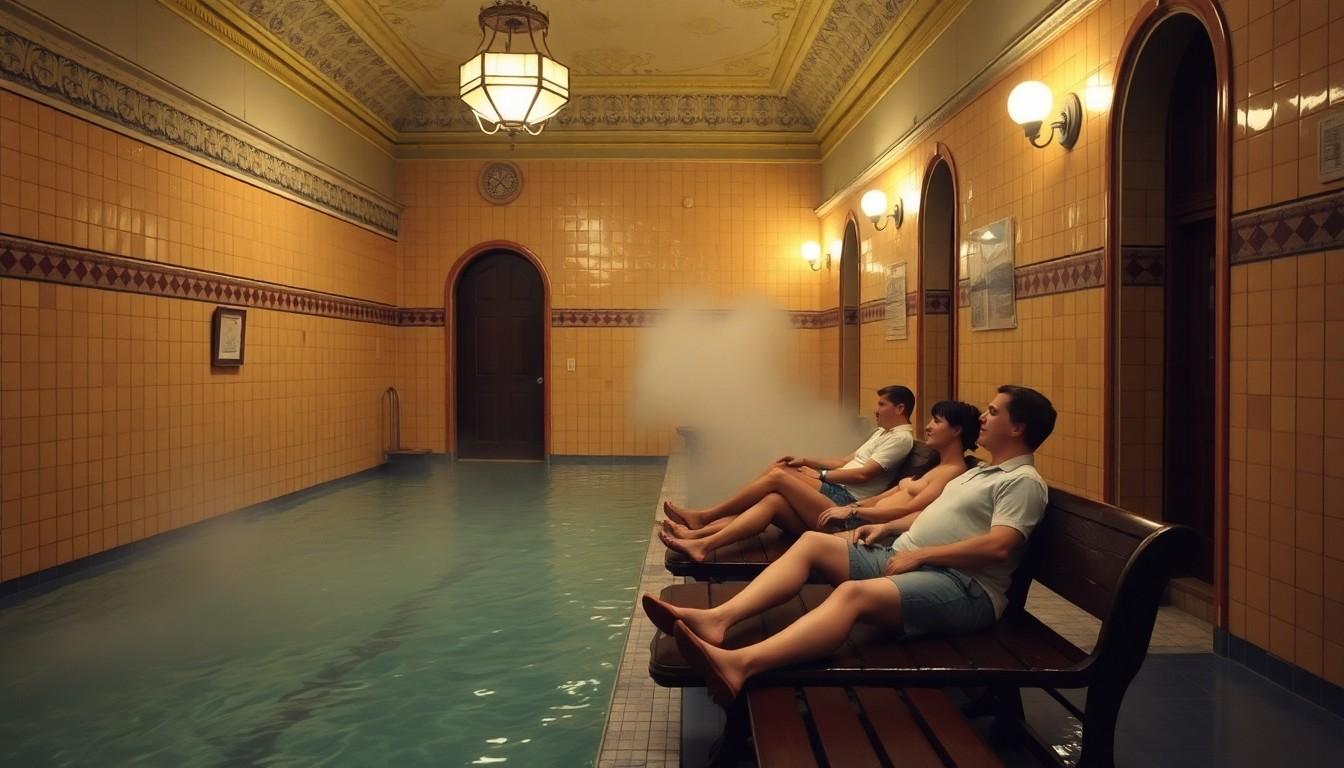
Readers are turning to New York Magazine’s first Men’s Style issue for more than fashion. Photographed shirtless at Manhattan’s historic Russian & Turkish Baths, Elliot Page joins Troye Sivan, Marlon James and other queer creatives in a portfolio exploring masculinity, self-expression and the freedom to feel at home in your own body.
Essential Takeaways
- A landmark issue: New York Magazine has launched its first dedicated Men’s Style edition.
- A striking cover star: Elliot Page appears shirtless in a relaxed bathhouse portrait.
- Queer creativity takes centre stage: Troye Sivan, Marlon James, Brandon Flynn and Jeremy O. Harris are also featured.
- A setting with history: The Russian & Turkish Baths have operated in Manhattan since 1892.
- The bigger message: The portfolio presents masculinity as broad, expressive and not confined to one look.
Elliot Page’s portrait says plenty without shouting
The most arresting detail in the portfolio is also the simplest: Elliot Page is there, shirtless and at ease. The image feels unforced, with the warm, steamy bathhouse setting doing much of the visual work.
According to Mediaite and WFMD, Page features prominently in New York Magazine’s inaugural Men’s Style issue, a project that places fashion alongside questions of identity and contemporary masculinity. It’s a confident choice for a publication’s first statement in the category.
Page has spoken publicly about the relief and confidence he found after transitioning. In the issue, he reflects on recently visiting a bathhouse and discovering that simply being present in his body could feel enjoyable rather than complicated.
That quiet shift matters. There’s no dramatic performance here, just a person looking comfortable in his own skin.
Why the bathhouse setting feels so significant
The shoot took place at the Russian & Turkish Baths in Manhattan’s East Village, a venue that has welcomed New Yorkers for more than a century. Its tiled rooms, heavy steam and old-world atmosphere make an obvious backdrop for a fashion portfolio, but the location carries more than visual texture.
The venue also sits within New York’s long queer social history. Bathhouses have offered community and intimacy during periods when openly queer life was much less visible, so using one as the stage for a mainstream style story gives the photographs an extra layer.
Complex and Fox News both highlighted the unusual setting and Page’s appearance, underlining how the issue blends celebrity fashion coverage with a broader cultural conversation. It’s a reminder that clothes and bodies rarely exist in isolation.
In this case, the setting says as much as the styling. The steam is almost a supporting character.
A wider cast changes the definition of men’s style
Page isn’t the only LGBTQ+ figure in the portfolio. Troye Sivan, Marlon James, Brandon Flynn and Jeremy O. Harris are among the other creative voices included, alongside talent from film, music, theatre, writing, fashion and dance.
That range gives the project more personality than a conventional celebrity shoot. Instead of presenting a single template for how men should dress or look, it gathers people whose work and identities stretch across several creative worlds.
Breitbart and Fiction Horizon also reported on Page’s inclusion in the first-ever issue, reflecting the attention the cover has attracted beyond the usual fashion audience. The interest makes sense: a mainstream men’s style title featuring a prominent trans man is still a meaningful editorial choice.
It also feels timely. Men’s fashion is increasingly less about rigid rules and more about shape, texture, confidence and personal story.
Jeremy O. Harris has one steam-room complaint
Jeremy O. Harris brings a lighter note to the shoot, offering his opinion on a familiar modern bathhouse habit: men entering the steam room in gym kit, trainers and socks, while appearing determined not to engage with anyone around them.
He also questions the use of headphones in a place designed for slowing down and listening. As reported by the source coverage, Harris encourages visitors to notice the small sounds around them instead.
It’s a funny observation, but it fits the issue’s wider mood. The bathhouse is not just a backdrop for polished images; it’s a social space with its own codes, rituals and occasional questionable footwear choices.
For readers, the practical takeaway is straightforward: if you’re visiting a steam room, check the venue’s rules, keep electronics somewhere safe and leave the trainers outside. Your fellow bathers will probably thank you.
Queer and trans masculinity belongs in the frame
The portfolio’s strongest idea is that queer and trans masculinity doesn’t need to be presented as a side conversation. It can simply be part of the main picture.
Page’s presence is especially resonant because his body isn’t treated as a debate or a spectacle. He appears as an actor and style subject, photographed in a setting that allows the image to feel intimate, relaxed and entirely self-possessed.
The coverage from Mediaite, WFMD and Complex reflects the cultural significance of that choice, while the wider reporting points to an issue interested in expanding rather than narrowing the definition of men’s fashion.
For a first Men’s Style issue, that’s an appealing direction. The best fashion conversations don’t tell people what masculinity must look like; they show how many different forms it can take.
A shirtless portrait can be striking, but the real statement is comfort.
Explore style that leaves room for everyone.
Source Reference Map
Story idea inspired by: [1]
Sources by paragraph: