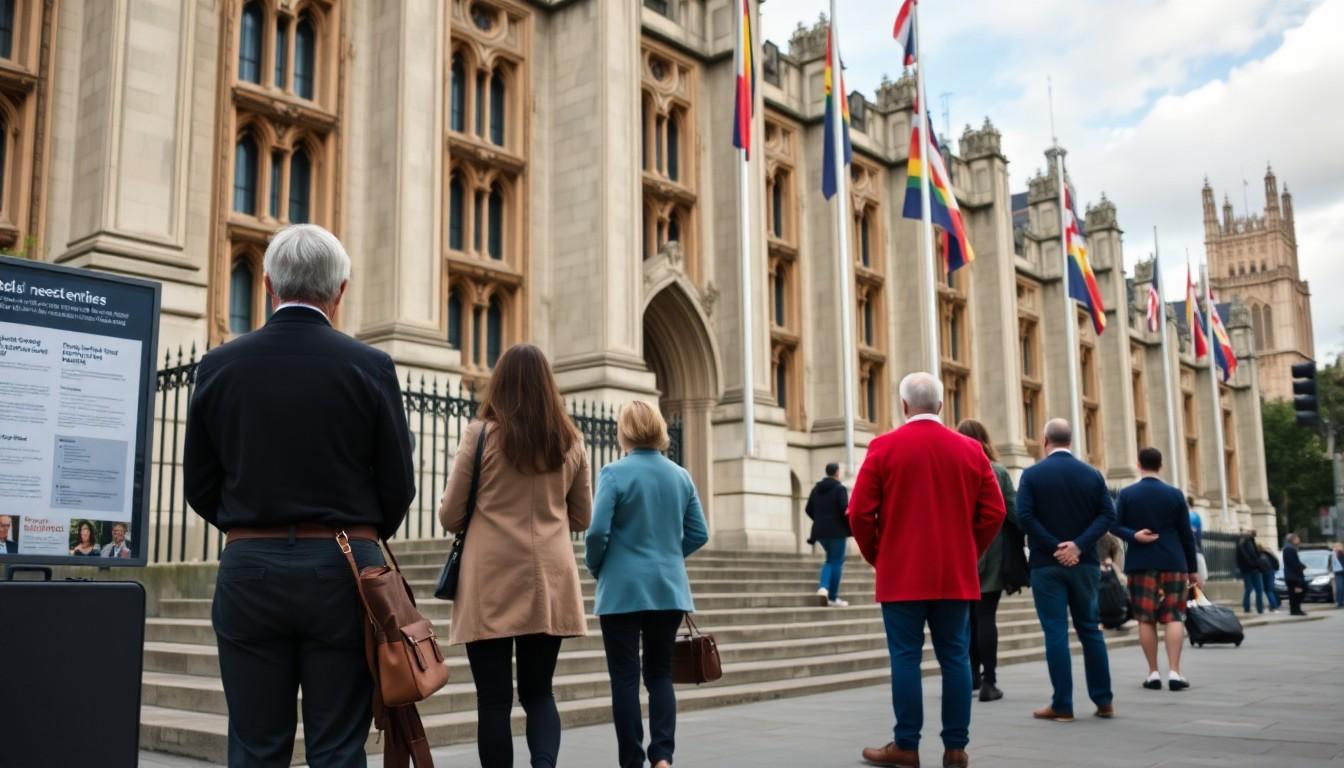
Ministers’ proposed conversion practices law is intended to protect LGBTQ+ people from abuse, coercion and harmful attempts to change identity. But critics warn that its broad wording could reach family conversations, pastoral advice and professional support, making the balance between protection and freedom of expression a crucial test for Parliament.
The argument goes far beyond banning abuse
The central disagreement isn't whether violence, sexual assault or coercive control should be illegal. Those acts are already criminal offences. The live question is whether a new law should cover a wider range of conversations, counselling and attempts to influence someone's sexuality or gender identity.
That distinction matters because conversion practices can mean very different things to different people. Campaigners describe them as harmful interventions that pressure LGBTQ+ people to change, while critics fear the definition could sweep up ordinary disagreement or religious guidance. The Government's equality assessment sets out the intended protections, but the detail will determine how the law works in real life. [2]
The American Psychological Association has also concluded that efforts designed to change sexual orientation can be harmful and lack reliable evidence of success. That gives campaigners a strong basis for opposing organised, coercive programmes, even as Parliament debates where lawful discussion should end and criminal conduct should begin. [3]
Why the evidence is facing scrutiny
The Government's impact assessment draws on available research to estimate the scale and nature of conversion practices. Yet critics say the evidence is uneven, with some survey findings difficult to interpret and broad categories potentially grouping together experiences that vary sharply in seriousness.
That concern has fuelled calls for more transparent methodology before criminal penalties are introduced. Protect and Teach, a group opposed to the draft legislation, argues that the available evidence doesn't adequately justify the Bill's reach. Its position is contested by organisations campaigning for a ban, but it reflects a wider anxiety about building criminal law on disputed estimates. [7]
Stonewall takes the opposite view, arguing that conversion practices are widespread enough to require a dedicated legal response. Its campaign describes the conduct as damaging and says existing offences don't cover every form of pressure or manipulation. [4] The clash is therefore not simply about statistics. It's also about which experiences the law should prioritise and how much uncertainty Parliament should tolerate.
Could families and faith groups be caught?
The most sensitive issue is the boundary between coercion and influence. A parent may want to protect a child from a medical decision they believe is premature. A minister may offer religious advice to someone struggling with sexual behaviour. A teacher may disagree with a pupil's requested form of address. Whether such conduct is supportive, harmful or criminal could depend heavily on the facts and on how prosecutors interpret the final wording.
Stonewall's guidance says conversion practices can include efforts aimed at changing or suppressing sexual orientation or gender identity. It also stresses that the issue isn't limited to dramatic or abusive settings. [6] That wider framing is precisely what alarms opponents, who fear that compassionate but non-affirming conversations could be investigated.
The practical safeguard, critics argue, must be a clear requirement for coercion, abuse or serious harm rather than mere disagreement. Without that clarity, families and faith communities may become cautious about offering advice at all. Nobody wants a vulnerable person trapped in an abusive programme, but neither should ordinary conversation feel like a legal minefield.
What does the draft assessment actually do?
The Government's final-stage impact assessment is designed to explain the likely consequences of the proposed legislation, including its effects on protected groups and public bodies. It presents the Bill as a targeted measure intended to address conduct that existing law may not capture. [5]
That official framing will be tested during parliamentary scrutiny. Supporters are likely to ask whether current criminal offences leave genuine gaps, while opponents will focus on free expression, parental responsibility and religious liberty. The quality of the definitions, the burden of proof and the treatment of consent will all matter more than the Bill's headline promise.
There is also a broader constitutional question. Criminal law carries the authority of the state, so Parliament should be especially careful when regulating speech, advice and belief. A narrowly drafted law may reassure both sides; a vague one could invite years of disputes over what counts as persuasion, pressure or protection.
Parliament has a difficult balance to strike
A credible law should protect people from threats, confinement, humiliation and deliberate psychological abuse. It should also make clear that adults can seek help, discuss belief and challenge ideas without automatically placing advisers or relatives under suspicion.
The American Psychological Association's evidence on harmful change efforts supports firm action against practices presented as a guaranteed way to alter sexual orientation. [3] Meanwhile, the Government's own assessments provide the framework for judging whether a new offence is proportionate and workable. [2] Those two strands need to meet in a law that is both protective and precise.
For many readers, the issue will feel less abstract when viewed through an ordinary family or congregation. The safest legislation won't demand that everyone agrees. It will draw a bright line around coercion and abuse while leaving room for conscience, honest conversation and lawful support.
The debate now needs less slogan-trading and more careful testing of the text. [5] Parliament should listen to survivors, clinicians, parents, religious communities and civil-liberties experts before deciding whether the draft is ready for the statute book.
A strong ban should stop abuse without criminalising disagreement.
Source Reference Map
Story idea inspired by: [1]
Sources by paragraph: