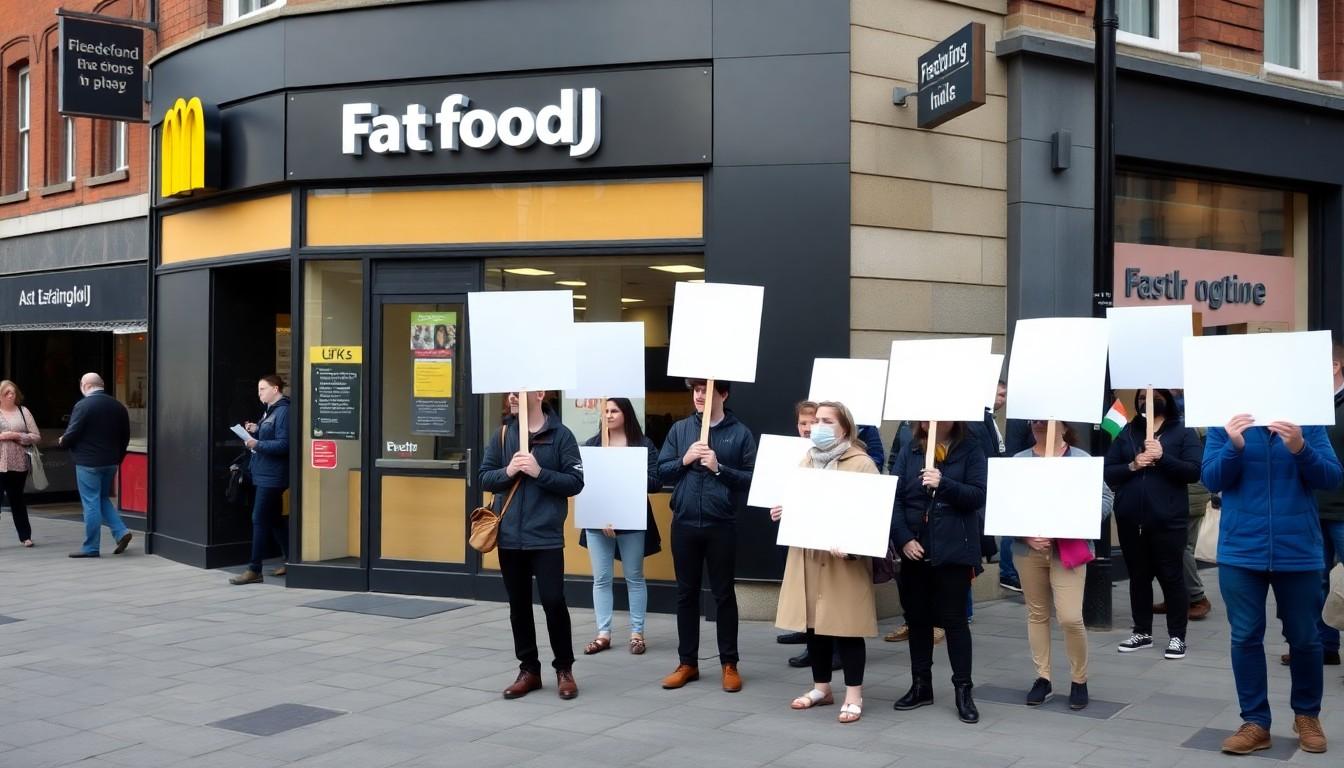
Campaigners have staged a colourful protest outside Chick-fil-A on Liverpool’s Lord Street, urging customers to boycott the restaurant because of historic donations linked to anti-LGBTQ+ organisations. The demonstration has reopened questions about the fast-food chain’s charitable giving, its UK ambitions and whether its newer community commitments can win over sceptical diners.
Essential Takeaways
- A public protest: Peter Tatchell Foundation campaigners gathered outside the Liverpool restaurant, with “Ru Cluck the Chicken” helping attract attention.
- The central criticism: Activists object to historic Chick-fil-A Foundation donations to groups opposed to marriage equality and LGBT+ rights.
- The company’s position: Chick-fil-A has said donations weren’t intended to support a political or social agenda and that its giving priorities have changed.
- A fresh UK test: The Lord Street opening follows earlier, short-lived attempts to establish Chick-fil-A in Britain.
- Local investment: The chain pledged £25,000 to Liverpool charity Opening Doors Project and says it donates surplus food locally.
Why protesters targeted Chick-fil-A in Liverpool
The protest outside the Grade II-listed Lord Street premises was designed to turn a complicated corporate history into a very visible street-level message. Campaigners spoke with passers-by about past donations and encouraged people to avoid the restaurant, while the large chicken mascot added a slightly surreal note to the picket.
According to the Peter Tatchell Foundation, the group had tried to engage Chick-fil-A over its links to organisations accused of opposing LGBT+ equality, but said those efforts had not produced a meaningful response. The foundation has previously staged protests around the chain’s UK expansion, arguing that public pressure is needed when private correspondence goes unanswered.
Chick-fil-A representatives and Liverpool franchisee David Pritchard declined to comment on the demonstration. That silence may frustrate campaigners, but it also keeps the argument firmly focused on the brand’s record rather than the food itself.
The donations behind the controversy
The dispute centres on money donated through the Chick-fil-A Foundation to charities and groups that critics say worked against LGBT+ rights. Reporting by Axios and the Los Angeles Times found that the company had given substantial sums to organisations associated with opposition to same-sex marriage and related equality measures.
LGBTQ Nation later reported further donations of roughly $1.8 million to groups viewed by activists as anti-LGBTQ+. Those reports helped fuel boycotts in the United States and made the issue particularly difficult for Chick-fil-A to leave behind, even as its charitable policies evolved.
The company has argued that the donations were intended to support programmes such as sport and community work, not to promote a political agenda. PolitiFact has also examined claims that Chick-fil-A reversed or concealed its giving position, finding that available documents did not support every version of the accusation circulating online.
A newer charity strategy, but an old reputation
Chick-fil-A changed its approach to charitable partnerships around 2020, including the appointment of a head of diversity and a greater emphasis on education and hunger relief. It also confirmed that it no longer donated to one organisation that had become a major focus of criticism.
That shift matters, but reputations don't reset as neatly as company policies. For many LGBT+ customers and allies, the question isn't only where money goes today; it's whether the business has acknowledged the harm and explained how its standards have changed.
In Liverpool, the company has tried to establish a more local connection. Its one-off £25,000 donation went to Opening Doors Project in Fazakerley, while surplus food is intended for shelters, soup kitchens and other food charities. Those measures are practical and welcome, but campaigners clearly want a direct conversation about equality as well.
Can the Liverpool restaurant win over sceptical diners?
The Lord Street opening is another attempt to make Chick-fil-A a familiar name in Britain after earlier branches in Reading and the Scottish Highlands closed after brief runs. This time, the company says it plans to listen to local organisations and create an inclusive environment for customers from every background.
That promise will be tested in a city with a strong queer community and a lively tradition of public debate. A polished restaurant, friendly service and local donations may attract curious diners, but online searches about Chick-fil-A's LGBT donation history are likely to remain part of the customer journey.
For shoppers and diners trying to make informed choices, the useful step is to check current charity policies rather than rely solely on old social-media posts. At the same time, historic giving is still relevant when a company's leadership, ownership and public identity remain closely connected.
What happens next for Chick-fil-A?
The protest won't decide the restaurant's future on its own. Footfall, repeat visits, local partnerships and the company's willingness to answer difficult questions will matter far more than one afternoon outside the door.
Still, the demonstration has given Liverpool customers a clear choice before they've even ordered. The chain can treat the controversy as background noise, or use the attention to show, in plain terms, what inclusion means in practice.
For a brand built around family values and community giving, that conversation is unlikely to disappear quickly. As one campaigner’s feathered costume made clear, sometimes a serious message arrives wearing a very large chicken suit.
A strong local presence will require more than a menu and a donation, it will require trust.
Source Reference Map
Story idea inspired by: [1]
Sources by paragraph:
- Paragraph 1: [2], [3]
- Paragraph 2: [2], [4]
- Paragraph 3: [3], [5]
- Paragraph 4: [7], [6]
- Paragraph 5: [4], [6]
- Paragraph 6: [2], [4]
- Paragraph 7: [5], [6]
- Paragraph 8: [3], [4]
- Paragraph 9: [2], [6]
- Paragraph 10: [4], [5]
- Paragraph 11: [2], [3]
- Paragraph 12: [6], [7]
- Paragraph 13: [2], [4]
- Paragraph 14: [3], [6]
- Paragraph 15: [4], [5]