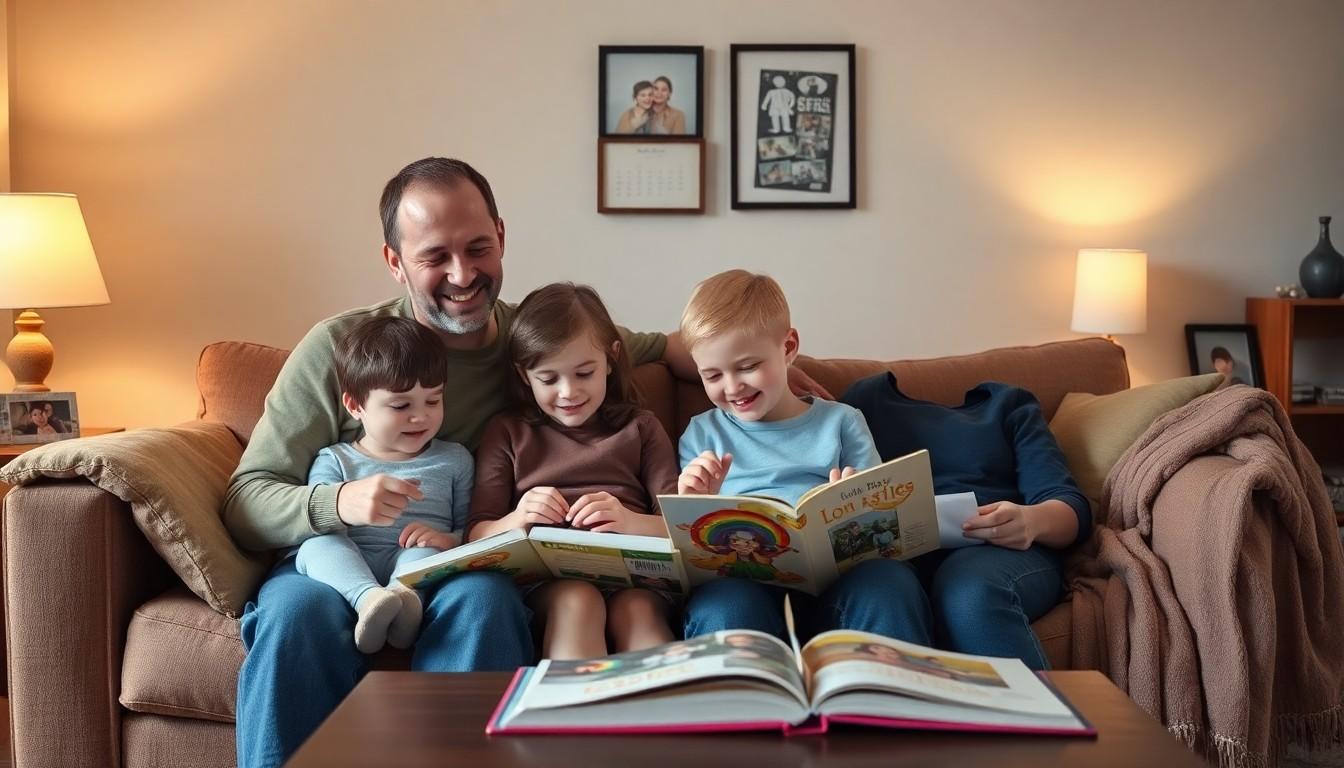
Parents and carers are increasingly choosing LGBTQ-inclusive picture books that show families simply getting on with life. From lively mornings and messy meals to bedtime mayhem and changing households, these warm stories make room for many kinds of family without turning inclusion into a lesson.
Essential Takeaways
- Everyday representation: These stories centre play, food, bedtime and family change, rather than making identity the whole plot.
- Gentle support: Several books offer useful reassurance around transitions, big feelings and household disruption.
- Bilingual flavour: Menudo Sunday brings Spanglish language and Mexican family traditions to a counting-book format.
- Ages and formats vary: Board books, rhythmic picture books and more reflective family stories offer options for different readers.
- Representation feels natural: LGBTQ parents and relatives appear as part of the child’s ordinary world, with warmth and humour.
These books put family life first
The most appealing thing about these LGBTQ-inclusive picture books is how unremarkable their families are allowed to be. Children refuse to leave the playground, dinner goes awry and bedtime stretches into a small domestic circus. The stories are full of movement, noise and affection, with LGBTQ parents present because they belong there.
That approach matters. Guidance and reading lists from BookTrust and other children’s literacy organisations increasingly highlight picture books that represent LGBTQ families through ordinary experiences, giving young readers mirrors of their own lives and windows into others. (BookTrust; Seattle's Child)
From dance-class delays to bedtime chaos
In Won't Go, a child resists leaving play for dance class, while her two dads respond with patience, encouragement and a little silliness. It captures a familiar parental negotiation: the child is having far too much fun, and the grown-ups are trying to move the day along without crushing the mood.
The Witching Hour takes a similarly recognisable stretch of family life and gives it a magical makeover. Its two-mum family navigates the lively period between dinner and sleep, when baths, games and sudden meltdowns can all arrive at once. The rhythmic writing and cosy illustrations make it an especially tempting bedtime choice, even if real-life bedtime remains less enchanted. (Iowa City Public Library; InclusiReads)
Food, counting and a very memorable mess
Menudo Sunday brings family culture, language and counting together around a bowl of Mexican soup. The little girl counts through a gathering that includes her two grandfathers, while Spanglish phrases and the warmth of the household give the book its flavour.
Then the menudo spills. Rather than turning the accident into a disaster, the family pauses, breathes and starts again. That small response gives the book an appealing emotional message: mishaps can interrupt a happy moment without ruining it. Pride reading lists frequently recommend books that combine LGBTQ representation with cultural specificity, rather than treating either as an add-on. (BookTrust; Bookshop.org)
Family change can be tender, complicated and hopeful
The Pumpkin Seed focuses on a more delicate transition. A girl struggles when her mother's female partner moves into the family home, and the story gives her feelings room instead of expecting instant happiness.
That makes the book useful for conversations about blended families, new relationships and the uncertainty that can accompany change. Its garden imagery offers a gentle way to talk about love growing over time, while the adults' willingness to listen keeps the story grounded. Inclusive family reading guides often stress that representation works best when characters are allowed ordinary worries as well as joyful moments. (Seattle's Child; Bay Windows)
How to choose the right inclusive picture book
For toddlers, a board book with repetition and a simple everyday problem is often the easiest starting point. Won't Go suits families looking for a playful story about transitions, while a counting book such as Menudo Sunday can add language, rhythm and cultural detail to shared reading.
Older preschoolers may connect more with stories about emotional change or busy household routines. Look for expressive illustrations, repeated phrases and a plot that leaves room for questions. You don't need to announce a book's message, either. Sometimes the most powerful moment is simply a child seeing a family that looks different from theirs enjoying the same familiar chaos. (Bookshop.org; InclusiReads)
Why ordinary representation has lasting value
A picture book doesn't have to explain LGBTQ identity to represent LGBTQ lives. When children see two dads helping with a transition, two mums managing bedtime or grandfathers sharing a family meal, inclusion becomes part of the story's landscape.
That quiet visibility can make books feel more welcoming for everyone. Parents may also find that these titles open conversations naturally, without turning reading time into a formal discussion. The best ones leave you with a smile, a question or the strong suspicion that the grown-ups need a snack too. (Iowa City Public Library; BookTrust)
It's a small, joyful way to make the family bookshelf more representative.
Source Reference Map
Story idea inspired by: [1]
Sources by paragraph: