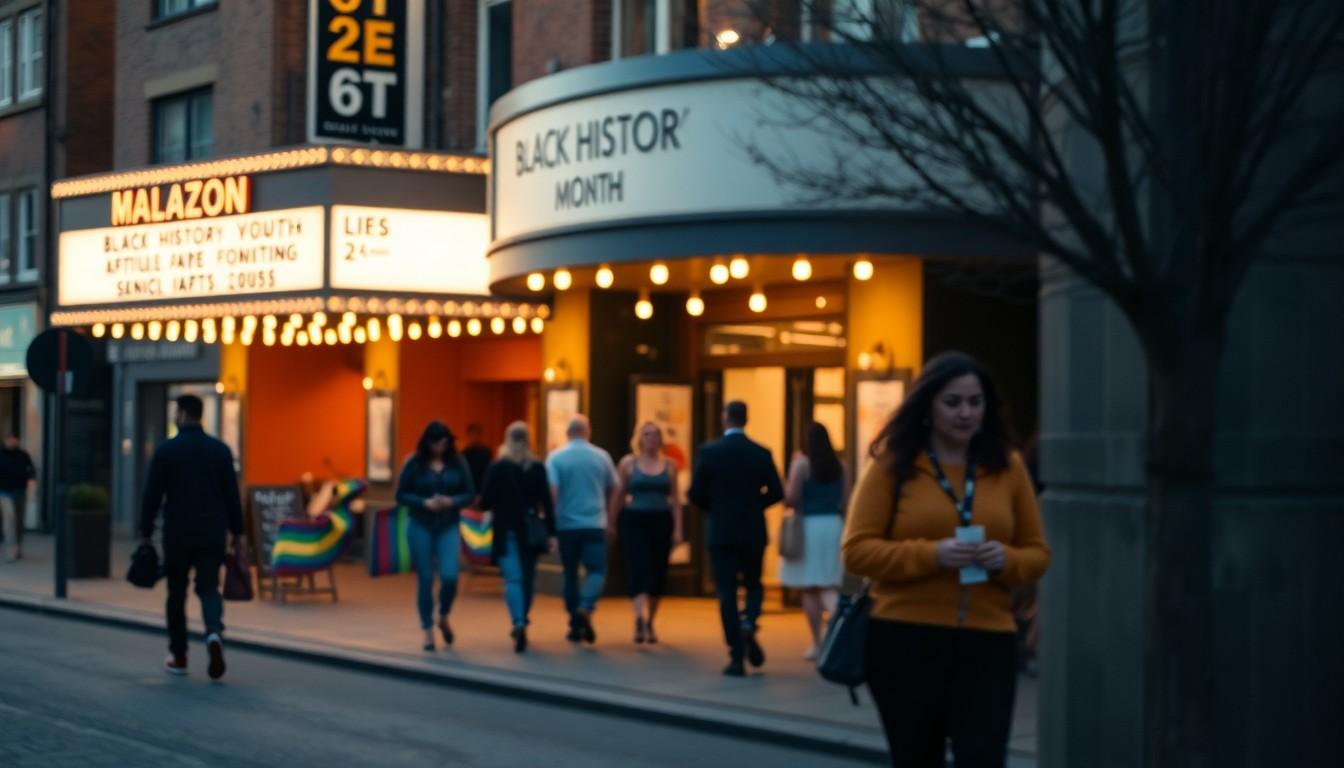
Black History Month invites reflection, but Isaac Julien's Looking for Langston offers something more intimate: a haunting, beautiful way to consider Black queer desire, identity and belonging. For audiences in the UK and beyond, its themes still feel strikingly close to modern conversations about representation, relationships and the gaze.
Essential Takeaways
- A landmark film: Isaac Julien's 1989 work explores Black queer desire through poetry, music and dreamlike imagery.
- More than history: Its ideas about objectification and visibility still resonate with dating and social life today.
- A wider tradition: Black History Month connects contemporary creative work with generations of Black artists and activists.
- Quietly powerful: The film doesn't offer tidy answers, but it creates space for recognition and reflection.
Looking for Langston turns history into something personal
Some films arrive with the weight of history. Looking for Langston arrives in a smoky, poetic haze, where music, bodies and fragments of memory create an atmosphere that feels both private and theatrical.
Isaac Julien's short film imagines the world around writer Langston Hughes and the Harlem Renaissance, while also considering Black male beauty, desire and cultural memory. According to the film's background history, it isn't a conventional biography. Instead, it uses Hughes as a gateway into questions about intimacy, identity and who gets to look, desire and be seen.
That distinction matters. The film's power doesn't come from explaining everything neatly. It comes from making the viewer sit with longing and uncertainty, which can feel surprisingly modern.
Why Black queer representation still needs room to breathe
Black History Month is often presented as a time to learn about major historical events and achievements. Childline describes it as an opportunity to celebrate Black history and culture, while also encouraging learning about the experiences and contributions of Black people.
That educational role is important, but art adds another layer. It lets people explore history through mood, emotion and imagination rather than dates alone. For Black queer viewers, that can be especially meaningful when mainstream accounts have so often left sexuality, desire and private life at the margins.
Looking for Langston helps fill that gap without pretending the past was simple. It presents beauty alongside exclusion, and desire alongside the pressures placed on Black bodies. The result feels less like a lesson and more like an invitation to look again.
The film's gaze feels uncomfortably familiar
One of the film's most enduring ideas is that admiration isn't always the same as recognition. A person can be desired for an image or stereotype while their wider humanity goes unseen. That tension remains painfully relevant in contemporary dating culture, where profiles and quick judgements can reduce people to categories within seconds.
The film's visual language makes that discomfort difficult to ignore. Its elegant compositions and sensual imagery draw the viewer in, but they also raise questions about consumption and control. Who is looking? Who is being displayed? And what happens when beauty becomes a form of confinement?
Those questions sit alongside wider Black History Month conversations about representation and belonging. Skills for Care notes that the month can encourage organisations to examine inclusion and create more thoughtful conversations, rather than treating diversity as a once-a-year gesture. The same principle applies to culture: visibility matters, but the quality of that visibility matters even more.
From Baldwin to today's Black queer storytelling
The film sits within a larger creative conversation that includes James Baldwin's writing on desire, shame and emotional vulnerability. Baldwin's work remains valuable because it understands that intimacy can be both liberating and frightening, especially when people have learned to hide parts of themselves to survive.
That lineage helps explain why older works can feel unexpectedly useful now. They don't mirror every detail of modern life, but they offer language for recurring problems: objectification, loneliness, internalised shame and the longing to be understood rather than simply wanted.
History UK's account of Black History Month traces its development as a platform for recognising Black achievement and challenging historical omissions. Seen in that context, films such as Looking for Langston aren't decorative additions to the cultural record. They're part of the record itself, preserving experiences that might otherwise be flattened or forgotten.
How to engage with the film this Black History Month
If you're new to Looking for Langston, approach it as an art film rather than a straightforward historical account. Give it time, notice its sound and imagery, and resist the urge to search for one definitive interpretation. A second viewing may reveal more than the first, particularly once the film's rhythms begin to feel familiar.
It can also help to pair the film with reading about Langston Hughes, James Baldwin and the Harlem Renaissance. Community screenings, queer film programmes, galleries and library events can offer useful conversation, although watching privately and reflecting afterwards is equally valid.
Black History Month in Wales describes the occasion as a chance to recognise Black histories, achievements and contributions while encouraging learning and dialogue. That spirit suits Julien's film perfectly. It doesn't demand a loud response; sometimes the most lasting reaction is the quiet realisation that an old work has found you at exactly the right moment.
Looking for Langston remains a beautiful reminder that Black queer history isn't only about survival. It's also about imagination, tenderness and the right to be seen in full.
Explore the film with curiosity, and let its questions stay with you.
Source Reference Map
Story idea inspired by: [1]
Sources by paragraph:
- Paragraph 1: [6], [7]
- Paragraph 2: [7], [3]
- Paragraph 3: [2], [5]
- Paragraph 4: [4], [6]
- Paragraph 5: [3], [7]
- Paragraph 6: [6], [7]
- Paragraph 7: [2], [4]
- Paragraph 8: [5], [6]
- Paragraph 9: [3], [7]
- Paragraph 10: [2], [5]
- Paragraph 11: [4], [6]
- Paragraph 12: [2], [3]
- Paragraph 13: [5], [7]
- Paragraph 14: [6], [7]