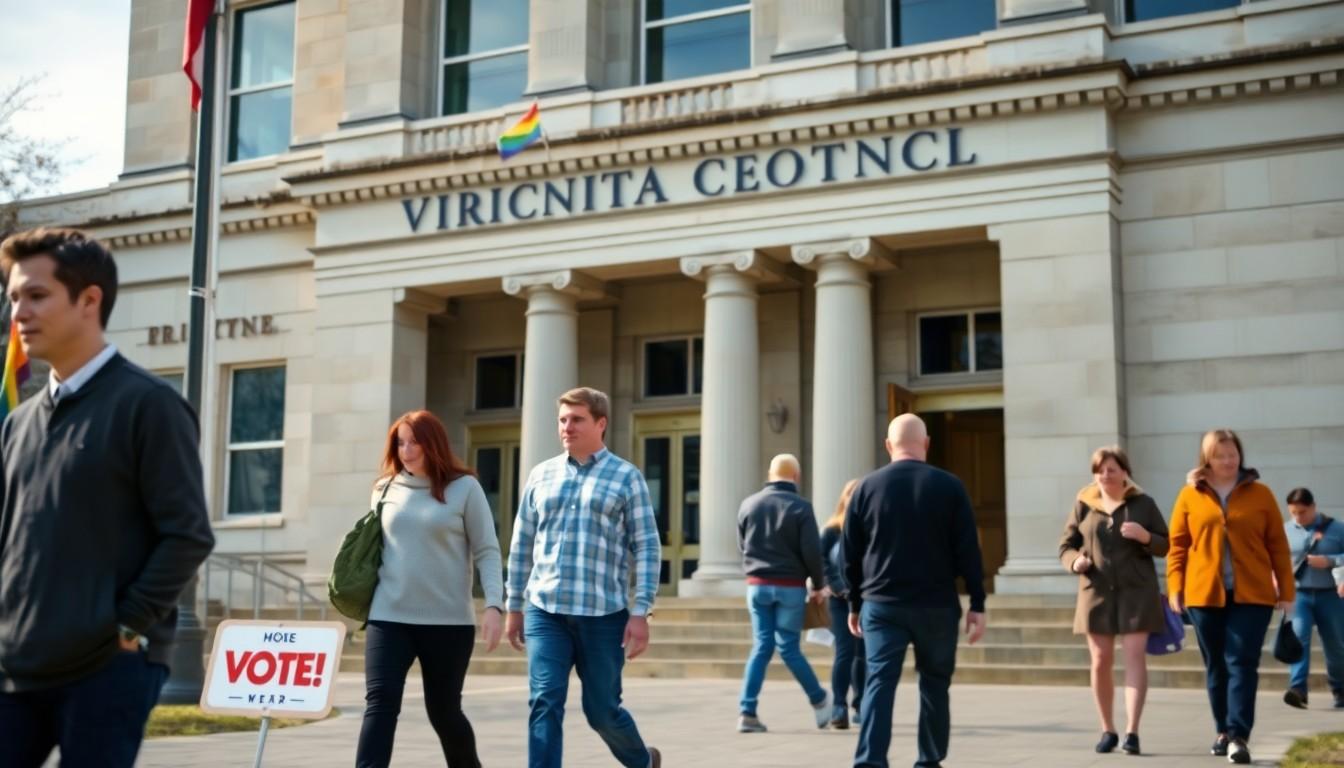
Virginia voters are being asked to decide whether marriage equality should be protected directly in the state constitution. With early voting under way, Question 2 matters because it could remove outdated language and give same-sex couples a clearer legal safeguard, even though equal marriage has been recognised in Virginia for more than a decade.
Essential Takeaways
- Question 2: The amendment would remove Virginia's obsolete constitutional ban on same-sex marriage.
- Why now: Equal marriage is legal, but the old wording remains on the books.
- What it reflects: The vote follows wider concern about the durability of LGBTQ+ rights.
- Who is watching: Same-sex couples, advocacy groups and voters across Virginia are being urged to pay attention.
- Practical point: Early voters should check their ballot carefully and find the official amendment wording before voting.
Virginia's marriage ban is still written into the constitution
The striking thing about Question 2 is that it isn't creating marriage equality from scratch. Same-sex couples have been able to marry in Virginia since 2014, following court action that came before the US Supreme Court's nationwide ruling in Obergefell v. Hodges.
Instead, voters are being asked to clean up the state's constitutional text. Current wording still describes marriage in terms that exclude same-sex couples, creating an awkward legal shadow over rights that are already recognised in practice.
Official election information lists Question 2 among Virginia's proposed constitutional amendments. Ballot explainers describe it as a measure designed to repeal the defunct prohibition rather than alter the day-to-day process of getting married. [6]
Why the amendment feels personal for long-married couples
For Arlington couple Rob Bookbinder and James Fisher, the issue reaches well beyond legal housekeeping. They've been together for 38 years and married in 2014, yet the old constitutional language still feels like a reminder that their relationship was once treated as less legitimate.
Speaking to the Washington Blade, Bookbinder recalled how meaningful it felt to use the words "my husband" instead of "my partner". It's a small phrase, perhaps, but for couples who spent years without equal recognition, language can carry a surprisingly heavy emotional weight.
Fisher described the vote as a chance to remove discriminatory wording and make the state's position unmistakable. That personal angle helps explain why an apparently technical amendment has attracted such strong feeling. [7]
Question 2 comes amid a broader rights debate
Supporters see the amendment as a safeguard in an unsettled political climate. Although the Supreme Court's 2015 decision established marriage equality nationwide, the continued presence of Virginia's ban has made some couples uneasy, particularly as debates over LGBTQ+ rights have intensified elsewhere in the United States.
The campaign also follows a failed effort in 2022 to remove the old ban. That earlier setback showed that legal recognition on the ground doesn't necessarily mean outdated constitutional language disappears quickly.
For voters, the comparison is useful. Question 2 isn't a referendum on whether same-sex couples may currently marry in Virginia; it's a decision about whether the state constitution should continue to contain language that says otherwise. [2]
How to make sense of the ballot measure
The simplest way to approach Question 2 is to read the official wording rather than rely on campaign shorthand. Check whether the amendment removes the existing prohibition, note any replacement language, and use Virginia's election resources for polling, registration and early-voting details.
Advocacy groups including Equality Virginia have urged residents to make sure they don't overlook the measure. Constitutional amendments can sit below headline races on a busy ballot, so it pays to slow down and review every question before submitting it.
If you're voting early, check your local election office's timetable and bring the identification or voting materials required in your area. A few quiet minutes of preparation can prevent a rushed decision at the ballot box. [3]
What approval could mean for Virginia
If voters approve Question 2, Virginia's constitutional text would better match the legal reality experienced by same-sex couples today. It would also send a clear symbolic message that the state no longer wishes to preserve a marriage ban that has been unenforceable for years.
Supporters hope that visibility will help normalise same-sex marriage further, making it easier for younger people and families to see it as part of ordinary civic life rather than a special exception. That may sound modest, but constitutional language has a way of shaping who feels fully included.
The result will matter both practically and emotionally. For couples like Bookbinder and Fisher, removing the old wording could make Virginia's welcome feel a little more complete. [4]
It's a small-looking constitutional edit with a very human purpose: making the law match the lives people are already living.
Source Reference Map
Story idea inspired by: [1]
Sources by paragraph: