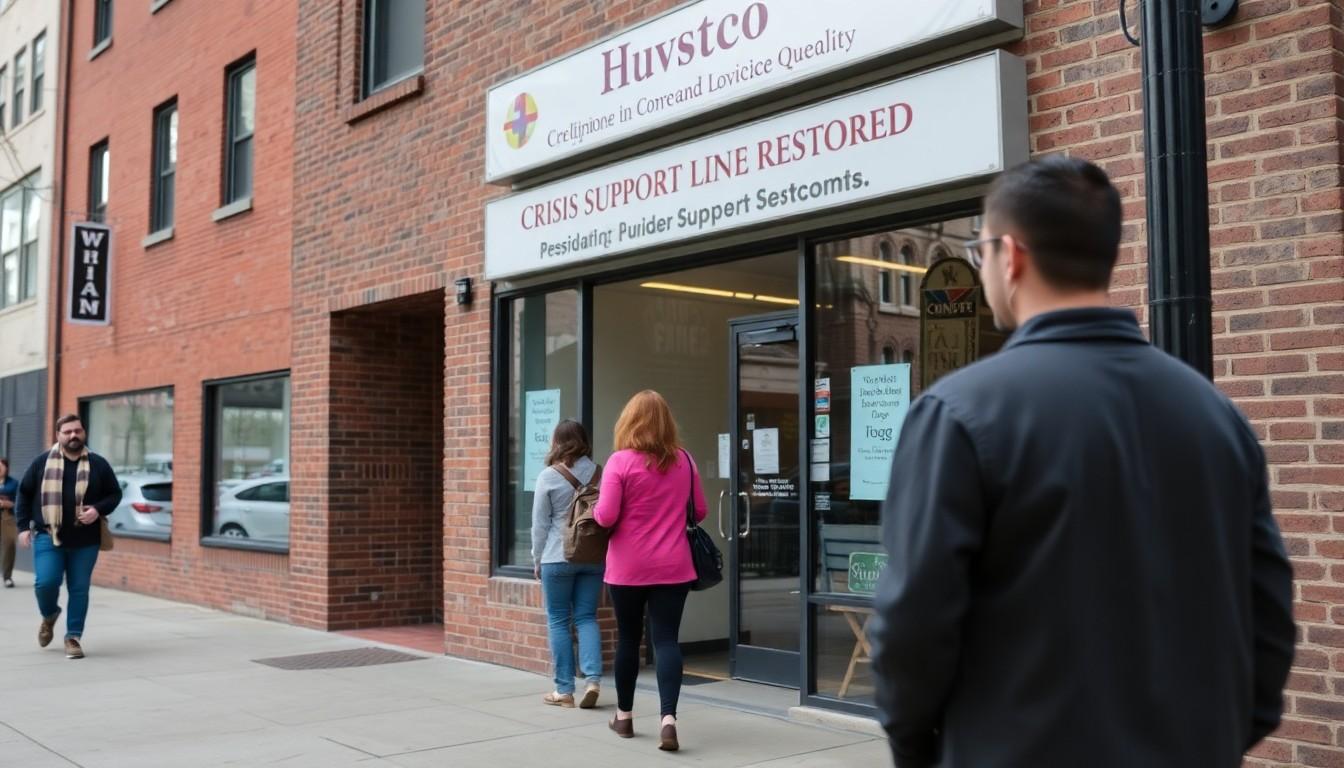
LGBTQ+ young people in the US can once again choose the 988 Press 3 service, a dedicated crisis route designed for them. Its return is welcome news, but uncertainty remains over who operates it, how counsellors are trained and whether trans and non-binary callers will receive fully affirming support.
Essential Takeaways
- Press 3 is back: LGBTQ+ young people can again access a specialised route through the US 988 Suicide & Crisis Lifeline.
- The Trevor Project is absent: The organisation helped create the service but wasn't selected to operate the restored programme.
- Demand has been substantial: The service handled nearly 70,000 calls, texts and chats in its final full month before closure.
- Questions remain: Federal officials haven't clearly explained the new provider arrangements or guidance for supporting trans and non-binary callers.
- Help is available now: Call or text 988 in the US, or use The Trevor Project's separate 24/7 services for LGBTQ+ young people.
Press 3 is finally back
The return of Press 3 restores a missing doorway in America's crisis-support network. For LGBTQ+ young people reaching out during a frightening, lonely moment, being able to select a service built around their experiences can make the first conversation feel less daunting.
The service was restored after Congress directed the federal government to bring it back, following its shutdown in July 2025. The Congressional Equality Caucus welcomed the move, while stressing that specialist support should remain available to young people who need it, according to its public statement. [2]
The wider 988 network continued during the gap, but the dedicated LGBTQ+ option disappeared. That distinction matters. A general crisis line may offer compassionate help, yet specialist training can help counsellors understand issues such as family rejection, minority stress, coming out and identity-based harassment.
A popular service returns without its best-known partner
The Trevor Project helped launch Press 3 and operated a significant share of its contacts. The organisation says it submitted a proposal to rejoin the restored service, but that proposal wasn't accepted.
In its response to the reopening, The Trevor Project said it was pleased to see the specialised option return and would monitor how the service performs. It also confirmed that its own crisis support remains available independently, according to the organisation's announcement. [3]
That creates an awkward twist: the programme is back, but one of the groups most closely associated with LGBTQ+ youth crisis care isn't running it. For callers, the practical question is simple: will the new service feel as informed, respectful and easy to use as the one they remember?
Why the numbers make the interruption hard to ignore
Press 3 wasn't a niche experiment quietly serving a handful of callers. Research from The Trevor Project recorded extensive use of LGBTQ+ crisis services, reflecting the scale of demand for accessible, identity-aware help among young people. [5]
The original programme received roughly 1.6 million contacts before it was closed, with about half handled by The Trevor Project. In June 2025 alone, the final full month before shutdown, it handled close to 70,000 calls, texts and online chats.
Research and analysis from KFF have also highlighted wider uncertainty around the future of LGBTQI+ services within 988. That uncertainty can be unsettling in itself, particularly for young people who need to know where they'll be heard before they reach breaking point. [4]
Can trans and non-binary callers trust it?
This is the most important unresolved issue. Federal officials have confirmed that Press 3 has returned, but haven't clearly explained what training, identity-affirming guidance or operating standards counsellors will follow.
That lack of detail is especially significant for trans and non-binary young people. The 988 Lifeline says its LGBTQ+ support is intended to connect callers with trained crisis counsellors, according to its guidance for LGBTQ+ people. [6] However, public questions about names, pronouns and gender identity remain unanswered.
In a crisis, nobody should have to prepare a case for their own dignity before asking for help. Until operating details are published, families and young people may reasonably want to check what support is available and how a service handles identity-related concerns.
What to do if help is needed now
In the US, call or text 988, or use the 988 Lifeline's online chat. If you're an LGBTQ+ young person aged 24 or under, The Trevor Project's separate services remain available by phone, text and online chat. The organisation has also reiterated that its support continues outside the federal Press 3 programme. [3]
Trans Lifeline is another option for transgender and gender-diverse people in the US and Canada. If someone is in immediate danger, contact emergency services, but for many people in emotional distress, a confidential crisis conversation can be the first manageable step.
The biggest test now will be consistency. A service can be restored on paper, but trust is earned through every calm, respectful interaction that follows.
Press 3 is back, but lasting confidence will depend on the care behind the button.
Source Reference Map
Story idea inspired by: [1]
Sources by paragraph: