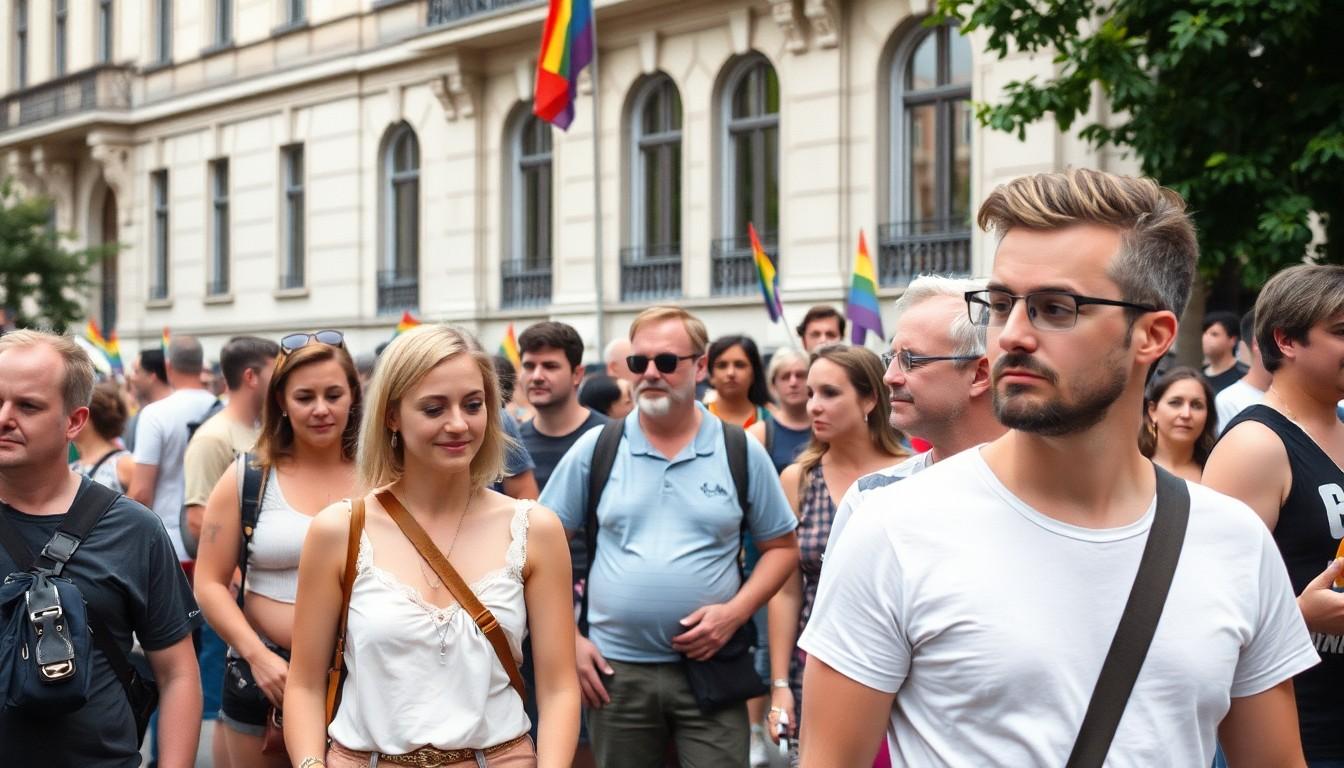
Pécs Pride has returned to Hungary's streets without a counter-protest, offering a striking glimpse of a country testing its new political mood. For LGBT people and their allies, the event matters beyond one southern city: public hostility has eased, yet campaigners say legal protections still lag behind the sense of social freedom.
Essential Takeaways
- A visible return: Pécs Pride was held again, with no reported counter-demonstration.
- A political turning point: The previous government's restrictions helped turn Pride into a wider symbol of democratic resistance.
- Progress is incomplete: Recent legal changes have been welcomed, but rights groups say important protections are still missing.
- Prosecutions dropped: Charges linked to organising Pride marches in Budapest and Pécs were abandoned.
- The mood has shifted: The atmosphere is less openly hostile, although reform has yet to match public expectations.
Pécs Pride offers a vivid snapshot of Hungary's new mood
The most telling image from Pécs may be the simplest one: a Pride event taking place without an opposing crowd shouting from the sidelines. That quieter atmosphere doesn't erase years of pressure on LGBT communities, but it suggests the political weather has changed.
Euronews reported that Pécs Pride was held again in September, with no counter-protest. For organisers and participants, that kind of normality can feel almost radical after years in which LGBT rights were treated as a culture-war prop. (Euronews, [2])
The event also carried national significance. Pécs is not Budapest, and that matters. A public celebration outside the capital shows how questions of equality and visibility have moved into everyday civic life, rather than remaining confined to the country's political centre.
From official hostility to cautious relief
Under Viktor Orban's government, Hungary became known internationally for policies that restricted LGBT rights and framed gender and sexuality through a so-called child-protection agenda. Human Rights Watch has documented the wider pattern of discrimination and official pressure affecting LGBT people in Hungary. (Human Rights Watch, [5])
That approach helped build a political story about Hungary defending itself against a supposedly decadent Western Europe. But it also made Pride an increasingly powerful counter-symbol. When Budapest's march was threatened with prohibition, the response was not quiet retreat. Instead, the issue helped drive one of the largest demonstrations of the post-communist era, according to reporting reviewed by HVG. (HVG, [1])
There was a certain political irony to it. Attempts to suppress a march designed to claim visibility ended up making the event far more visible.
The legal picture is improving, but slowly
A less confrontational public mood is welcome, but it isn't the same as a complete rights settlement. Human Rights Watch has described proposed and emerging reforms as a positive step while stressing that Hungary still has further work to do on anti-LGBT laws and equal treatment. (Human Rights Watch, [4])
The debate includes adoption, legal gender recognition and broader safeguards against discrimination. Hungary's Conservative has also reported on proposals touching these areas, showing that reform is now being discussed in terms that were previously politically difficult to imagine. (Hungarian Conservative, [3])
For families and individuals, these aren't abstract policy points. They affect whether a couple can build a family, whether official documents reflect someone's identity and whether a person can expect meaningful protection when discrimination occurs. A friendlier atmosphere is reassuring, but paperwork and enforceable rights are what make change durable.
Why dropping Pride charges matters
The decision to abandon charges against organisers of Budapest and Pécs Pride marches adds another important layer to the story. The Hungarian Helsinki Committee said prosecutors dropped the cases, describing the outcome as evidence that freedom had prevailed. (Hungarian Helsinki Committee, [6])
Human Rights Watch likewise reported that Hungarian prosecutors dropped Pride-related charges. That doesn't undo the anxiety created by the investigations, but it removes the threat of criminal proceedings hanging over people who helped organise public events. (Human Rights Watch, [7])
For civic groups, the message is especially significant. A march is not only a celebration; it's also an exercise in association, assembly and public speech. When organisers can work without fearing prosecution, the practical meaning of those freedoms becomes much clearer.
What happens next for LGBT rights in Hungary?
Pécs offers an encouraging sign, but it shouldn't be mistaken for a finished transformation. Rights groups still want stronger legal protections, clearer recognition for trans people and equal treatment for LGBT families. Those demands will test whether the new political direction is genuinely reformist or simply less aggressive in tone.
The contrast is striking: the streets may feel calmer, while the legal system remains a work in progress. That gap is where Hungary's next argument over equality is likely to unfold. For many participants, though, simply gathering openly in Pécs will have felt like a small, powerful return to ordinary life.
The real test will be whether that ordinary feeling becomes permanent.
It's a meaningful step forward, but lasting equality needs more than a peaceful parade.
Source Reference Map
Story idea inspired by: [1]
Sources by paragraph: