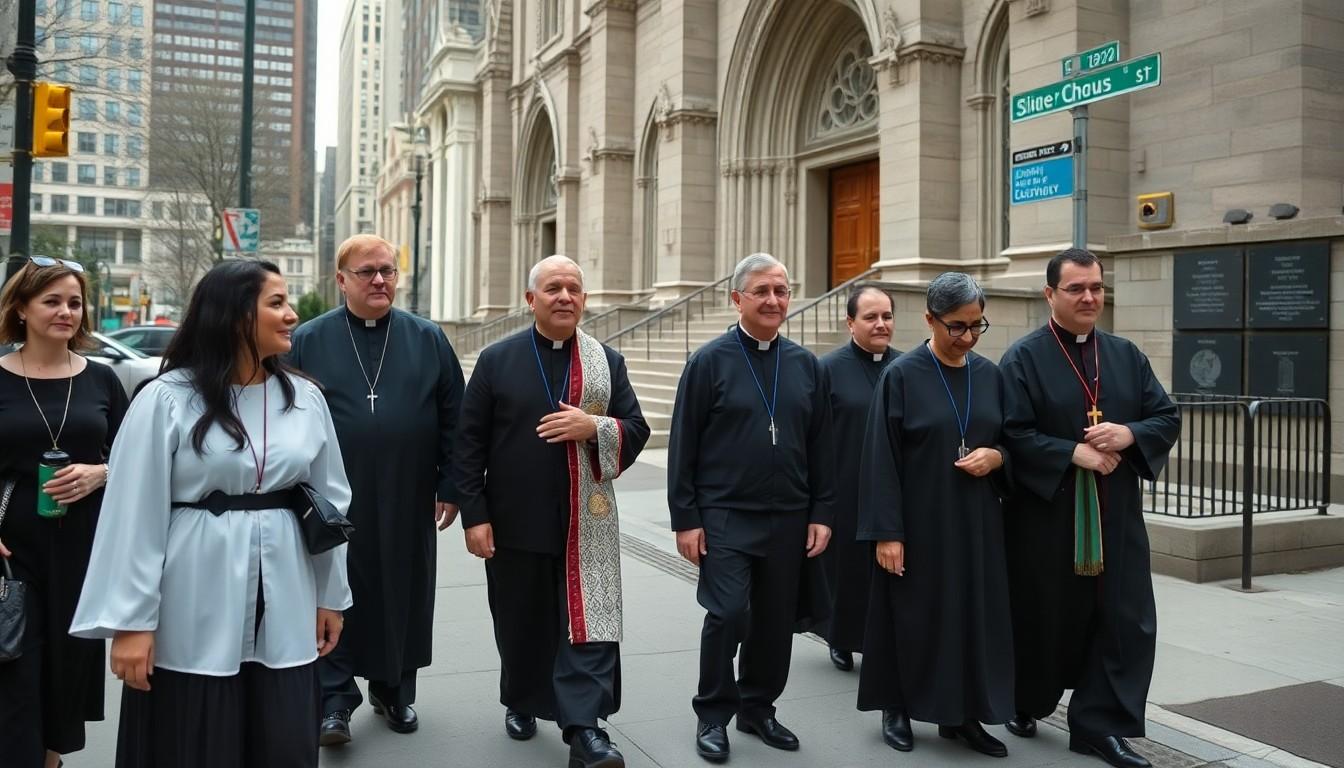
Pilgrims are turning New York City into a moving classroom, visiting churches, memorials and LGBTQ landmarks to explore Catholic ministry, HIV/AIDS history and the resilience of generations who often felt overlooked. The three-day gathering brought together LGBTQ Catholics, clergy, religious sisters, relatives and allies, offering prayer, remembrance and a more honest conversation about belonging.
Essential Takeaways
- A three-day journey: The pilgrimage used the Easter triduum as a framework for reflection, moving from mourning and waiting towards hope.
- Historic stops: Participants visited St Francis Xavier Church, the New York City AIDS Memorial, St Vincent's Hospital's former site and the Stonewall Inn.
- Generations met: Younger Catholics encountered a crisis they hadn't lived through, while older participants revisited deeply personal memories.
- Ministry took centre stage: The programme highlighted Catholic communities and religious workers who supported LGBTQ people during the HIV/AIDS crisis.
- Listening mattered: Clergy joined the walk to better understand the experiences of LGBTQ Catholics in their parishes.
A pilgrimage built around memory and meaning
The strongest impression was the route itself: a city walk where every stop carried emotional weight. At St Francis Xavier Church, participants prayed at an altar dedicated to people who died of HIV/AIDS, before continuing towards places that connected Catholic care with wider LGBTQ history.
According to National Catholic Reporter, Outreach organised the event as a local extension of its work with LGBTQ Catholics. Rather than treating history as something tucked away in an archive, the pilgrimage placed it underfoot, in streets, churches and memorial spaces that still shape New York's communal memory.
The structure borrowed from the Easter triduum. Friday introduced the journey, Saturday confronted grief and uncertainty, and the closing gathering turned towards perseverance and hope. It's a familiar religious rhythm, but here it gave participants room to name wounds that have often been discussed separately from Catholic life.
Why St Vincent's still matters
The visit to the former site of St Vincent's Hospital brought the HIV/AIDS crisis into sharp focus. The hospital, run by the Sisters of Charity of New York, became a crucial centre of treatment when fear, stigma and limited medical knowledge made care extraordinarily difficult.
A sister who worked there during the 1980s and 1990s helped connect the memorial with the people behind its history. Her presence offered something statistics can't: a direct reminder of the exhaustion, tenderness and courage involved in caring for patients during a frightening period.
For many LGBTQ Catholics, that history is also personal. Some participants were young adults during the crisis, while others were born decades later. The pilgrimage allowed those experiences to meet, giving younger attendees a way to understand what earlier generations endured without reducing the past to a solemn museum display.
Churches, Stonewall and a wider LGBTQ story
The route also included St Veronica's Church, a former meeting point for Catholic LGBTQ groups and a site associated with the Missionaries of Charity. Participants then travelled to the AIDS Memorial and Stonewall Inn, placing Catholic ministry alongside the broader movement for LGBTQ rights.
That combination was significant. The story wasn't presented as a simple tale of institutional approval or rejection. Instead, it showed a complicated landscape in which some Catholics experienced exclusion while others offered practical care, companionship and a place to pray.
Earlier Catholic gatherings at Stonewall have similarly centred on inclusion, faith and hope, according to National Catholic Reporter. The juxtaposition of a historic LGBTQ rights site with nearby Catholic landmarks made the point quietly but effectively: communities can have difficult relationships with institutions and still keep searching for meaning within them.
What younger and older pilgrims found
For younger attendees, the weekend offered a bridge to a crisis they knew mainly through stories. One young participant described discovering how gay Catholics endured the AIDS era and connected that perseverance with Christian reflections on suffering and endurance.
Older pilgrims brought a more intimate perspective. Some remembered the 1980s as a time when AIDS, public fear and official teaching about homosexuality affected their education, relationships and sense of safety. Walking with others helped place experiences that had once felt isolated into a shared narrative.
That intergenerational exchange may be the pilgrimage's most lasting achievement. History becomes more useful when it changes how people listen to one another, especially when the subject involves grief, faith and lives that have too often been pushed to the margins.
A practical model for Catholic LGBTQ ministry
The gathering also had a clear pastoral purpose. A diocesan priest from Buffalo joined the walk to listen more closely to LGBTQ Catholics in his parish, describing presence and understanding as essential parts of his ministry.
Outreach has been developing regional events to complement its larger national conference, according to its own announcement. The New York pilgrimage shows why that approach matters: local history gives ministry a texture that broad statements can't match. A church's response to LGBTQ Catholics looks different when people can point to the pews, hospitals and neighbourhoods where that story unfolded.
For families, clergy and religious communities, the lesson is straightforward. Listening doesn't require a perfect script, but it does require time, humility and a willingness to learn what happened before today's conversations began. One participant's reflection captured the emotional shift: difficult history became not only a source of pain, but also evidence of perseverance.
The New York pilgrimage leaves a gentle but important challenge behind. Faith communities can't repair the past by ignoring it, but they can honour it by remembering clearly and walking together now.
Explore the history, listen generously and make space for every pilgrim.
Source Reference Map
Story idea inspired by: [1]
Sources by paragraph:
- Paragraph 1: [2], [3]
- Paragraph 2: [4], [6]
- Paragraph 3: [2], [7]
- Paragraph 4: [5], [6]
- Paragraph 5: [2], [4]
- Paragraph 6: [3], [5]
- Paragraph 7: [2], [6]
- Paragraph 8: [4], [7]
- Paragraph 9: [2], [3]
- Paragraph 10: [5], [6]
- Paragraph 11: [2], [4]
- Paragraph 12: [3], [7]
- Paragraph 13: [2], [5]
- Paragraph 14: [4], [6]
- Paragraph 15: [2], [3]
- Paragraph 16: [5], [7]