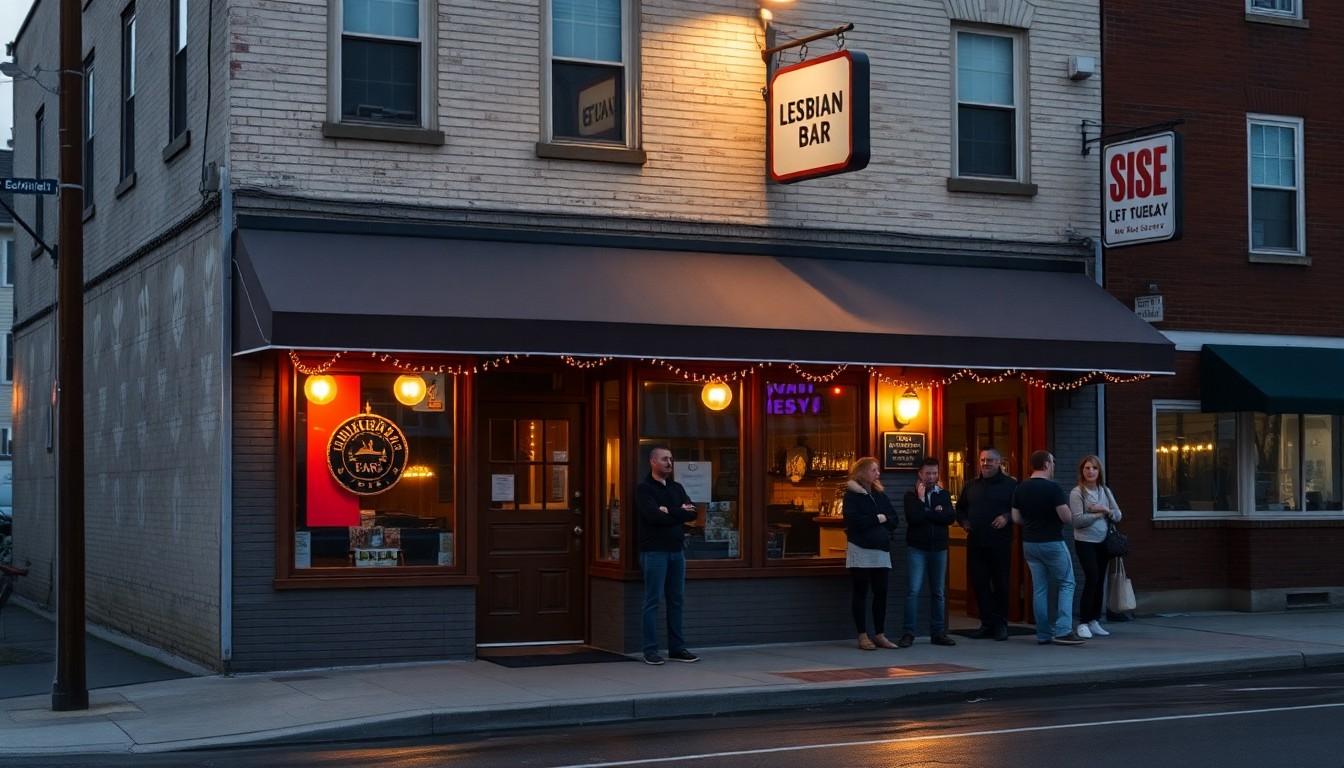
A lesbian bar in Greenfield, Massachusetts, has become an unlikely internet flashpoint after making masks optional on Saturday nights. What began as a local attempt to broaden attendance quickly turned into a national debate about disability access, public health, online activism and the pressures facing small queer venues.
Essential Takeaways
- A modest policy change: Last Ditch moved from mandatory masks to an optional approach on selected nights.
- Online anger escalated: Critics accused the venue of abandoning immunocompromised customers, while some messages became threatening.
- Business pressures mattered: The bar was reportedly struggling with low attendance, debts and the loss of several founders.
- The debate is complicated: Supporters cited lip-reading and social access, while others feared greater exposure to illness.
- Viral attention changed the mood: National coverage brought curious visitors, but also tighter door checks and private events.
A tiny venue suddenly found itself at the centre of a huge argument
Last Ditch had been known locally for drag performances, karaoke, film nights and a warmly scruffy queer atmosphere. Then a post about changing its mask rules turned the Greenfield bar into an international talking point almost overnight.
According to the Boston Globe, the venue had required customers and staff to wear high-quality masks, even as many pandemic restrictions elsewhere had faded. When attendance weakened, the remaining owner reportedly decided that selected mask-optional evenings might help keep the business afloat.
That calculation was met with furious online criticism. TMZ reported that the backlash included accusations that the bar was putting vulnerable people at risk, alongside hostile comments that went far beyond ordinary disagreement.
Why the mask decision became so personal
For immunocompromised customers, a venue's mask policy isn't a minor detail. It can determine whether they can attend at all, meet friends safely or take part in nightlife that already has limited options.
But the change also raised another accessibility question. Boston Spirit Magazine noted that masks can make communication harder for deaf and hard-of-hearing people, particularly those who rely on lip-reading or facial cues. In that sense, the argument wasn't simply about being cautious or careless. Different groups were describing different barriers to participation.
That collision helps explain why the discussion became so heated. Everyone involved was talking about access, but they weren't necessarily imagining the same people, risks or solutions.
The business behind the controversy was already under strain
Last Ditch wasn't a large chain with a marketing department and deep reserves. It was a young, community-focused venue dealing with the unglamorous realities of rent, staffing, uneven footfall and debt.
Hoodline reported that the bar's ownership had narrowed considerably, leaving one founder carrying much of the responsibility. A policy intended to attract more customers therefore looked less like a grand ideological statement and more like a practical business experiment.
That distinction was easy to lose online. Once screenshots began circulating, the bar was no longer being judged solely by people who knew the neighbourhood or understood its weekly rhythm. Know Your Meme documented how the dispute spread through social media, where context tends to travel more slowly than outrage.
A meeting intended to calm tensions only deepened them
The controversy moved from Instagram into a tense community meeting, where participants debated safety, inclusion and the meaning of accessibility. The Boston Globe's account described a long and difficult gathering involving people in the venue and others joining remotely.
The reported exchanges show how quickly a discussion about opening hours and masks can become a referendum on identity, power and language. Participants challenged one another over race, disability, virtual participation and emotional expression, while the owner reportedly described the personal strain of keeping the business operating.
There is an uncomfortable lesson here. A community space can be built around care and still lack a shared process for handling disagreement. Good intentions don't automatically produce good meetings, especially when people arrive frightened, exhausted or convinced that compromise itself is dangerous.
What happened when the story reached the outside world?
The publicity brought attention, curiosity and, apparently, fresh customers. The Atlantic treated the episode as part of a wider argument about progressive institutions and the limits of ideological purity, while other coverage turned the bar into a source of online fascination.
Locals offered a more grounded perspective. Boston Spirit Magazine reported that some residents supported the change because it could make the venue more usable for people who struggle with face coverings, while others remained concerned about health risks. Several observers also pointed out the basic reality that a permanently closed venue cannot provide access to anyone.
At the same time, the bar reportedly tightened entry arrangements and hosted a more private event. Visitors unfamiliar with the local community were turned away, and some found themselves drinking elsewhere. Fame may have filled the queue, but it didn't necessarily make the venue feel safer or more settled.
The bigger question is whether small queer spaces can survive the pressure
The Last Ditch dispute has become a symbol because it compresses several modern anxieties into one small room: public-health fatigue, disability rights, online pile-ons, financial precarity and the dwindling number of queer nightlife spaces.
There isn't an effortless answer. Venues may need clearer night-by-night policies, better ventilation, transparent communication and practical alternatives for customers with conflicting needs. They also need room to make ordinary business decisions without every adjustment becoming a moral trial broadcast to the world.
For a bar in a small Massachusetts city, that may be the most surprising twist. The argument was global, but the consequences remained intensely local: who turns up, who feels welcome and whether the lights stay on.
A community space can only be accessible if it survives.
Source Reference Map
Story idea inspired by: [1]
Sources by paragraph:
- Paragraph 1: [2], [5]
- Paragraph 2: [6], [7]
- Paragraph 3: [3], [4]
- Paragraph 4: [2], [7]
- Paragraph 5: [5], [6]
- Paragraph 6: [4], [2]
- Paragraph 7: [6], [5]
- Paragraph 8: [2], [7]
- Paragraph 9: [3], [4]
- Paragraph 10: [6], [7]
- Paragraph 11: [2], [5]
- Paragraph 12: [4], [6]
- Paragraph 13: [2], [7]
- Paragraph 14: [5], [6]
- Paragraph 15: [2], [3]
- Paragraph 16: [4], [7]