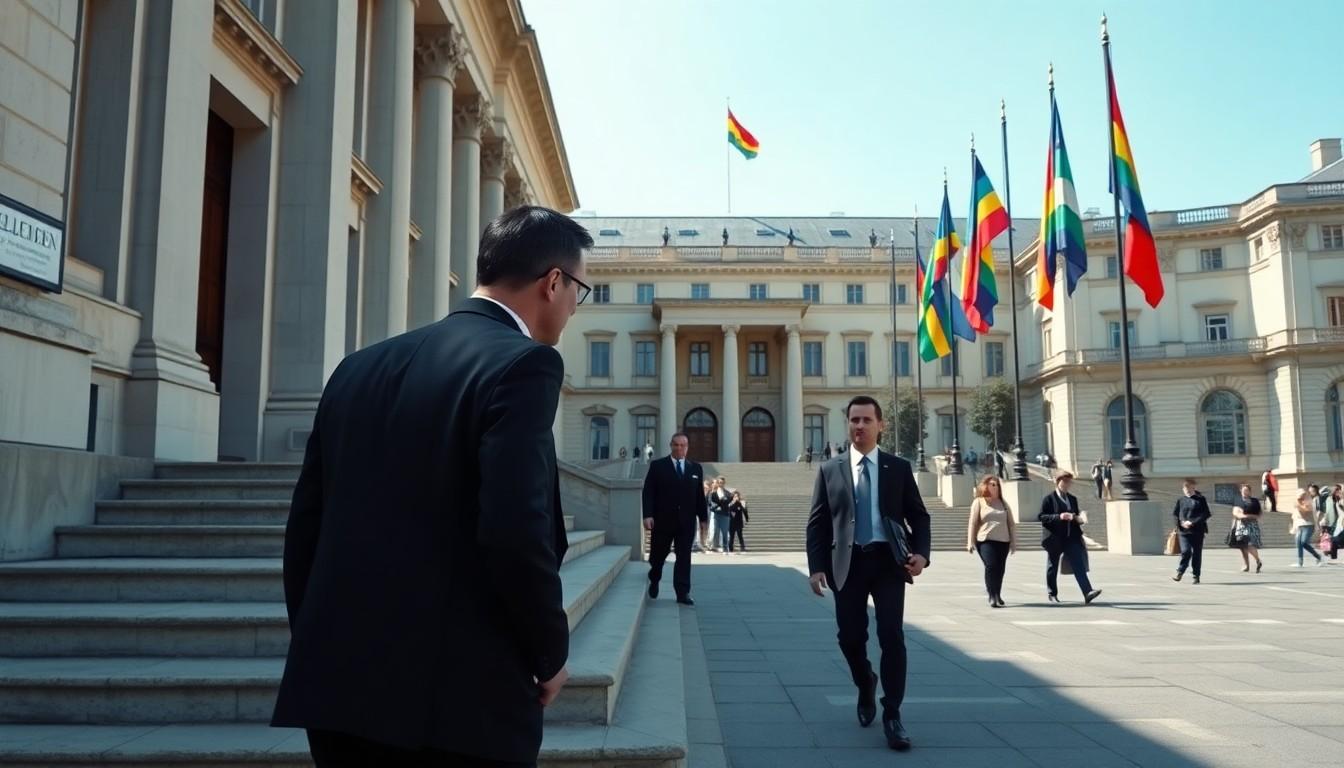
Europe's openly LGBTQ+ leaders are showing that public office and queer visibility can belong in the same picture. From the Netherlands to Luxembourg, these presidents and prime ministers have reached the top while living openly, offering representation that feels both historic and refreshingly ordinary.
Essential Takeaways
- Visibility matters: Openly LGBTQ+ leaders can make high office feel more attainable to younger queer people.
- Rob Jetten is breaking new ground: He became the Netherlands' first openly gay prime minister and its youngest.
- The milestones are varied: The group includes gay, lesbian and bisexual leaders across different political systems.
- Progress isn't uniform: Holding office doesn't erase the wider debates around equality, rights and acceptance.
- The message is personal: Several leaders have stressed that sexuality is part of who they are, not the whole of their public identity.
A new face at the top in the Netherlands
Rob Jetten's arrival as Dutch prime minister has added a striking new chapter to Europe's LGBTQ+ political story. At 38, he's not only the Netherlands' first openly gay prime minister, but also its youngest, giving the moment a distinctly modern feel. According to LGBTQ Nation, his swearing-in marked a significant national milestone. [2]
Before reaching the country's top job, Jetten built his reputation through climate and energy policy and parliamentary leadership. European coverage has also focused on his public profile and relationship, suggesting that voters are watching more than a political résumé. Sometimes visibility arrives through policy, sometimes through the simple sight of a leader living an recognisable, open life. [4] [5]
Six leaders, six different routes to office
Jetten's story sits alongside a wider group of European leaders who reached senior office by very different routes. Latvia's Edgars Rinkēvičs became the first openly gay head of state in an EU member country after coming out publicly in 2014, following more than a decade as foreign minister.
In Andorra, Xavier Espot Zamora confirmed that he was gay in 2023 while serving as prime minister. Ireland's Leo Varadkar became the country's first openly gay Taoiseach in 2017, while Luxembourg's Xavier Bettel took office as the first openly gay prime minister there in 2013. Serbia's Ana Brnabić has also broken new ground as the country's first openly lesbian woman to serve as acting president.
Why representation still carries real weight
It's easy to become used to historic firsts once enough of them appear in the headlines. But for LGBTQ+ people, particularly young people, seeing someone openly queer occupy a nation's highest offices can quietly change what's imaginable.
Espot has spoken about the value of young people seeing an openly gay person reach the top of public life. That idea is more powerful than a ceremonial milestone. It turns representation into a practical reminder that sexuality shouldn't set a ceiling on ambition.
Being open without becoming a symbol
These leaders have generally resisted the idea that their sexuality should define every aspect of their work. Bettel, who became Luxembourg's prime minister in 2013 and married Gauthier Destenay in 2015, has spoken about the importance of living openly without being reduced to a label.
That balance matters. LGBTQ+ politicians are often asked to represent an entire community while also being judged on the same everyday concerns as everyone else, from housing and jobs to energy bills and national security. Their identities are meaningful, but they aren't their only qualification.
A political milestone with an ordinary human side
The public response to Jetten has also shown how politics and personal storytelling now overlap. Coverage of his relationship with hockey player Nicolas Keenan has brought a softer, more human dimension to his rise, while international reporting has highlighted the significance of his appointment. [3] [5]
That doesn't make the history less important. If anything, it shows how normality and symbolism can exist together: a queer leader can be a constitutional milestone, a policy-maker and simply a person heading to work. For many readers, that's the most encouraging part.
Europe's LGBTQ+ leadership story is still developing, but the direction is hard to miss. More leaders are proving that authenticity needn't be traded for authority.
It's a small sentence with a big message: you can lead without hiding.
Source Reference Map
Story idea inspired by: [1]
Sources by paragraph: