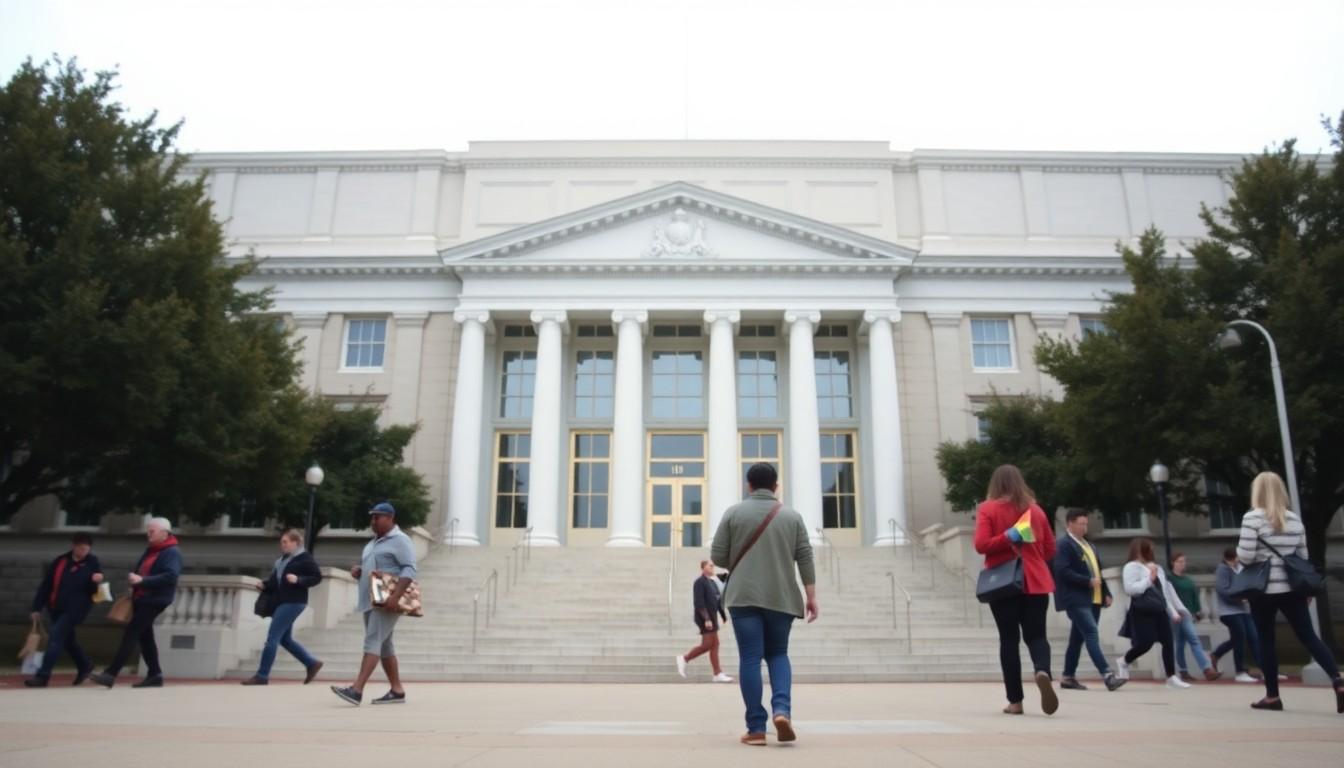
Voters are heading towards the 2026 midterms with household costs, abortion access and LGBTQ+ rights firmly in view. A new national poll finds women especially anxious about paying for essentials, while younger voters are reshaping debates over reproductive freedom and transgender rights. The findings offer a revealing snapshot of what may drive turnout.
Essential Takeaways
- Affordability dominates: Women report greater concern than men about groceries, housing, healthcare and retirement costs.
- Abortion remains broadly supported: Most Americans continue to favour legal abortion in all or most circumstances.
- Transgender discrimination is visible: About half of adults say trans people face substantial discrimination today.
- Childcare has public backing: A majority support increased federal spending on childcare.
- LGBTQ+ attitudes are shifting: Support remains significant, but views on transgender issues have become more divided.
Cost of living is setting the political mood
The sharpest message from the polling is also the most familiar one: everyday bills are shaping political choices. Women are more worried than men about affording essentials across every category tested, including food, housing, medical care and retirement.
That gap matters because financial pressure rarely stays confined to the household budget. It can influence views on childcare, wages, healthcare and government spending, giving economic concerns a much wider political reach. Research from the Center Forward also points to women’s health and family costs as important parts of the 2026 policy conversation.
For many voters, the issue isn't an abstract inflation figure. It's the quiet calculation at the supermarket, the rent payment that feels heavier, or the sudden medical bill that can undo months of careful budgeting.
Abortion rights still command majority support
The poll also places reproductive rights near the centre of the midterm debate. Pew Research Center found that a majority of Americans continue to believe abortion should be legal in all or most cases, a view that has remained resilient even as access varies sharply between states.
Other Gallup research suggests the Supreme Court's Dobbs decision continues to influence how Americans think about abortion policy. The ruling ended the federal constitutional protection for abortion, but it hasn't ended public disagreement over what access should look like.
That creates a complicated electoral picture. Voters may support legal abortion in principle while differing over time limits, exceptions and the role of federal government. In practice, those distinctions could matter just as much as the headline question.
LGBTQ+ issues are becoming more politically complex
Nearly half of adults in The 19th's poll say they'd be more likely to support a candidate who backs restrictions on transgender athletes competing in girls' and women's sports. The issue has become a prominent campaign message, particularly among Republican candidates, while some Democrats have adopted more cautious language.
At the same time, the wider picture isn't simply one of a broad collapse in support for LGBTQ+ people. Gallup's polling shows that attitudes towards LGBTQ+ issues remain more supportive than they were decades ago, even as enthusiasm has cooled from earlier peaks.
The result is a political landscape full of contradictions. Americans may support same-sex marriage and oppose discrimination, yet hold more divided views on transgender participation in sport, healthcare and legal protections. Recent coverage by the Los Angeles Times and The Washington Post highlights how quickly these questions have become entangled with party identity and moral debate.
Gen Z brings a different emphasis
The decision to oversample Gen Z offers a useful glimpse of the youngest voting generation, particularly Gen Z women. They are more supportive of abortion rights than Gen Z men, suggesting that age alone doesn't explain the direction of opinion. Gender, personal experience and political identity are all playing a part.
This matters because younger voters are often treated as a single progressive bloc, which can hide important disagreements. Their views on reproductive freedom may be more liberal overall, while debates about gender, sport and online culture can still produce sharp divisions.
And these voters are coming of age during an unusually expensive period. Student costs, housing, childcare and healthcare are not distant policy themes for them, but practical questions about whether adulthood feels financially possible.
Childcare links household pressure to public policy
A majority of Americans say the federal government should spend more on childcare, connecting a private family expense with a broader argument about public investment. The finding is especially relevant to women, who continue to carry a disproportionate share of caring responsibilities in many households.
The affordability findings help explain that support. When childcare competes with rent, food and medical bills, families may see government help less as a bonus and more as a way to keep working and remain financially stable.
Whether politicians can turn that sentiment into a workable policy is another question. Still, the polling suggests voters aren't separating family economics from gender equality or workforce participation. They're seeing the same pressure from several angles.
What the 2026 midterms may turn on
The emerging message is less about one defining culture-war issue and more about the overlap between rights and financial security. Abortion, LGBTQ+ protections, childcare and the cost of living are competing for attention, but they often affect the same voters and households.
The Democratic Party holds an advantage on several of the issues highlighted by the polling, while Republicans continue to find traction with messages focused on transgender participation in sport and social values. That contrast may make turnout and issue intensity especially important in close races.
For voters, the choice could ultimately feel very practical: who understands the pressure of daily life, and who offers a credible answer? The campaign slogans will be loud, but the deciding concerns may be as ordinary as a grocery receipt or a childcare invoice.
The 2026 midterms are shaping up around the bills people cannot ignore and the rights they do not want to lose.
Source Reference Map
Story idea inspired by: [1]
Sources by paragraph:
- Paragraph 1: [2], [3]
- Paragraph 2: [6], [5]
- Paragraph 3: [3], [5]
- Paragraph 4: [2], [4]
- Paragraph 5: [4], [7]
- Paragraph 6: [3], [5]
- Paragraph 7: [6], [1]
- Paragraph 8: [1], [3]
- Paragraph 9: [1], [6]
- Paragraph 10: [2], [4]
- Paragraph 11: [1], [7]
- Paragraph 12: [1], [6]
- Paragraph 13: [1], [2]
- Paragraph 14: [1], [3]
- Paragraph 15: [2], [4]