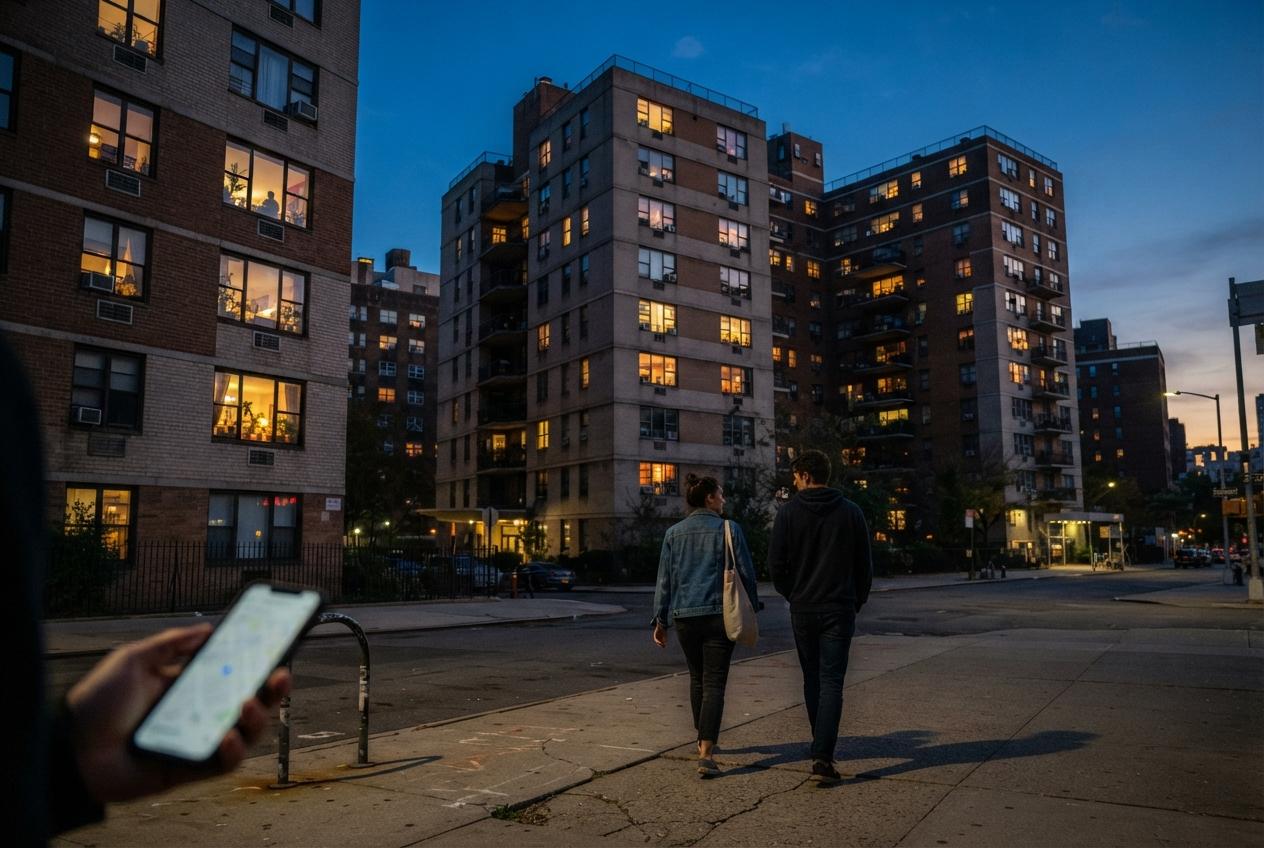
A viral Grindr exchange between two men who discovered they lived in the same building has revived a deliciously modern fantasy: finding romance, sex or simply a flirtation next door. But while proximity can feel exciting, location-sharing brings real privacy and safety questions, especially for users in vulnerable communities.
Essential Takeaways
- The fantasy is real: Nearby matches can turn a routine app chat into an unexpectedly intimate encounter.
- Location matters: Grindr’s distance and location tools can reveal more than users intend if settings aren’t checked carefully.
- Privacy comes first: Hiding distance, avoiding exact addresses and meeting safely can reduce unnecessary risk.
- High-rises offer a twist: Dense urban living can create anonymity, but it can also make awkward encounters very close to home.
- The safest romance is informed: A little caution lets users enjoy the thrill without handing strangers too much information.
When your Grindr match turns out to be next door
There’s something irresistibly cinematic about opening a dating app and discovering that the attractive stranger in your messages lives a few floors away. The viral exchange that sparked this conversation captures that mix of surprise, possibility and mild panic: the fantasy of a nearby hookup suddenly becomes a practical question about lifts, corridors and seeing each other the next morning.
Queerty framed the moment through familiar pop-culture romances, from All of Us Strangers to Taylor Swift’s “You Belong With Me”. The comparison is knowingly dramatic, but it also explains why these stories travel so well. A match across town is ordinary; a match behind the next wall feels like a plot.
That closeness can be thrilling because it removes the usual friction. No long journey, no elaborate excuse and no awkward goodbye at the station. Still, it also means the consequences of a bad experience may follow you home.
Why Grindr makes proximity feel so powerful
Grindr’s appeal has always been closely tied to geography. The app can help people find others nearby quickly, which is useful for spontaneous plans but also turns physical distance into part of the flirtation. For some users, the map-like sense of the neighbourhood is almost a feature in itself.
There’s a particular urban version of this fantasy. In a large block of flats, two people may be close enough for a quick rendezvous while still retaining a degree of anonymity. The city supplies both the excitement and the cover, although that cover can disappear fast if a stranger learns exactly where you live.
Reddit anecdotes and dating-app folklore often celebrate neighbour hookups as cheeky, convenient and unexpectedly romantic. But the pattern tends to come with an unspoken warning: the closer the match, the more carefully both people need to handle boundaries.
The privacy lesson behind the flirtation
The fun stops quickly when location data reveals too much. NBC News reported in 2018 on security flaws that could expose Grindr users’ location information, while Forbes also covered concerns about the handling of private data, messages and whereabouts. Those reports remain an important reminder that digital convenience can carry a personal cost.
Grindr has since provided controls for managing location settings, and guides such as Anycoord’s explain ways users can limit what others see. Options can change, so it’s worth checking the app’s current settings rather than assuming an old privacy routine still works.
Users should be especially cautious in places where being openly LGBTQ+ can carry legal or social danger. Even in safer countries, there’s no good reason to broadcast an exact home address to someone whose identity you haven’t verified.
How to enjoy a nearby match more safely
Start by reviewing location controls before you begin chatting. Grindr’s help guidance explains how users can manage location settings, while practical privacy advice commonly recommends hiding distance where appropriate and avoiding clues that identify a particular flat, entrance or routine.
A first meeting should happen somewhere you can leave easily, rather than at your home or the other person’s. Tell a trusted friend where you’re going, keep your own transport or exit plan available and consider a quick video call first. Chemistry is lovely, but it isn’t a substitute for knowing who’s on the other side of the screen.
It’s also worth thinking about the morning after. If you live in the same building, the encounter may not end when the chat does. A clear conversation about discretion, boundaries and whether either person wants further contact can prevent a flirtation from becoming a daily lift ride filled with silence.
The neighbour hookup is a fantasy with sharp edges
The appeal isn’t hard to understand. Finding someone attractive nearby feels efficient, a little mischievous and far more personal than scrolling through a sea of distant profiles. It also taps into an old romantic idea: that love, lust or fate might be waiting just around the corner.
But the most compelling part of these stories is the tension between spontaneity and self-protection. As the privacy concerns reported by NBC News, Forbes and Washington Blade show, location-based dating works best when users understand what they’re sharing and why.
So enjoy the cinematic possibility, by all means. Just make sure the mysterious neighbour is a real person, your privacy settings are under control and your exit plan is less ghost story than common sense.
A little caution can keep the thrill close to home without letting the risks follow you through the front door.
Source Reference Map
Story idea inspired by: [1]
Sources by paragraph: