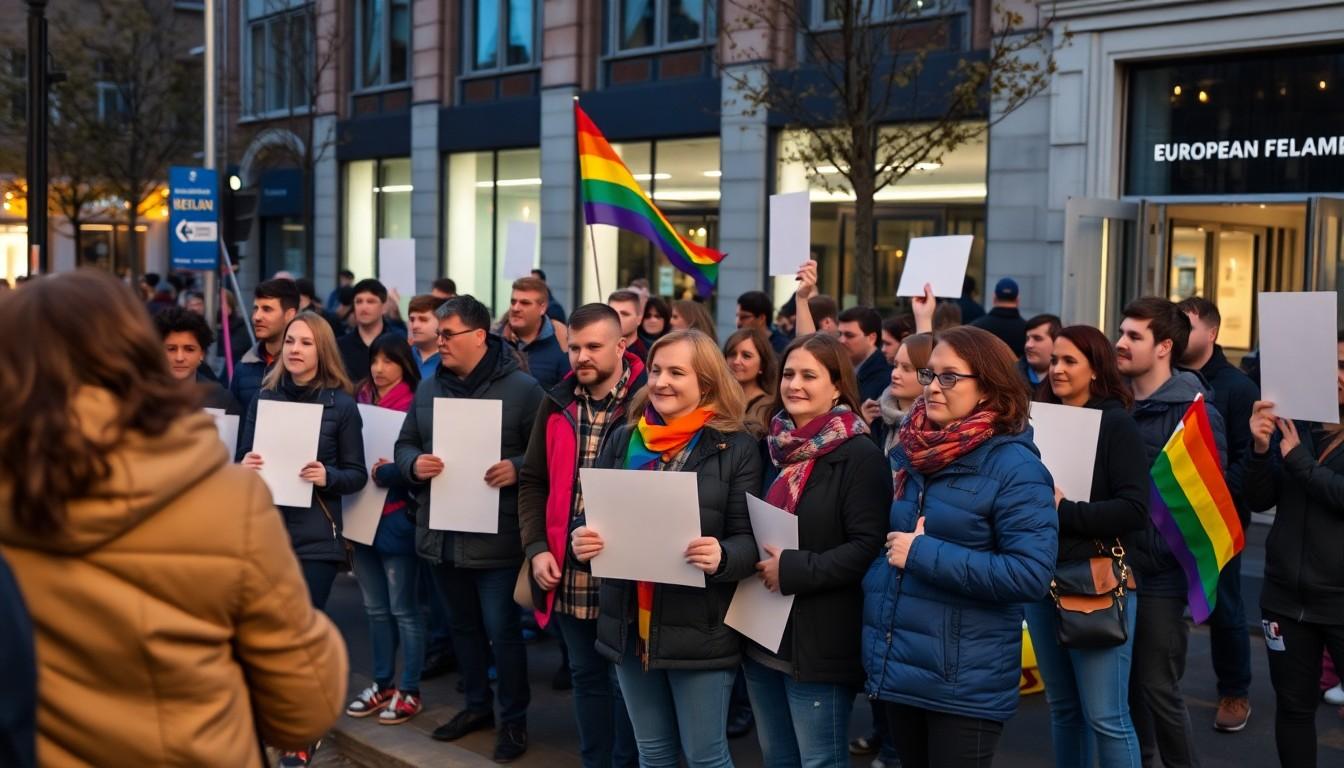
Irish LGBTQI+ organisations and allies will gather in Dublin on 30 September 2026 to support LGBTQI+ activists in Turkey, where rights groups say a widening crackdown is putting civil society, human rights defenders and community spaces under intense pressure. The demonstration also urges Ireland and the European Union to move beyond statements and take practical diplomatic action.
Essential Takeaways
- When and where: The demonstration is scheduled for 6pm outside the European Parliament Liaison Office in Dublin city centre.
- Why it matters: Organisers say LGBTQI+ groups, activists and defenders in Turkey are facing arrests, raids and growing restrictions.
- What campaigners want: Calls include releases for people detained over legitimate rights work and humane, non-discriminatory detention conditions.
- The wider issue: The action also focuses on freedom of expression, peaceful assembly, civic space and the rule of law.
- A coordinated response: Solidarity demonstrations are expected across Europe and beyond.
Dublin action puts international solidarity on the street
The Dublin gathering is designed to be visible, direct and difficult to dismiss. Organisers say Irish LGBTQI+ groups, allies and supporters will stand alongside colleagues in Turkey during an international day of action called by the LGBTQI+ movement there.
The location is significant. Holding the demonstration outside the European Parliament Liaison Office places responsibility firmly at the door of European institutions, rather than treating the situation as a distant domestic dispute. Amnesty International has called on Turkish authorities to end what it describes as an escalating crackdown and to release detained activists.
For people attending, the message is both political and personal: communities under pressure should know they're not facing it alone. Human Rights Watch has likewise linked the developments to broader concerns about the rule of law and the treatment of civil society.
Why the campaign is widening beyond LGBTQI+ rights
The organisers argue that the issue reaches far beyond identity and equality protections. When LGBTQI+ organisations are raided or restricted, the consequences touch freedom of association, speech, peaceful protest and access to independent legal and community support.
That broader concern is reflected in international responses. The Youth Forum has highlighted the impact on young human rights defenders and LGBTQI+ organisations, while reporting from the Los Angeles Times has described pressure on groups connected with LGBTQ+ and HIV support. The picture is of a civic space becoming noticeably tighter.
It matters because community organisations often provide the practical safety net that formal systems don't. They may offer advice, medication support, referrals or simply a trusted room where someone can feel safe. Remove that infrastructure and the harm can be immediate, quiet and deeply personal.
What Irish campaigners are asking the Government to do
The Dublin demonstration follows a joint letter from 20 LGBTQI+ organisations and groups in Ireland to Foreign Affairs Minister Helen McEntee. The letter calls for direct engagement with Turkish authorities, advocacy for detained people and continued support for independent rights organisations.
Campaigners want diplomacy to be specific, not merely sympathetic. Their demands include monitoring relevant legal proceedings, pressing for the release of people detained solely for legitimate human rights activity, and seeking safe access to medication, clean water, hygiene supplies and protection from harm in detention.
That emphasis reflects a wider concern raised by Amnesty International and Human Rights Watch: expressions of concern have limited value if they're not followed by sustained pressure. Diplomatic language can sound polished, but people in detention need concrete safeguards now.
Europe faces a test of its stated values
The choice of venue also points towards the European Union's relationship with Turkey. Organisers are asking European institutions to raise the crackdown directly and ensure that human rights, civic space and the protection of defenders are part of ongoing engagement.
The International Planned Parenthood Federation has reported a wider online and political climate of pressure affecting LGBTQI+ and feminist groups. Meanwhile, youth and civil society organisations have warned that restrictions can isolate activists precisely when cross-border support is most needed.
For European governments, the challenge is balancing diplomacy with accountability. The Dublin action's central argument is straightforward: cooperation shouldn't become an excuse to overlook attacks on fundamental freedoms. It’s a small city-centre gathering, but the question behind it is sizeable.
A public show of support with a practical demand
The organisers aren't presenting solidarity as a symbolic end point. They want the Irish Government and European Union to use their political influence, support independent organisations and push for safer conditions for LGBTQI+ people and defenders in Turkey.
That makes the demonstration relevant even to people who can't attend. Support can include following trusted rights groups, sharing verified information, contacting elected representatives and avoiding unconfirmed claims that could put activists at greater risk. In moments like this, careful attention is more useful than social-media noise.
The atmosphere may be determined rather than celebratory, but public presence still matters. As activists have learned repeatedly, a quiet international response can feel like permission. A visible one says the crackdown is being watched.
It's a modest act of solidarity, but it carries a clear demand: rights must be defended in practice, not just praised in principle.
Source Reference Map
Story idea inspired by: [1]
Sources by paragraph:
- Paragraph 1: [2], [4]
- Paragraph 2: [4], [5]
- Paragraph 3: [6], [7]
- Paragraph 4: [5], [6]
- Paragraph 5: [3], [7]
- Paragraph 6: [4], [5]
- Paragraph 7: [3], [6]
- Paragraph 8: [4], [5]
- Paragraph 9: [2], [3]
- Paragraph 10: [6], [7]
- Paragraph 11: [4], [5]
- Paragraph 12: [2], [4]
- Paragraph 13: [3], [6]
- Paragraph 14: [5], [7]
- Paragraph 15: [2], [3]
- Paragraph 16: [4], [6]
- Paragraph 17: [5], [7]
- Paragraph 18: [2], [4]