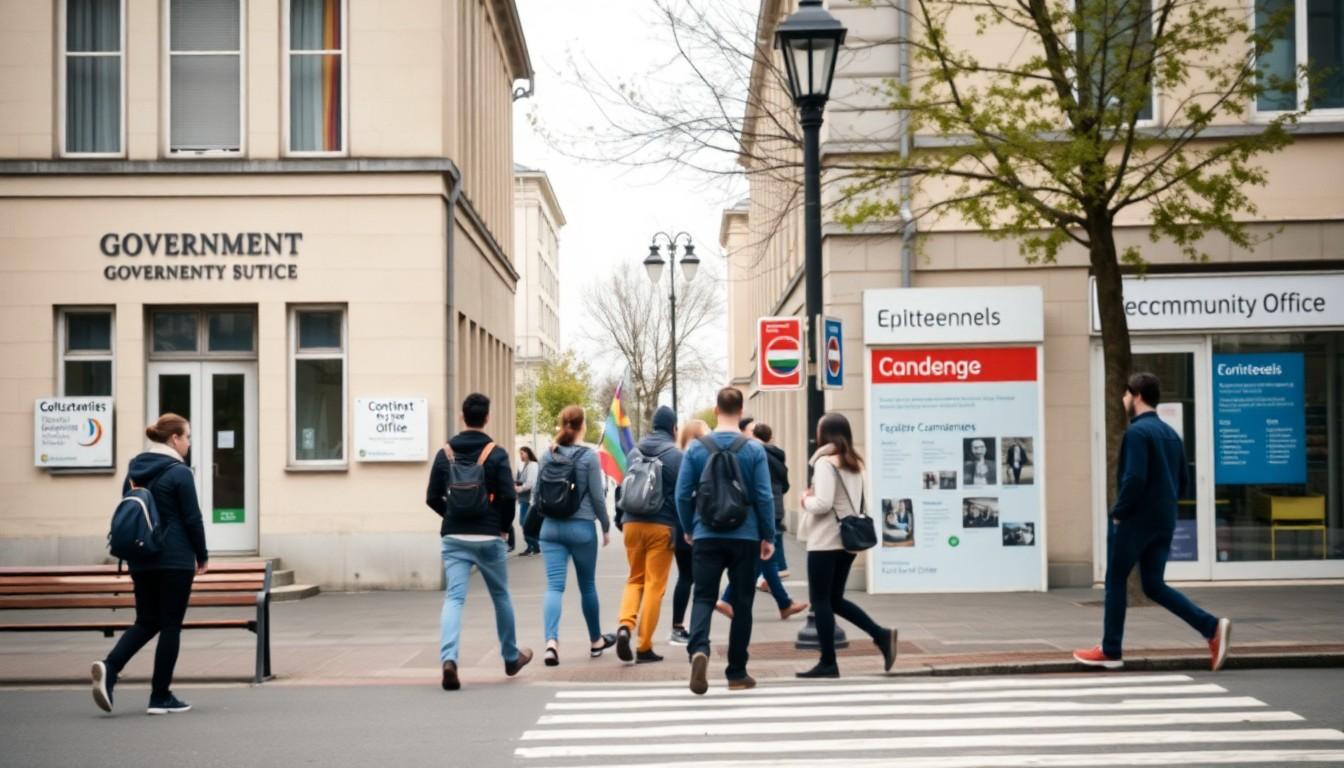
Young queer people in Germany are growing up with stronger legal protections, yet daily life can still feel exposed. From street harassment to rising hate crime, the gap between constitutional promise and lived experience matters, especially for anyone dreaming of a future where love, clothing and identity don't require a safety check.
Essential Takeaways
- Legal protection isn't the whole picture: Germany's constitutional guarantees coexist with discrimination and violence.
- Hate crime remains a serious concern: Official figures show queer people continue to face recorded attacks, while many incidents likely go unreported.
- Motives vary: Extremist and political ideologies are part of the picture, but authorities can't classify every case neatly.
- Public space matters: Pride events offer visibility, solidarity and a rare chance to celebrate without shrinking yourself.
- The goal is ordinary freedom: A genuinely safer Germany would let queer people travel, dress and show affection without fear.
The promise of equality still feels unfinished
Germany can look reassuring on paper. Its constitution protects human dignity, while legal reforms have expanded rights for LGBTQ+ people over recent decades. But paperwork can't stop a hostile stare on a train, a shouted insult from a passing car or an unwanted hand in the street.
That tension sits at the heart of Valentina Vapaux's reflection on Germany in ten years. The future she imagines isn't extravagant. It's a kiss in public, a walk home without calculating the route and a night out without wondering who might decide to make her body their business. According to Amnesty International, discrimination and hostility still affect minority communities across Germany, despite the country's formal protections.
For teenagers discovering their identity, the distinction is especially sharp. A law can say you're equal, but safety is measured in smaller moments: whether you can hold someone's hand, wear what you like or speak openly about your life. That's where progress becomes real, or starts to feel hollow. Sources from the Bundestag have also highlighted the continuing importance of protecting people from discrimination and hate.
Hate crime exposes the gap between law and life
Official data gives the debate a firmer shape. Germany's Federal Criminal Police Office records crimes targeting lesbian, gay, bisexual, transgender, intersex and queer people, although the figures cover only incidents reported to the authorities. The BKA warns that recorded cases don't capture the full scale of the problem, since victims may fear embarrassment, retaliation or simply assume nothing will change.
That missing data matters. A slur can be dismissed as a one-off, and harassment can be treated as unpleasant rather than dangerous. Yet repeated encounters create their own burden. The person being watched, followed or mocked is left to carry the risk, while everyone else gets to call it banter.
Reporting by Tagesschau has drawn attention to the threat posed by violent right-wing networks and hostility around queer events. The broader lesson is uncomfortable but important: danger doesn't come from one political direction alone, and no community should be used as a convenient explanation for another group's exclusion.
Pride is not a luxury, it's a public safety issue
People who ask why queer communities need Pride often imagine it as a party first and a protest second. In reality, it serves both purposes at once. The music, flags and bright outfits create joy, but they also announce that queer people belong in public, not just behind closed doors.
That visibility can feel powerful because everyday life often demands the opposite. Many people quietly edit themselves before leaving home, checking their clothes, their route or the mood around them. Pride temporarily changes that calculation by turning private survival into collective presence.
Recent coverage of Germany's queer policy debate shows how quickly public solidarity can become political theatre. Government figures may express support after an attack, while funding, protection and long-term infrastructure remain contested. The charity Bosch Foundation has similarly argued that rising anti-queer hostility requires sustained political action rather than sympathetic statements alone.
The statistics need care, not easy slogans
One of the most important details in Germany's official reporting is that investigators can't always identify a clear motive. That makes the numbers harder to summarise, but it also prevents politicians and commentators from forcing every case into a convenient narrative.
BKA material distinguishes between different ideological backgrounds, including right-wing and religious or foreign ideological motives. The figures cited in the debate show that right-wing motivation accounts for a substantial share of recorded anti-queer hate crimes, while a smaller proportion is linked to foreign or religious ideologies. Many cases remain unassigned.
That nuance matters after a high-profile attack. A crime can be condemned without turning an entire nationality, religion or migrant community into a suspect class. Tagesschau's reporting on the government's queer commissioner and CSD response underlines the pressure on leaders to offer credible protection, not just dramatic language after tragedy.
What a safer Germany would look like
The most useful test isn't whether Germany can produce another statement of concern. It's whether people can experience freedom in ordinary places: on a suburban platform, in a nightclub queue, beside a lake or walking through a busy city centre.
Practical change would include properly funded counselling services, better police training, reliable recording of hate crime and stronger support for local queer organisations. It would also mean bystanders taking responsibility. A man who challenges a sexist joke, checks on someone being harassed or refuses to laugh along may not look heroic, but those small interruptions help change the atmosphere in which violence grows.
The outlook is neither hopeless nor guaranteed. Germany has made real progress, yet progress that isn't defended can go backwards. For young queer people, the dream is refreshingly modest: not special treatment, just the freedom to be unremarkable in public. That's a future worth taking seriously.
It's not enough to promise protection; people must be able to feel it in everyday life.
Source Reference Map
Story idea inspired by: [1]
Sources by paragraph:
- Paragraph 1: [2], [7]
- Paragraph 2: [6], [7]
- Paragraph 3: [2], [6]
- Paragraph 4: [2], [5]
- Paragraph 5: [2], [3]
- Paragraph 6: [3], [7]
- Paragraph 7: [3], [4]
- Paragraph 8: [4], [5]
- Paragraph 9: [2], [3]
- Paragraph 10: [2], [4]
- Paragraph 11: [4], [5]
- Paragraph 12: [2], [6]
- Paragraph 13: [3], [4]
- Paragraph 14: [5], [6]
- Paragraph 15: [6], [7]
- Paragraph 16: [2], [5]
- Paragraph 17: [3], [4]
- Paragraph 18: [5], [7]
- Paragraph 19: [4], [6]
- Paragraph 20: [2], [5]