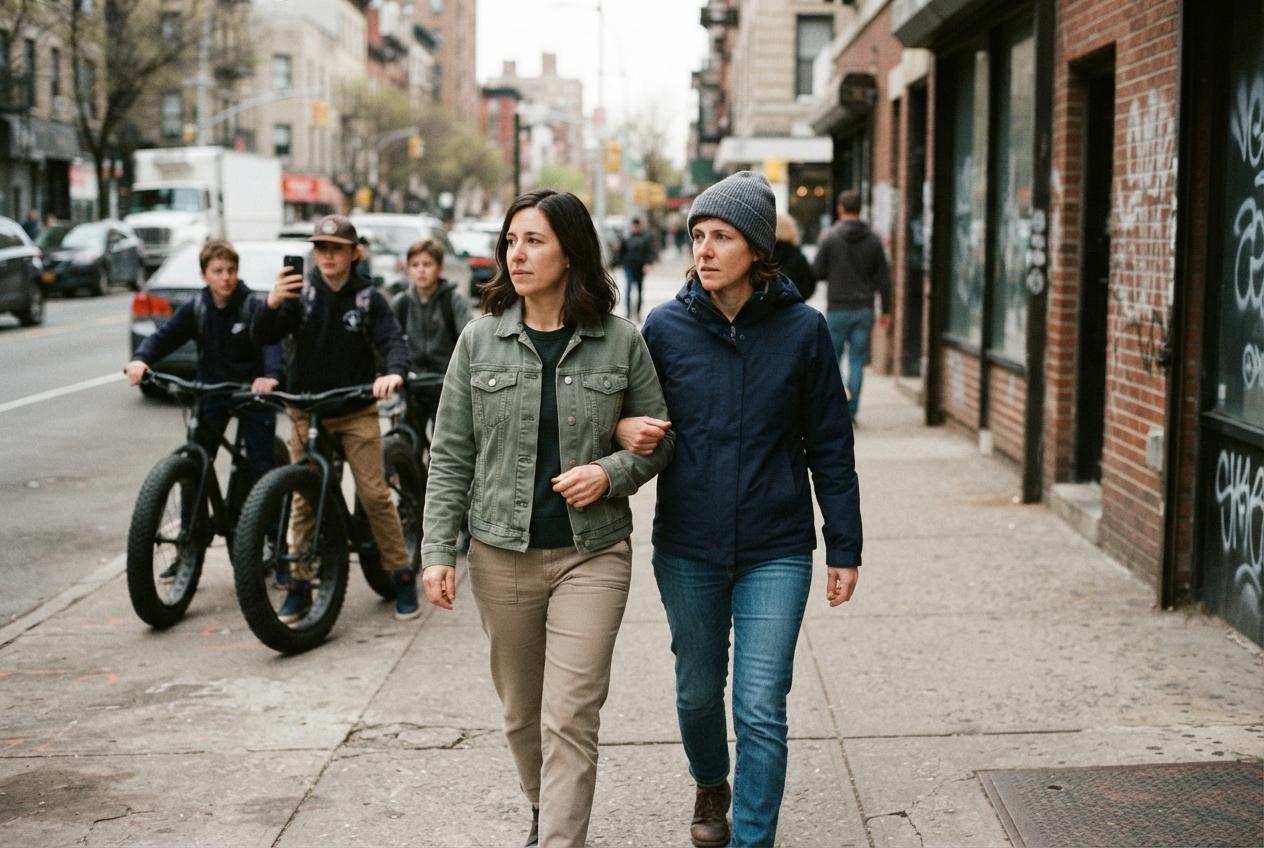
A fleeting street encounter can turn an ordinary walk into a moment of fear. For women in same-sex relationships, public affection may carry a different emotional weight, shaped by harassment, visibility and the uneasy knowledge that strangers are watching. Research suggests that this tension isn't imagined, even when the incident itself lasts only seconds.
A quiet walk, suddenly put on display
The moment begins innocently: two women walking arm in arm, sharing the easy closeness couples often take for granted. Then a group of teenagers approaches, pointing and filming, before shouting a remark about one woman's red hair. The word itself may sound trivial, but the cameras and the crowd turn it into something more threatening.
That is the uncomfortable power of public harassment. It doesn't need to become physical to change how someone moves through the world. A tightened grip, a wary glance and the instinct to keep walking can all be signs that safety has suddenly become a calculation.
Why public affection can feel different
Research discussed by Psychology Today suggests that same-sex couples may weigh public displays of affection against the possibility of judgement or hostility in ways heterosexual couples often don't have to consider. Holding hands can feel warm and ordinary, yet also make a relationship more visible to strangers.
Studies indexed by PubMed have linked minority stress with poorer wellbeing among sexual-minority people. That doesn't mean every public interaction is hostile, but it helps explain why an apparently small incident can trigger such a sharp reaction: it lands on top of wider experiences of exclusion, vigilance or doubt.
Harassment is rarely just about one comment
Human Rights Watch has documented how lesbian, bisexual and queer women can face discrimination and attacks in everyday settings, including in public spaces. The details vary from country to country, but the broader pattern is familiar: visibility can invite scrutiny, while reporting or challenging abuse may feel risky in the moment.
Research published in peer-reviewed journals also points to the role of social context in relationship stress. Being watched, mocked or recorded can make couples feel they have less freedom to express affection, even when no direct threat is made. It is a grim lesson in how quickly a public space can stop feeling shared.
What helps people feel safer?
There is no perfect response to street harassment, and nobody should have to produce one while being filmed. Moving towards a busier area, entering a shop, calling someone trusted or staying close to a companion can be practical choices. Choosing not to confront the group isn't weakness; sometimes it's simply the safest option.
For friends and bystanders, a calm check-in can matter more than a dramatic intervention. Ask whether the couple is all right, offer to walk with them and avoid turning the incident into another spectacle. Research on minority stress and social support consistently underlines the value of feeling understood rather than left alone with the experience.
Visibility shouldn't come with a safety warning
Public affection is often presented as a symbol of equality, but real equality is more ordinary than that. It means being able to walk arm in arm without scanning faces, interpreting laughter or wondering whether a phone is being raised to record you.
The encouraging part is that attitudes can change, and supportive communities can make public spaces feel less hostile. But the burden shouldn't sit with couples to become experts in avoidance. As one small street encounter shows, the right to be unremarkable can still feel surprisingly precious.
A safer public life begins when affection is treated as ordinary, not as an invitation to comment.
Source Reference Map
Story idea inspired by: [1]
Sources by paragraph: