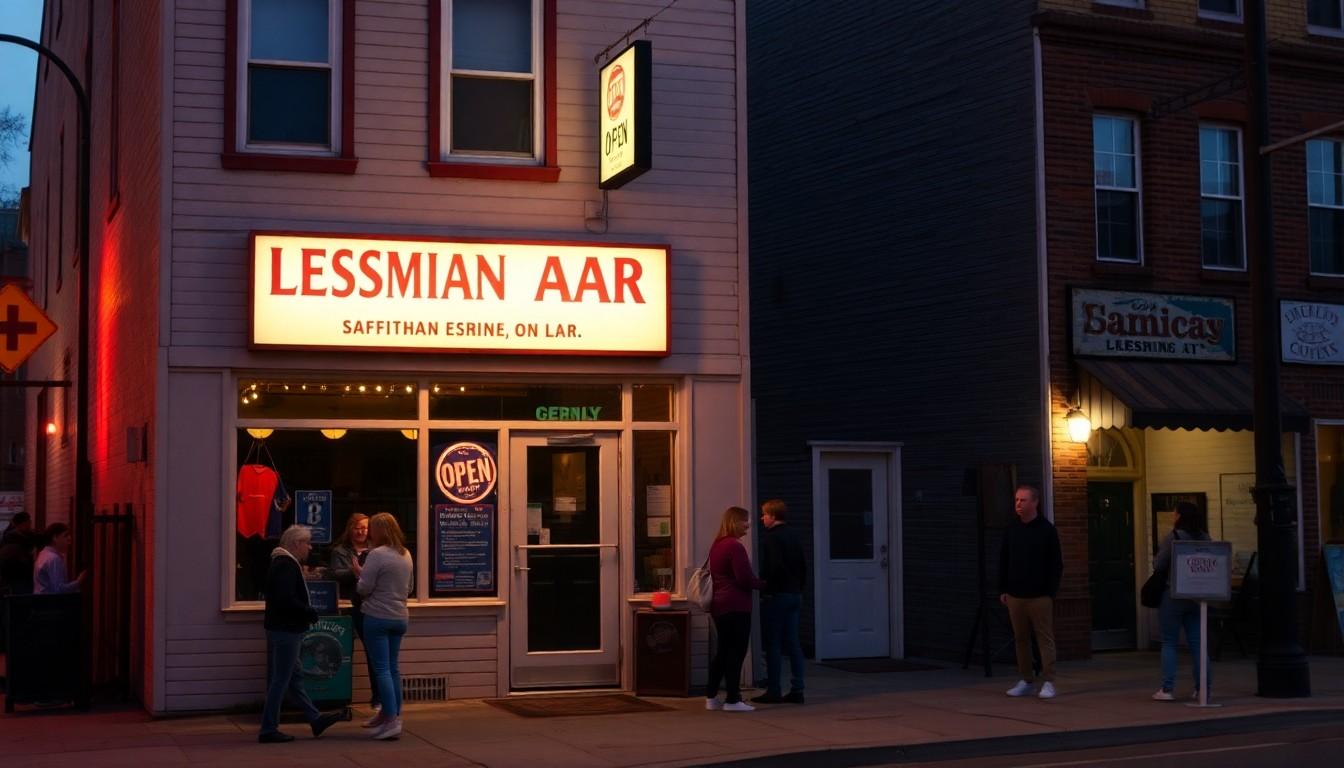
A viral dispute over masks at Last Ditch, a lesbian bar in Western Massachusetts, has exposed a bigger concern: queer venues remain scarce, financially fragile and essential to the people who rely on them.
Essential Takeaways
- Last Ditch is under pressure: The recently opened bar is reportedly carrying a substantial business loan and struggling to cover its costs.
- The controversy began over masks: A weekly mask-free night prompted fierce debate among patrons and online commentators.
- Lesbian bars remain rare: Around 36 sapphic bars now operate in the US, compared with roughly 200 in 1980.
- These venues serve broad communities: Lesbian bars also welcome bisexual, pansexual, trans and other queer people.
- Accountability still matters: Support doesn't mean ignoring harassment, racism, inaccessibility or transphobia.
A mask dispute became a fight about survival
The Last Ditch controversy has all the ingredients of an internet spectacle: a small bar, a divisive health policy and a community argument that quickly escaped its original setting. Reports from the Boston Globe and other outlets describe a Western Massachusetts venue that relaxed its mask requirement for one night each week in an effort to attract more business.
That decision drew intense criticism, with coverage spreading well beyond local queer circles. The Atlantic and LGBTQ Nation both examined the backlash, while Boston.com reported on the wider attempt to rescue a business whose financial difficulties were already serious. The result has been plenty of online heat, but rather less attention on the cold arithmetic of keeping a bar open.
According to the account published by Uncloseted Media, Last Ditch's remaining founder, Jackie Matellian, is working four jobs and carrying responsibility for a $50,000 business loan. For a venue that opened in April 2025, that's a punishing burden. The argument may be easy to share, but the bills are still waiting behind the bar.
These spaces are scarce for a reason
The larger story is the shrinking number of lesbian and sapphic venues. The Lesbian Bar Project estimates that the US has about 36 such spaces today, a modest improvement on the pandemic-era low but a dramatic fall from the approximately 200 operating in 1980.
That decline reflects more than changing nightlife habits. Gentrification, rising rents, wage inequality, insurance costs, environmental disasters, gun violence and hostile political climates all put pressure on queer-owned businesses. The Boston Globe's reporting on Last Ditch helped bring one local example into view, while related coverage from Urania Institute and Boston.com showed how quickly a community venue can become financially exposed.
Walk into a lesbian bar and the value isn't always obvious on a balance sheet. It's in the quiet relief of not having to explain yourself, the easy recognition between strangers and the soft confidence of being able to flirt, dance or simply sit alone without feeling out of place. That atmosphere is difficult to build, and almost impossible to replace once the doors close.
Community standards matter, but perfection is impossible
None of this means queer venues should be protected from criticism. A safe space must take complaints seriously, especially when they concern racism, harassment, sexual assault, accessibility or transphobia. The people most dependent on these spaces are often those with the fewest alternatives, so their concerns can't be brushed aside as inconvenient.
But demanding that a small, community-run bar meet every expectation at once can create a standard that few other third spaces could survive. The Last Ditch debate, covered by The Daily Beast and LGBTQ Nation, shows how quickly a disagreement over one policy can become a referendum on an entire venue's values.
Health precautions also carry real emotional weight. Immunocompromised people and those living with long Covid need spaces where their risks are taken seriously, while business owners have to attract enough customers to pay staff, rent, suppliers and debt. Those needs aren't identical, and pretending otherwise makes conversation harder.
How can patrons support lesbian bars responsibly?
The most useful response is neither blind loyalty nor instant cancellation. Patrons can ask clear questions, explain what would make them feel safer, spend money when they can and support practical improvements rather than treating public condemnation as the only available tool.
For venue owners, transparency helps. Clear information about mask policies, ventilation, accessibility, staffing and complaint procedures gives people the chance to make informed choices. A rotating schedule, outdoor events or dedicated low-risk sessions may not satisfy everyone, but they can offer more options than a single all-or-nothing rule.
The reporting surrounding Last Ditch, including coverage from Boston.com and the Boston Globe, also points to a broader need for stronger financial support. Community fundraisers, local partnerships, grants and regular patronage won't solve every problem, but they can make a meaningful difference. Sometimes the most radical act is simply turning up, buying a drink and helping keep the lights on.
Saving these venues means making room for disagreement
Lesbian bars have always been more than nightlife businesses. They are meeting places, informal support networks and stages for queer life in all its messy, contradictory detail. The Lesbian Bar Project's work, cited in the Uncloseted Media essay, captures that emotional geography through stories from venues including Cubbyhole, Wildrose, Ginger's and Pearl Bar.
The future will depend on whether communities can challenge harmful behaviour without destroying the spaces where those conversations happen. That requires compassion, but it also requires seriousness: listen to people at risk, hold owners accountable and recognise the economic limits facing small queer businesses.
There won't be one policy that makes every patron comfortable. Yet if every disagreement becomes a reason to walk away, the remaining bars may disappear one by one. Losing them would mean losing not just a place to go out, but a shared language many people learned inside those rooms.
The best way to protect lesbian bars is to demand better while helping them stay open.
Source Reference Map
Story idea inspired by: [1]
Sources by paragraph:
- Paragraph 1: [2], [4]
- Paragraph 2: [5], [6]
- Paragraph 3: [4], [5]
- Paragraph 4: [2], [7]
- Paragraph 5: [1], [4]
- Paragraph 6: [3], [5]
- Paragraph 7: [1], [5]
- Paragraph 8: [2], [6]
- Paragraph 9: [4], [7]
- Paragraph 10: [1], [6]
- Paragraph 11: [2], [5]
- Paragraph 12: [1], [3]
- Paragraph 13: [4], [6]
- Paragraph 14: [1], [7]
- Paragraph 15: [2], [5]
- Paragraph 16: [1], [4]
- Paragraph 17: [3], [6]
- Paragraph 18: [1], [5]