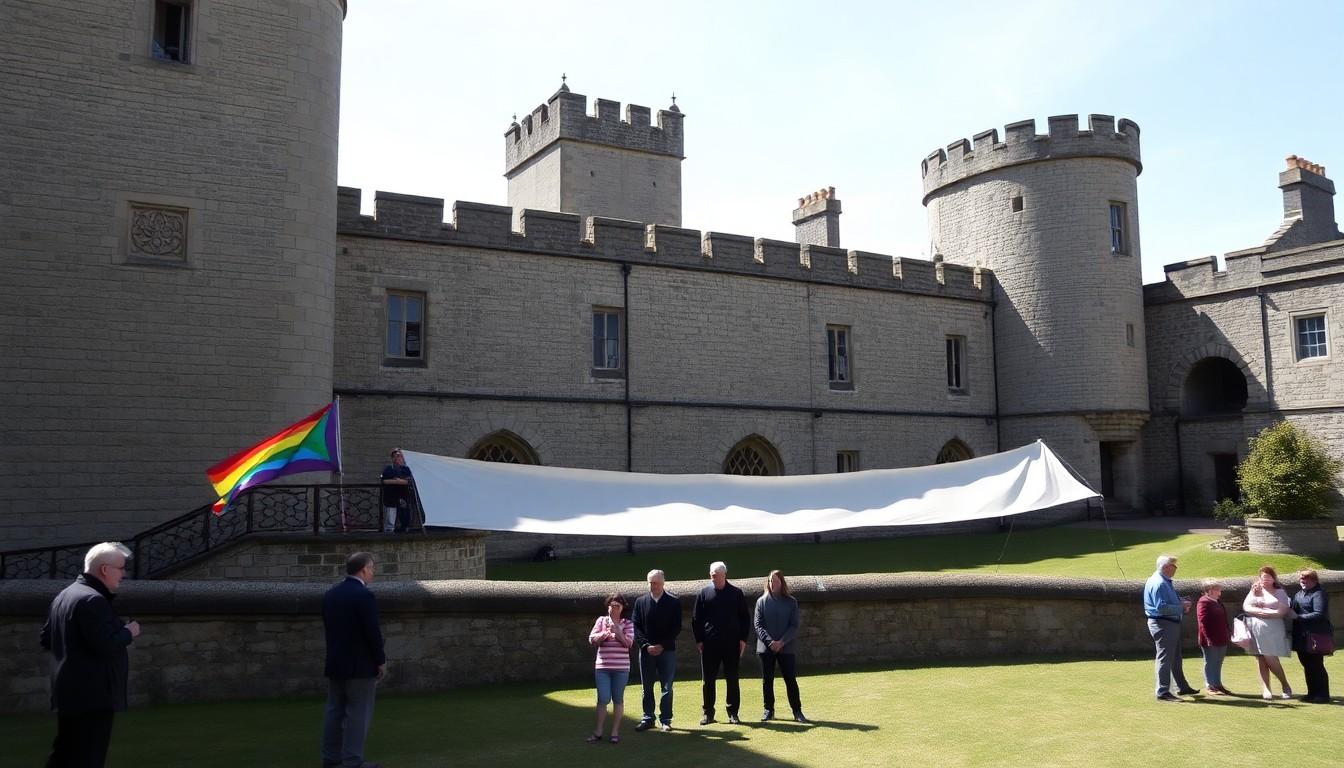
Visitors to Totnes Castle in Devon saw a striking Pride display during the town's four-day festival, with a 150-metre rainbow flag crossing the historic site. The event was designed as a bold statement of belonging, but its theatrical language and use of a protected monument have prompted a wider argument about celebration, public space and how Britain presents its past.
Essential Takeaways
- A dramatic setting: Around 30 flag-bearers carried the rainbow banner across Totnes Castle during the festival.
- A historic landmark: The Norman fortress dates from the late 11th century and is a Grade I listed site cared for by English Heritage.
- A wider programme: Totnes Pride promoted more than 40 arts, culture and community events alongside the castle display.
- A point of disagreement: Supporters viewed the event as inclusive and memorable, while critics questioned whether a protected monument should host such a prominent campaign-style spectacle.
Why Totnes Castle became the festival's centrepiece
The image was hard to miss. A huge rainbow banner stretched across the stonework of Totnes Castle, turning the hilltop fortress into the visual signature of this year's Pride celebrations.
The organisers described the event as "Capture the Castle", presenting it as a symbolic way to show that queer people belong in the town's history and future. Totnes Pride's website places the display within a broader festival programme, rather than treating it as a standalone stunt.
That distinction matters. For supporters, the castle was an open civic space and an ideal backdrop for a message about visibility. For sceptics, the language of capturing or storming an ancient stronghold made the occasion feel more like a political occupation than a cultural event.
A 1,000-year-old backdrop brings extra scrutiny
Totnes Castle isn't an ordinary event venue. The fortress was established around 1087, overlooking the River Dart, and remains one of England's best-preserved motte-and-bailey castles.
Its Grade I listing gives the site a special status, which helps explain why the banner drew attention beyond the usual festival crowd. Historic buildings carry a certain visual authority, and once a modern cause is displayed across one, the setting inevitably becomes part of the message.
According to the Totnes Pride programme, the castle event was planned as a major civic moment within the festival. That ambition created the spectacle, but it also raised a practical question: should historic monuments be treated as flexible stages for contemporary campaigns, even when the cause is widely supported?
The festival was much bigger than one photograph
It would be easy to reduce Totnes Pride to a single colourful image, but the organisers advertised a more substantial programme. Their schedule included more than 40 arts, cultural and community events, with activities designed to bring people into venues across the town.
That broader offer gives the festival a different shape. A parade or a flag display may grab attention online, but workshops, performances and local gatherings are the parts that tend to build a lasting community connection.
The support page also invites donations and wider backing, suggesting that the event relies on participation beyond the headline moment. In other words, the castle image may have been the loudest note, but it wasn't the whole song.
Celebration or campaign statement?
Public festivals regularly borrow historic places for modern life. Markets, concerts, remembrance services and civic ceremonies all place new activity inside old walls. The tricky part is deciding when a celebration becomes a branding exercise, and whether the symbolism feels welcoming to everyone who shares the site.
Totnes Pride's argument is straightforward: queer people have always been part of the community, and visibility in a landmark setting reinforces that message. Critics take a different view, saying shared heritage should avoid becoming a backdrop for any single contemporary identity campaign.
Neither side is likely to forget the photograph soon. That's the strength of using a castle, but it's also the risk. A memorable setting can open a conversation about belonging, yet it can just as easily turn the event into an argument about who gets to define public space.
What the debate says about Britain's historic places
The Totnes display sits within a bigger national conversation about flags, monuments and civic identity. Across Britain, councils and heritage bodies are increasingly asked to balance celebration, neutrality, safety and public access, often under intense scrutiny from residents and online audiences.
That makes the practical details important. Event organisers need clear permissions, careful handling plans and sensitivity towards the character of listed buildings. Visitors, meanwhile, can appreciate the colour and energy while still asking reasonable questions about conservation and consistency.
A rainbow flag across an old fortress is undeniably striking. Whether it's inspiring, intrusive or simply a little theatrical depends on what someone believes a historic monument should represent. Either way, Totnes has shown that heritage sites aren't silent backdrops anymore; they're active participants in Britain's culture wars and community celebrations.
It's a vivid reminder that public spaces can welcome new stories without losing sight of the old ones.
Source Reference Map
Story idea inspired by: [1]
Sources by paragraph:
- Paragraph 1: [2], [3]
- Paragraph 2: [3], [5]
- Paragraph 3: [2], [4]
- Paragraph 4: [3], [6]
- Paragraph 5: [2], [7]
- Paragraph 6: [3], [5]
- Paragraph 7: [2], [4]
- Paragraph 8: [3], [6]
- Paragraph 9: [2], [7]
- Paragraph 10: [3], [5]
- Paragraph 11: [2], [4]
- Paragraph 12: [3], [6]
- Paragraph 13: [2], [7]
- Paragraph 14: [3], [5]
- Paragraph 15: [2], [4]