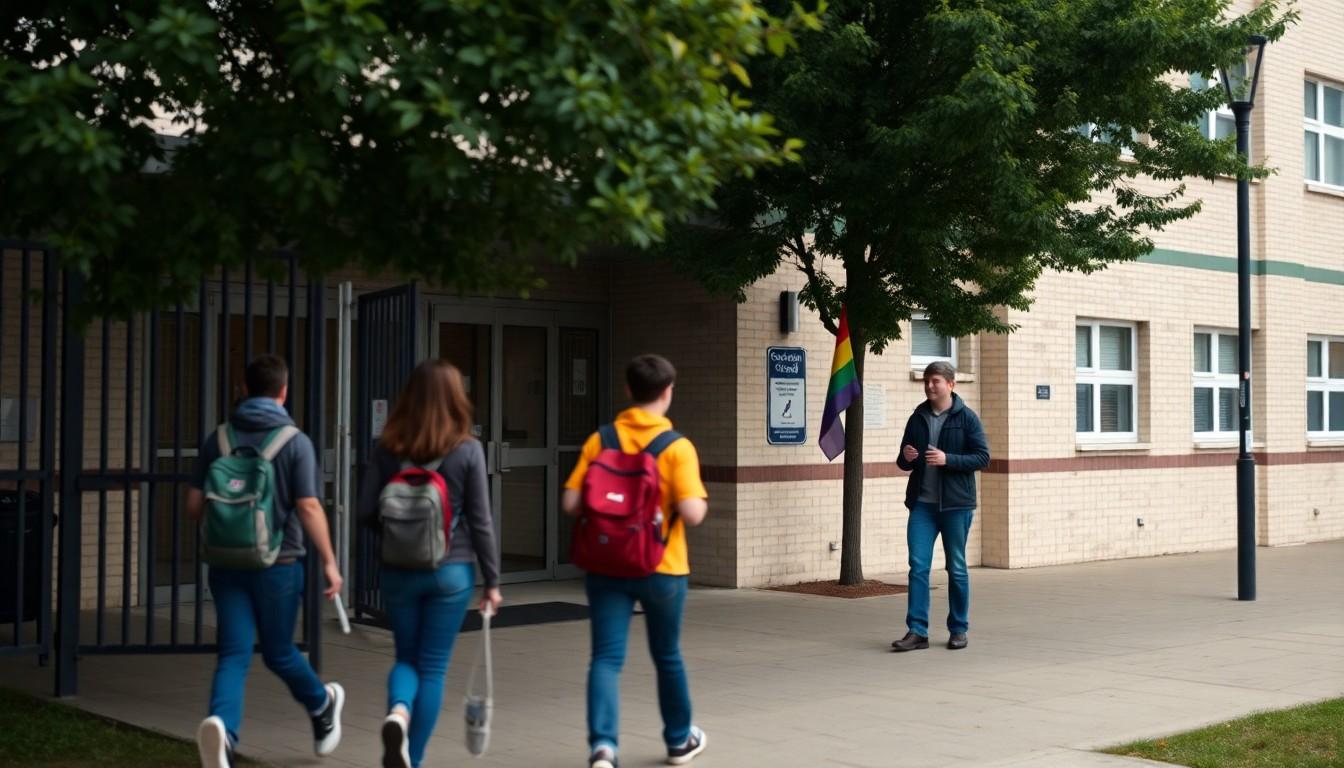
Teachers and LGBTQ+ students are facing sharply different school climates across the US, according to new research from the Human Rights Campaign. The survey suggests restrictive laws are linked to more bullying, greater anxiety and fewer staff willing to intervene, raising urgent questions about safety, learning and support in classrooms.
Essential Takeaways
- Bullying is more common: Educators in states with restrictive policies reported higher levels of anti-LGBTQ+ harassment and student bullying.
- Teachers feel exposed: Many staff worry about complaints, discipline or online criticism when supporting LGBTQ+ pupils.
- Trans students face particular barriers: Restrictions on gender identity support are dramatically more common in hostile policy environments.
- School climate affects learning: Missed days, lower engagement and poorer wellbeing can follow when students feel unsafe.
- Support makes a difference: Anti-bullying rules and visible inclusion are associated with safer experiences for LGBTQ+ young people.
Restrictive laws are changing everyday school life
The most striking finding isn't simply that LGBTQ+ students encounter hostility. It's that educators say policies can make it harder to respond when that hostility appears.
The Human Rights Campaign surveyed 826 education professionals across 42 US states, including teachers, counsellors, principals and administrators. According to the organisation's findings, staff in states with restrictive LGBTQ+ policies were far more likely to describe harassment as a serious or moderate problem than colleagues in states with more supportive rules.
That difference is easy to imagine in practical terms. A student arrives late, quiet and visibly upset after being targeted in a corridor, while the adult who wants to help is quietly calculating whether intervention could trigger a complaint. It's a grim pause for any classroom.
LGBTQ+ students face a tougher school climate
Educators in restrictive states reported witnessing anti-LGBTQ+ bullying more often than those in supportive states. The Human Rights Campaign's survey also found a much higher share describing harassment as a significant problem in their schools.
That matters because bullying rarely stays confined to one unpleasant incident. It can affect attendance, concentration and a student's willingness to take part in school life. Research reviewed by Axios has also highlighted the serious mental-health pressures already affecting LGBTQ+ young people, particularly LGBTQ+ members of Generation Z.
For families, the lesson is fairly straightforward: a school's written policy is only part of the picture. The real test is whether students can report abuse, find a trusted adult and see that support delivered consistently.
Teachers want to help, but many fear the consequences
Most educators surveyed said they would intervene if they witnessed bullying of an LGBTQ+ student. Yet staff in states with restrictive policies were much more likely to worry about disciplinary action, angry parents, community backlash or hostile online attention.
That creates a damaging contradiction. Schools may expect teachers to protect pupils while policies, politics or local pressure make visible support feel risky. The result can be a muted response, even when an adult recognises that a child is being singled out.
The Human Rights Campaign's wider educator research points to the same tension: staff often understand what inclusive practice looks like, but may lack clear backing from school leadership. A rainbow sticker or supportive notice is no substitute for reliable procedures, but removing every visible sign of welcome can make an already isolated pupil feel even more alone.
Transgender pupils are bearing the sharpest pressure
The survey found a particularly wide gap around support for transgender students. In states with limiting policies, a majority of educators reported restrictions on helping trans pupils, compared with only a small minority in states with supportive policies.
Those restrictions can affect ordinary school experiences, including names, pronouns, facilities, records and access to trusted staff. None of these questions is abstract to a young person trying to get through a normal day without being challenged or exposed.
Other research has linked anti-LGBTQ+ laws and hostile school environments with poorer mental-health outcomes among LGBTQ+ youth. The Trevor Project has likewise reported the importance of effective anti-bullying policies, suggesting that clear protection can help create a safer foundation for students who already face elevated risks.
What should parents and schools look for?
Parents comparing schools should ask practical questions rather than relying on broad promises. Is there a named safeguarding lead? How are bullying complaints recorded? Can students access a counsellor privately? Does the school explain how it supports transgender and LGBTQ+ pupils?
Schools, meanwhile, need more than occasional awareness days. Staff training, confidential reporting routes, prompt follow-up and firm anti-bullying procedures are the less glamorous essentials, but they're the things that matter when a student is frightened.
The wider political debate will continue, especially as US states revisit education and LGBTQ+ rights. But inside a classroom, the need is immediate and human: a teacher who can step in, a pupil who believes they'll be heard and a school prepared to stand behind both.
A safer classroom starts with policies that let adults protect students, not policies that make support feel dangerous.
Source Reference Map
Story idea inspired by: [1]
Sources by paragraph:
- Paragraph 1: [2], [3]
- Paragraph 2: [2], [3]
- Paragraph 3: [2], [3]
- Paragraph 4: [4], [5]
- Paragraph 5: [2], [3]
- Paragraph 6: [2], [3]
- Paragraph 7: [2], [3]
- Paragraph 8: [2], [3]
- Paragraph 9: [2], [3]
- Paragraph 10: [5], [7]
- Paragraph 11: [3], [7]
- Paragraph 12: [2], [3]
- Paragraph 13: [2], [7]
- Paragraph 14: [2], [3]
- Paragraph 15: [3], [7]