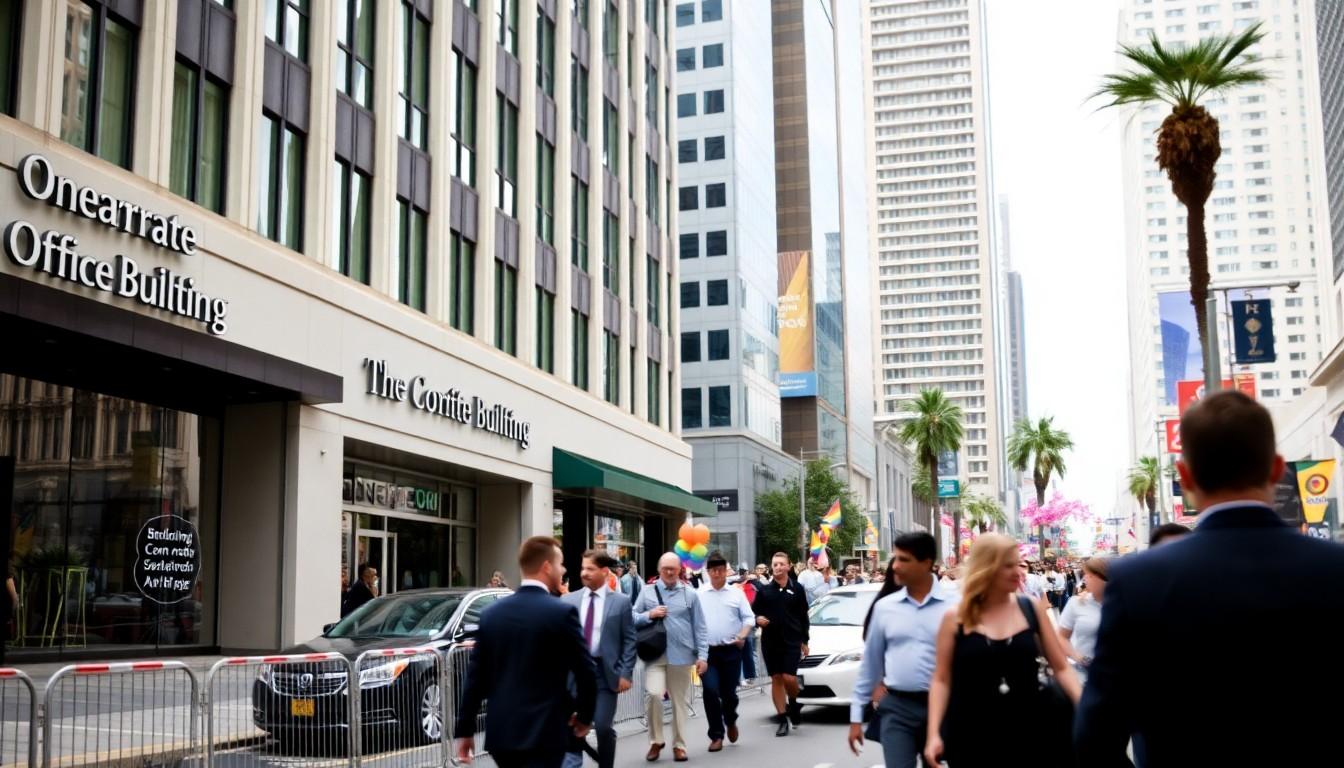
Shoppers are seeing a striking split in corporate messaging: Ford, Target, Molson Coors and T-Mobile have stepped back from some formal DEI commitments, yet their brands remain visible at Pride events across the United States. The shift matters because customers, employees and shareholders are now watching not just what companies announce, but where their sponsorship money goes.
Essential Takeaways
- DEI policies are changing: Several major companies have reduced formal diversity programmes or left the Corporate Equality Index.
- Pride sponsorships continue: Target, Molson Coors and T-Mobile have been linked with sponsorships for various US Pride events.
- Corporate messaging is under scrutiny: Critics say public commitments and commercial activity don't always line up.
- The backlash is broader: Industry reporting shows DEI rollbacks have spread across corporate America during 2024 and 2025.
- The debate remains polarised: LGBT advocacy groups argue that workplace inclusion should be protected, not treated as a political liability.
The corporate retreat hasn't ended the sponsorship debate
For shoppers, the contradiction is easy to spot. A company may announce that it's stepping away from formal DEI targets, then appear on a Pride festival's sponsor list a few months later. The result is a corporate landscape that feels less like a clean U-turn and more like a car changing lanes. According to the 1792 Exchange's findings reported by Blaze News, Target, Molson Coors and T-Mobile remain connected with Pride events despite publicly advertised policy changes. [2], [3]
That distinction matters because corporate inclusion has become a reputational issue in its own right. The Human Rights Campaign has criticised companies that reduce or abandon workplace inclusion measures, while its Corporate Equality Index continues to rank businesses on policies affecting LGBT employees. Its response to Ford's changes shows how quickly a business decision can become a public culture-war flashpoint. [2], [3]
Why Ford, Target and T-Mobile changed direction
The recent retreat began with a broader corporate recalculation. Human resources publication HR Dive reported that businesses across America were rethinking DEI programmes amid political pressure, shareholder concerns, legal uncertainty and customer backlash. For many executives, the question has shifted from whether inclusion matters to how visibly a company should express its position. [5]
Ford's 2024 announcement became one of the clearest examples. The carmaker said it would focus more closely on customers and employees, stop taking part in the Corporate Equality Index and avoid public commentary on polarising issues. T-Mobile and Target also announced changes to DEI roles, goals or external partnerships, framing the moves around business priorities rather than ideology. [2], [5]
But changing a policy framework doesn't necessarily mean ending every relationship. A retailer can drop a formal scorecard while continuing local marketing partnerships, and a drinks brand can reduce internal programmes while maintaining event sponsorships. That's why the public conversation has moved beyond press releases and towards the fine print of partnerships. [3], [5]
Pride sponsorships keep familiar brands in view
The 1792 Exchange's review identified Target as a sponsor of several Pride events, including New York City Pride and festivals in New Jersey, Los Angeles, Utah, Houston and San Francisco. Molson Coors brands were also associated with Pride activity, including events in New Jersey, Miami Beach and Denver. [3], [4]
T-Mobile brands were similarly linked with Pride festivals in Phoenix, Des Moines and Philadelphia. Those appearances don't necessarily prove that every sponsor supports every message or activity connected with an event, but they do show why corporate neutrality claims are being tested so closely. The logo on the banner is often more memorable than the wording in a policy memo. [3], [5]
Molson Coors' retreat illustrates the tension. Reports in 2024 said the brewer would end some DEI training, stop participating in the Corporate Equality Index and alter certain donations, following conservative criticism. Yet its beer brands remained visible in Pride sponsorships, leaving observers to ask whether the company had really changed course or simply separated internal policy from consumer-facing marketing. [4], [6], [7]
What shoppers should look for in corporate claims
The simplest way to read these announcements is to separate three things: employee policy, industry rankings and event sponsorship. They overlap, but they aren't identical. A company may withdraw from the Corporate Equality Index without abandoning every LGBT-related donation, while a brand may sponsor an event even when its parent company has reduced formal DEI commitments. [2], [3]
For consumers, that means looking beyond headlines. Check whether an announcement concerns staff training, hiring targets, charitable giving, advertising, sponsorships or a specific brand rather than the whole corporate group. This is particularly useful for large businesses, where a parent company, a drinks label and a local marketing team may all make decisions at different levels. [5], [6]
Shareholders face a slightly different question. The 1792 Exchange argues that public companies should ensure sponsorships support long-term value and fit with stated corporate principles. Critics, meanwhile, say businesses shouldn't retreat from inclusion simply because online campaigns have made such commitments politically uncomfortable. Both sides agree on one point: vague messaging invites suspicion. [2], [3]
The next phase will be quieter, not necessarily neutral
The corporate world is unlikely to return to the highly visible Pride campaigns seen earlier in the decade, at least not uniformly. Instead, companies may favour local partnerships, targeted advertising and less conspicuous community support, allowing them to reach customers without making a sweeping cultural declaration. That's a more cautious strategy, but it won't satisfy either side of the argument. [4], [5]
LGBT advocacy groups are likely to keep monitoring corporate scorecards and public commitments, while conservative watchdogs will continue checking sponsor lists and event materials. The result is a new form of accountability in which businesses are judged on both what they stop saying and what they quietly keep funding. [2], [3]
For ordinary shoppers, it can feel exhausting. Yet the underlying lesson is fairly practical: a corporate retreat may be genuine, partial or largely cosmetic, and only consistent action over time will show which one it is. [5], [7]
The logo may change less quickly than the policy.
Source Reference Map
Story idea inspired by: [1]
Sources by paragraph: