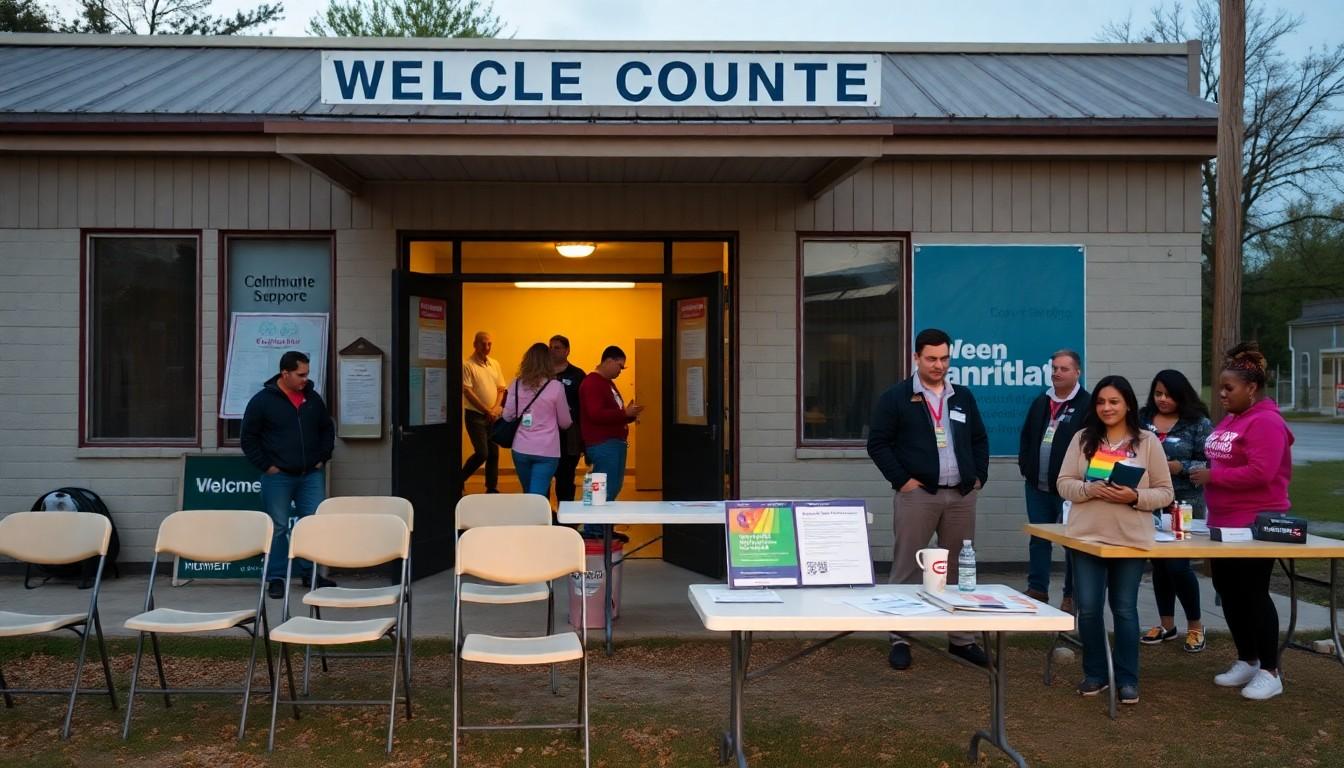
Organisers in Arkansas are creating support networks for trans Latinos facing overlapping pressures around identity, immigration and restrictive state policy. Through advocacy, cultural events and practical accompaniment, the work aims to make people feel visible, safer and less isolated in a state where gender-affirming care for young people remains heavily contested.
A community finding its voice
For trans Latinos in Arkansas, visibility isn't a slogan. It's a daily need, particularly during cultural celebrations when people can feel overlooked by both mainstream LGBTQ+ groups and Hispanic communities.
Intransitive, an Arkansas advocacy organisation, is working to bridge that gap. Its focus includes community education, organising and support for people whose identities don't fit neatly into a single category, according to the organisation's own description of its work.
That intersection matters. Someone may be navigating anti-trans discrimination, concerns about immigration enforcement and the ordinary stresses of finding trustworthy healthcare or legal help, all at once. It can make a welcoming room feel like a lifeline rather than simply another event.
Arkansas remains a flashpoint for trans rights
Arkansas became the first US state to prohibit gender-affirming treatment for transgender minors, a move reported by The Guardian and other national outlets. The law prompted a fierce legal and political fight, with supporters defending it as a measure to protect children and opponents arguing that it blocks medically recognised care.
The legal picture has continued to shift. The Washington Post reported on court proceedings involving the ban, while legal explainers from Nolo describe gender-affirming care as a broad category that can include social support, counselling, puberty blockers, hormone treatment and, in some circumstances, surgery.
That distinction is important because public debate often compresses very different forms of care into one alarming phrase. For families and young people, the consequences are far more practical: access, privacy, consultation with clinicians and the ability to make decisions without political pressure.
Cultural events offer more than a night out
A drag and film evening in Little Rock, featuring activist Victoria Castro and a documentary about her journey from El Salvador to the United States, is designed to connect celebration with conversation.
That combination has real value. A film can open the door gently, while a drag performance brings energy, humour and a sense of shared ownership. For people who spend much of their time managing risk, an evening that feels bright, relaxed and unapologetically public can be quietly powerful.
Intransitive's approach reflects a wider truth about grassroots organising: support isn't always delivered through formal services. Sometimes it starts with a room where people can meet others who understand the same language, family pressures and cultural reference points.
Practical support can make intimidating systems manageable
The organisation has trained more than 200 volunteers to accompany people to appointments involving immigration authorities, courts and other official systems. That kind of help doesn't replace legal advice, but it can make an unfamiliar process feel less lonely and confusing.
For anyone seeking support, the sensible first step is to check an organisation's current services, eligibility rules and confidentiality policy. People dealing with immigration or court matters should also seek advice from a qualified legal professional, since circumstances can change quickly and general information isn't a substitute for individual guidance.
The need for accompaniment reflects a broader concern among Arkansas's trans community. Even people with lawful immigration status may feel uneasy about public protest or official appointments when enforcement activity is prominent. A trusted companion, clear paperwork and a plan for the day can offer a little more steadiness.
Organising is already looking towards the next session
Intransitive is also preparing for future legislative battles, building on earlier campaigns that used both online action and face-to-face organising. Arkansas's restrictions have attracted sustained national attention, and reporting from The Guardian, the Los Angeles Times and the Washington Post shows how fiercely the issue has been contested.
The outlook remains uncertain, but local groups are not waiting for policy to settle before helping people. Their work combines advocacy with the less visible tasks that keep communities functioning: sharing information, training volunteers and making introductions.
For trans Latinos in Arkansas, that practical solidarity may be just as important as any headline. Feeling seen is the beginning, but having someone beside you when the paperwork, courtroom or public debate becomes overwhelming is what turns recognition into support.
It's a small community gathering with a much bigger message: nobody should have to navigate these pressures alone.
Source Reference Map
Story idea inspired by: [1]
Sources by paragraph:
- Paragraph 1: [2], [3]
- Paragraph 2: [3], [4]
- Paragraph 3: [2], [5]
- Paragraph 4: [4], [6]
- Paragraph 5: [3], [7]
- Paragraph 6: [2], [5]
- Paragraph 7: [3], [4]
- Paragraph 8: [3], [6]
- Paragraph 9: [4], [6]
- Paragraph 10: [2], [5]
- Paragraph 11: [7], [6]
- Paragraph 12: [2], [3]
- Paragraph 13: [3], [5]
- Paragraph 14: [2], [6], [7]
- Paragraph 15: [3], [4]