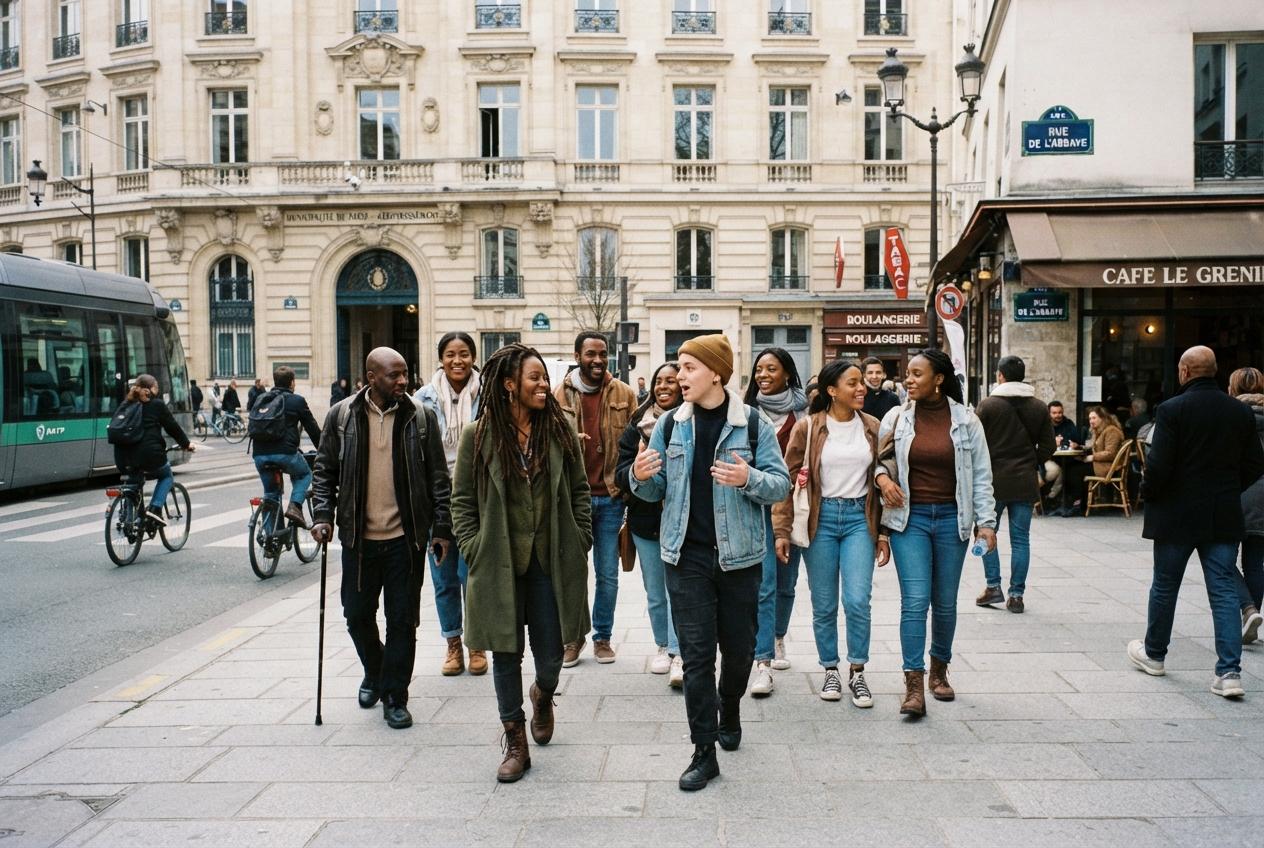
Travellers and activists gathered in Paris for Global Black Pride 2026, creating a vibrant meeting point for Black LGBTQIA+ communities from across Africa, Europe, the Caribbean and the wider diaspora. Beyond the music and celebration, the weekend offered a striking lesson in solidarity, history and the urgent work still ahead.
Essential Takeaways
- A genuinely international gathering: Thousands joined a multilingual, intergenerational celebration spanning Black LGBTQIA+ communities worldwide.
- More than a party: Panels and public events explored queer history, organising, funding and the anti-gender backlash.
- A meaningful route through Paris: The march connected Goutte d'Or, Château Rouge and Place de la République.
- Community funding matters: Organisers stressed the need for sustained donations and collaboration between Black Pride groups.
- History remained close: Paris's links to Black queer cultural life, including James Baldwin's legacy, shaped the weekend's atmosphere.
Paris became a meeting point for Black queer life
The most powerful thing about Global Black Pride 2026 wasn't simply its size. It was the feeling of recognition: people arriving from different countries and generations, then discovering how many experiences they shared.
Paris's tourism office promoted the event as a major international occasion, while local and visiting communities brought their own energy to the programme. According to Paris je t'aime, the event formed part of the city's wider calendar of cultural and LGBTQIA+ gatherings, drawing attention to Paris as a destination for inclusive travel. [7]
That mix gave the weekend a particular warmth. It wasn't just a crowd moving between venues; it was a network of Black trans, lesbian, bisexual and gay communities comparing notes, swapping stories and making new connections. Global Pride events in Paris have increasingly become spaces where celebration and political education sit comfortably side by side. [2]
The programme made room for joy and urgency
The opening ceremony set a welcoming tone, while a gala brought performance and glamour into the mix. There was plenty of sparkle, naturally, but the weekend's emotional centre lay in the conversations taking place away from the stage.
A public programme promoted by Paris authorities included talks, cultural events and community-focused activities designed to bring international and local audiences together. The structure mattered because it kept the event from becoming a short-lived spectacle. [4]
The march added a visible, public dimension. Its route through Goutte d'Or, Château Rouge and on towards Place de la République passed through areas with deep African and diasporic connections, giving the demonstration a strong sense of place rather than treating Paris as a generic backdrop. Event details published by Global Black Pride identified the march and rally as central parts of the 2026 programme. [6]
Why mutual education mattered
One of the clearest differences between this gathering and many mainstream Pride celebrations was its emphasis on learning from one another. Organisers and speakers discussed how Black LGBTQIA+ groups are responding to political pressure, shrinking resources and anti-gender campaigns in different parts of the world.
That international exchange is more than a useful talking point. A strategy that works for a community group in London may not translate neatly to Nairobi, Amsterdam, Paris or the Caribbean. Bringing those experiences together can reveal practical ideas, but it can also prevent movements from becoming isolated.
Global Black Pride's international approach reflects a broader shift in queer organising, with activists building stronger links across borders rather than relying solely on large annual festivals. The organisation's 2026 march and rally information placed collective action, visibility and community mobilisation at the heart of the event. [6]
Paris's Black queer history gave the weekend depth
Paris has long been associated with Black artistic and political life, and that history added texture to the celebration. James Baldwin's years in the city remain especially resonant: his writing, relationships and public arguments helped make Paris an important setting in the story of Black queer culture.
That legacy isn't frozen in museums. It still appears in the city's cafés, neighbourhoods and conversations, where visitors can feel how migration and creative exchange have shaped Paris over decades. For attendees, the connection between historical figures and present-day organisers made the weekend feel less like an isolated event and more like part of a continuing story.
The city's official programming also placed the Pride gathering within Paris's broader civic and cultural landscape. That visibility matters, particularly when communities are asking institutions to do more than add a rainbow logo for one weekend a year. [4]
The next challenge is keeping the movement funded
Celebration can open a door, but funding is what keeps community work moving through it. Speakers and organisers highlighted the importance of local donations, public support and international collaboration, particularly as many LGBTQIA+ groups face political hostility and financial uncertainty.
For visitors, that offers a useful way to think about Pride travel. Buying a ticket or attending a march can show solidarity, but supporting grassroots organisations, choosing community-led events and learning where money goes can have a more lasting effect. The Horn of Africa Pride network, for instance, demonstrates why regional LGBTQIA+ organisations need visibility and sustained support rather than occasional attention. [5]
The strongest impression from Paris was therefore not simply that Global Black Pride had grown into a major international gathering. It was that people were actively building the infrastructure for whatever comes next. As the event's listings and international partners show, the future of Black queer organising will depend on connections that continue long after the music stops. [2] [3]
Closing Line
Paris offered the celebration, but the real promise was a stronger global community ready to carry the work forward.
Source Reference Map
Story idea inspired by: [1]
Sources by paragraph: