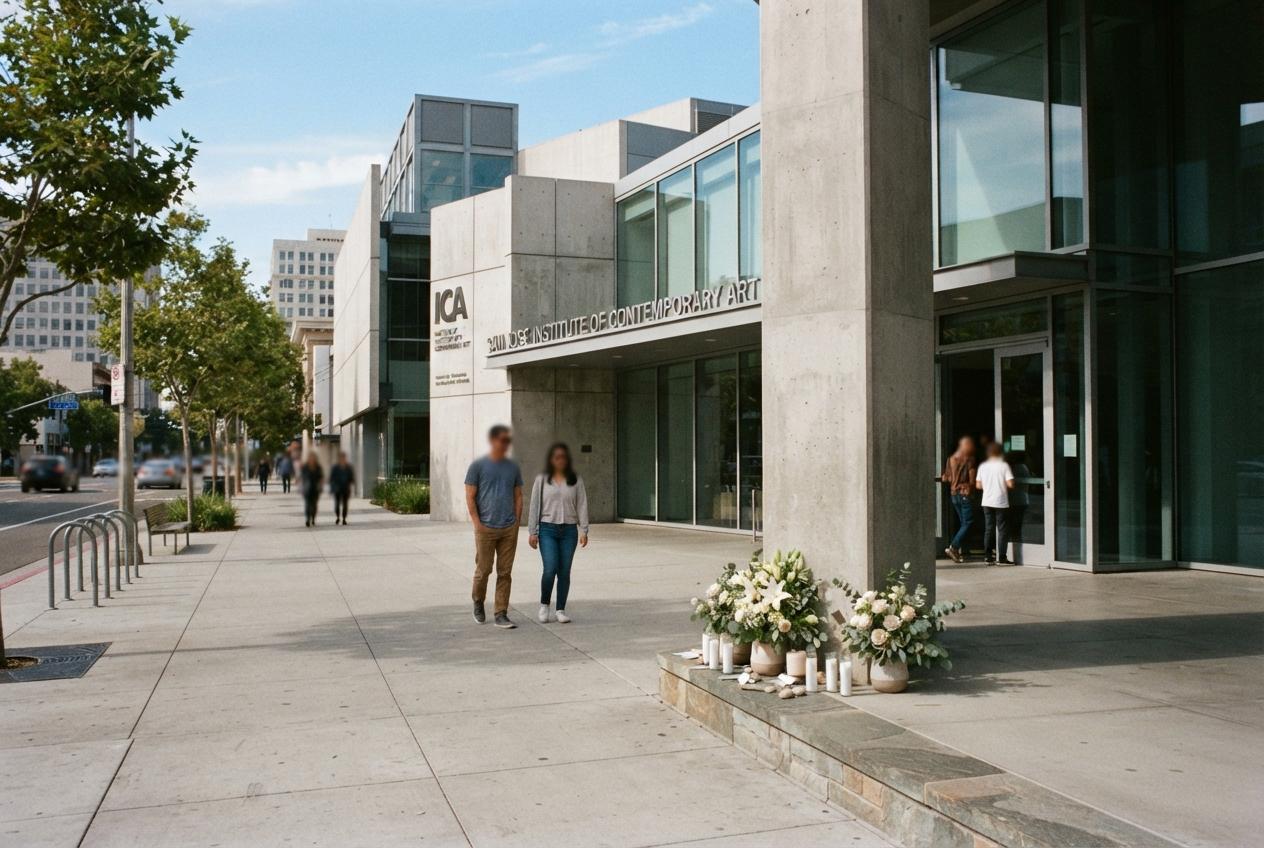
Visitors to San Jose’s Institute of Contemporary Art will encounter the first Queer American Memorial, a quietly powerful tribute to Alina Marie Barragan, a Latine transgender woman killed in 2000. The exhibition pairs photography, digital mapping and live performance before the permanent ceramic-brick memorial moves to the Billy DeFrank LGBTQ+ Community Center.
Essential Takeaways
- A first-of-its-kind project: The memorial series records LGBTQ+ people killed in anti-LGBTQ+ hate crimes between 1999 and 2009.
- A local connection: San Jose native Alina Marie Barragan is the first person honoured.
- More than a plaque: The exhibition combines photography, Google Earth mapping, video and a ceramic brick.
- A meaningful venue: Barragan once volunteered at the Billy DeFrank LGBTQ+ Community Center.
- The project will grow: Further memorials are planned across the Bay Area and California.
A small brick carrying a large story
The first Queer American Memorial arrives in San Jose with an understated object at its centre: a single ceramic brick. It may look modest, even familiar, but its purpose is anything but ordinary. It will permanently honour Alina Marie Barragan, a Latine transgender woman and San Jose native who was killed in 2000.
The opening exhibition at the Institute of Contemporary Art San Jose will bring Barragan's story into a wider public space through photographs, film and an interactive map. The effect is likely to be both intimate and unsettling, turning a gallery visit into a journey through people and places too often left out of public memory.
According to the Institute of Contemporary Art San Jose, the opening takes place during the city's First Friday programme, with a performance by the Silicon Valley Gay Men's Chorus adding a communal, living element to the evening. [2]
Why this memorial matters now
Queer American Memorials was created by artist and New York University Tisch School of the Arts assistant professor Sean Fader, working with co-creator Maureen Towey. The project focuses on LGBTQ+ people killed in anti-LGBTQ+ hate crimes during the decade from 1999 to 2009, giving each person a physical marker rather than allowing their name to fade into statistics.
The choice of a brick feels deliberate. It suggests permanence, architecture and the ordinary streets where these lives unfolded. Instead of placing the memorial somewhere distant or abstract, the project connects remembrance to real communities and familiar ground.
The project's own materials describe a wider effort to build a network of memorials across California and beyond, creating a public record that can be encountered in everyday life rather than only in archives or annual commemorations. [3]
Inside the San Jose exhibition
The ICA San Jose presentation will include Fader's photograph of the place where Barragan lost her life, drawn from his earlier project, "Insufficient Memory". It will also feature an interactive Google Earth artwork that moves from site to site, linking locations of anti-queer violence with the lives of the people involved.
A video introduction by Fader and Towey will help explain how the memorials are made and why the project uses both digital tools and physical objects. That combination gives the exhibition a useful tension: visitors can explore a broad map of violence, then return to one person, one city and one enduring marker.
The exhibition is scheduled to run until 21 February, giving visitors time to absorb the work beyond the opening-night atmosphere. The Institute of Contemporary Art San Jose has also noted that the earlier "Insufficient Memory" project is held in the permanent collections of the Brooklyn Museum and Buffalo AKG Art Museum. [4]
From the gallery to the DeFrank centre
After the exhibition, Barragan's memorial will be installed permanently at the Billy DeFrank LGBTQ+ Community Center, where she once volunteered. That location gives the brick an especially personal setting, placing it among the community she helped support.
The project team spoke with San Jose officials, but the final installation at the DeFrank centre doesn't require additional municipal permission because it will be hosted on the community centre's site. In practical terms, that means the memorial can remain close to the people and organisation connected to Barragan's life.
It's a thoughtful reminder that remembrance doesn't always need a grand civic plaza. Sometimes the most affecting place is the one where someone showed up, volunteered and helped others feel less alone. [5]
A growing map of queer remembrance
San Jose is only the beginning. The Queer American Memorials map identifies further people to be remembered in San Francisco, including Simone, Clay Whitmire and transgender women Tony "Delicious" Green, Daxi Arredondo, Ruby Rodriguez, Caprice Curry and Mariah Malina Qualls.
Other planned Bay Area locations include Orinda, for trans man Emmon Bodfish, and Newark, for transgender teenager Gwen Araujo. The expanding list underlines the project's broader purpose: to make local histories visible while acknowledging that anti-LGBTQ+ violence has affected many different communities and generations.
The California LGBTQ Legislative Caucus has pledged support for the project at California sites, according to the project's organisers. If those plans continue, the result could be a quietly powerful network of markers, each one asking passers-by to pause and remember someone whose life mattered. [3]
What visitors can expect from the opening
The launch runs from 5pm to 9pm at the Institute of Contemporary Art San Jose, 560 South First Street, with the Silicon Valley Gay Men's Chorus scheduled to perform at 7.30pm. The setting alongside First Friday should make the event accessible to regular arts visitors as well as people specifically drawn to LGBTQ+ history and activism.
Those attending should expect a reflective exhibition rather than a conventional unveiling. The digital map invites exploration, the photograph anchors the work in a real place, and the brick offers a tactile sense of permanence. Together, they make a strong case for why public art can do more than decorate a city: it can help decide whose stories remain visible.
For many visitors, the most memorable part may be the simplest - seeing one person's name carried forward in a place connected to her community. [2]
It's a small memorial with a long reach, bringing queer history into the places where people live, gather and remember.
Source Reference Map
Story idea inspired by: [1]
Sources by paragraph: