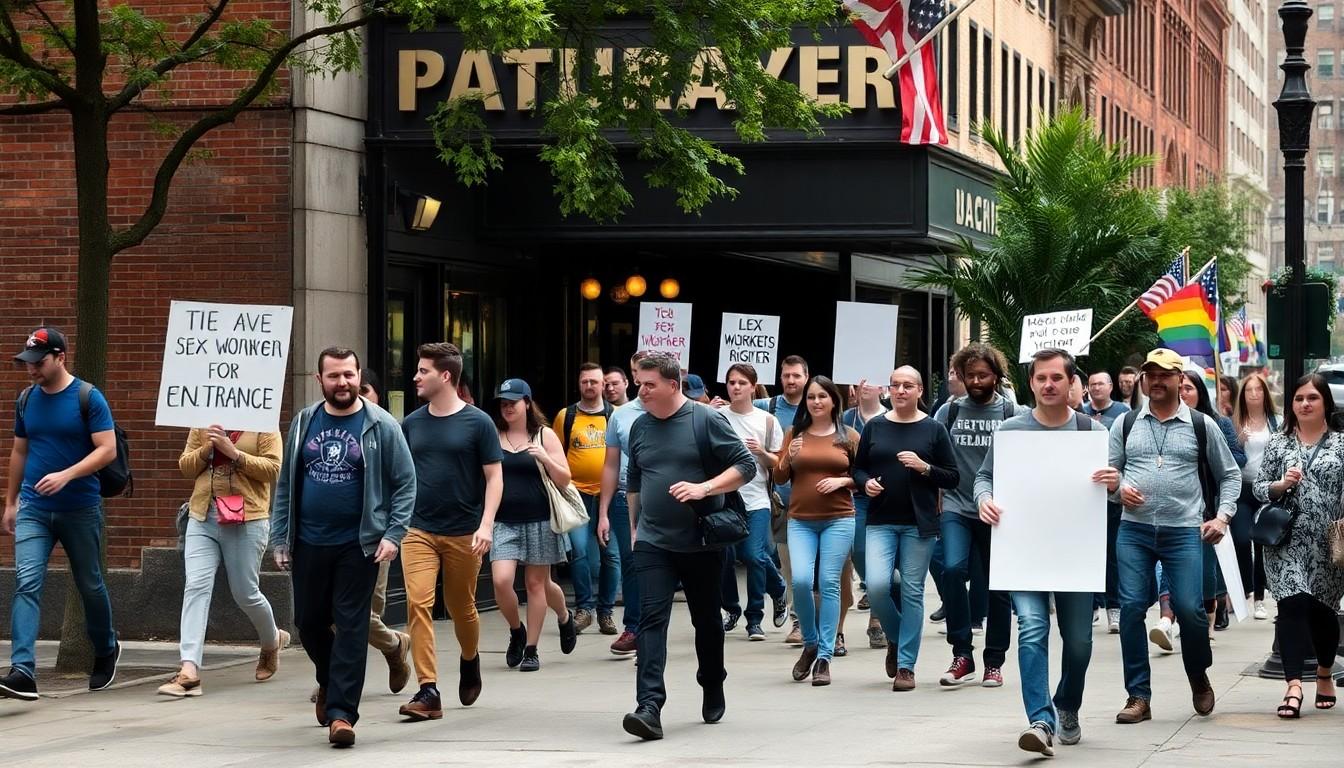
Marchers carrying red umbrellas gathered on Boston Common for the city’s first Sex Worker Pride March, turning a vivid public demonstration into a wider conversation about dignity, bodily autonomy and decriminalisation. The event linked sex workers’ history with queer and feminist movements, while asking how Boston can make pride more inclusive in practice.
Essential Takeaways
- A first for Boston: The march brought sex workers and allies together publicly for the city’s first dedicated Sex Worker Pride event.
- Red umbrellas mattered: The symbol represented solidarity and better working conditions, giving the procession a striking visual identity.
- Decriminalisation was central: Speakers contrasted full decriminalisation with the Nordic Model, which targets buyers.
- The route carried history: Participants marched from Brewer Fountain to Jacques’ Cabaret, a long-standing LGBTQ+ venue.
- The debate continues: Organisers called for legal reform, safer reporting and stronger protection from abuse and discrimination.
Red umbrellas made a quiet city corner impossible to ignore
Boston Common took on a different feel as marchers gathered beneath a canopy of red umbrellas. The colour was bold, almost theatrical, but the message was serious: sex workers wanted to be visible, heard and recognised as part of the city’s broader liberation movements.
The march moved from Brewer Fountain towards Jacques’ Cabaret, one of Boston’s oldest continuously operating gay bars. That destination connected the event with the city’s LGBTQ+ history, while also giving the procession a celebratory finish rather than leaving it as a purely political rally.
The setting mattered. Boston has hosted large mainstream Pride celebrations, including the city’s first major Pride parade since 2019 in 2023, but this march focused attention on a group that organisers say is often included in rights conversations without being centred. Coverage from CBS Boston, Boston.com and local outlets showed how public Pride events can transform streets into platforms for identity, protest and community.
Why decriminalisation became the defining issue
At the centre of the speeches was a familiar but fiercely contested question: how should the law protect people involved in sex work? Supporters of full decriminalisation argue that removing criminal penalties can make it easier for workers to report violence, seek healthcare and negotiate safer conditions.
The Nordic Model takes a different route, criminalising the purchase of sex while presenting buyers as the main source of exploitation. Critics at the march argued that this approach can still push transactions underground and make workers less secure, particularly when police action affects where and how they work.
It’s a debate that doesn’t fit neatly into a slogan. Supporters of decriminalisation see autonomy and labour rights as inseparable, while opponents worry about coercion, trafficking and unequal power. The Boston event put those tensions in public view, rather than pretending a single policy can answer every experience.
A labour argument sits beneath the pride message
Organisers also emphasised the language of work. The modern term “sex work” emerged in the 1980s as a way to describe a broad range of activities while highlighting labour, rather than reducing people to a criminal label or a social stereotype.
That framing shaped the march’s wider argument. Speakers described sex work as something that can be chosen, necessary, or both, depending on a person’s circumstances. For some, it may be one income stream among several; for others, it can be connected to survival, independence or community support.
The point is not that every experience is identical. It’s that public policy often treats sex workers as a problem to manage instead of people with different needs, risks and ambitions. That distinction gives the event its sharper edge, especially as Boston’s wider Pride culture continues to grow.
The red umbrella carries more than visual drama
The umbrella has become an international symbol associated with sex workers’ rights and solidarity. It works well as a protest image because it’s practical, instantly recognisable and easy to carry, but its meaning goes beyond design: it points to protection, shelter and collective action.
The march also looked backwards, recalling sex workers’ contributions to feminist and queer organising. One speaker argued that sex workers helped shape Pride itself, a reminder that movements often rely on people whose recognition arrives later than their labour.
That historical perspective adds weight to the event. Mainstream Pride celebrations across Boston have become major public occasions, with extensive guides covering routes, road closures, performances and things to do. Yet the Sex Worker Pride March asked a more pointed question: who gets to feel safe and welcome once the banners come down?
What happens after the first march?
The organisers’ next challenge is turning visibility into practical change. That includes lobbying for full decriminalisation, improving safe reporting routes and preventing abuse by people in positions of authority. Cultural change matters too, particularly when stigma can discourage workers from seeking help or speaking publicly.
For residents and visitors, the event offers a useful lesson in how a city’s Pride calendar is changing. Big parades bring scale and spectacle, while smaller marches can focus attention on issues that are easier to overlook. Both have a place, but they do different work.
Boston’s first Sex Worker Pride March was therefore more than a new entry on the city’s events calendar. It was a bright, noisy claim to belonging, and a reminder that the meaning of Pride is still being argued in real time.
It's a small red umbrella, but the question beneath it is unmistakably large.
Source Reference Map
Story idea inspired by: [1]
Sources by paragraph:
- Paragraph 1: [2], [3]
- Paragraph 2: [4], [5]
- Paragraph 3: [6], [7]
- Paragraph 4: [2], [4]
- Paragraph 5: [3], [5]
- Paragraph 6: [6], [7]
- Paragraph 7: [2], [3]
- Paragraph 8: [4], [5]
- Paragraph 9: [6], [7]
- Paragraph 10: [2], [4]
- Paragraph 11: [3], [5]
- Paragraph 12: [6], [7]
- Paragraph 13: [2], [3]
- Paragraph 14: [4], [5]
- Paragraph 15: [6], [7]